Highlight
- Weight loss of ≥5% within six years of impaired glucose tolerance (IGT) diagnosis substantially reduces long-term cardiovascular disease (CVD) events and mortality.
- Early weight management delays median time to all-cause and CVD death by over two and six years, respectively.
- The Da Qing Diabetes Prevention Study provides 34-year follow-up evidence linking lifestyle intervention-induced weight loss to improved survival and cardiovascular health in prediabetes.
Study Background
Impaired glucose tolerance (IGT), a prediabetic state characterized by elevated blood glucose levels not yet meeting criteria for diabetes, affects a significant proportion of the global population. This condition confers heightened risk for progression to type 2 diabetes mellitus (T2DM), cardiovascular disease (CVD), and premature mortality. Given that cardiovascular complications constitute the primary cause of death in individuals with dysglycemia, interventions targeting early metabolic modulation are critically important.
Weight management through lifestyle modification remains a cornerstone in preventing diabetes progression. However, robust longitudinal data elucidating the long-term impact of early weight loss specifically after IGT diagnosis on mortality and CVD outcomes are limited. The Da Qing Diabetes Prevention Study, a landmark Chinese trial initiated in the 1980s, offers unique insights with over three decades of follow-up evaluating the benefits of lifestyle intervention in adults with IGT.
Study Design
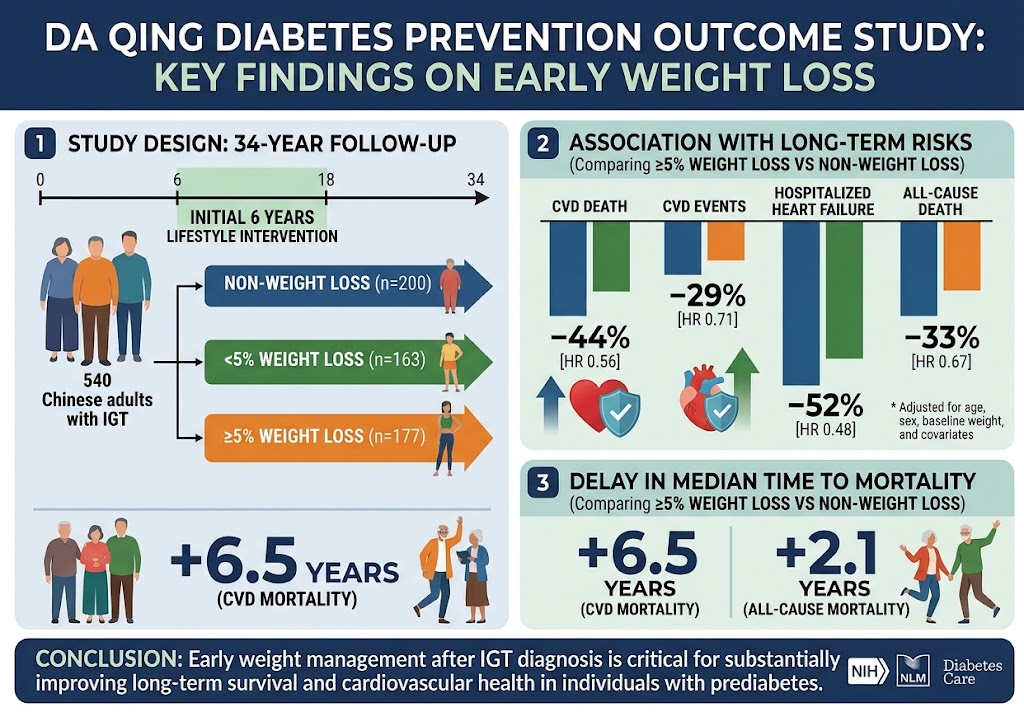
The study enrolled 540 adults diagnosed with IGT and categorized them into three groups based on weight change from baseline to the end of a 6-year lifestyle intervention period:
- Non-weight loss (n=200)
- Low weight loss (<5%, n=163)
- High weight loss (≥5%, n=177)
Participants were followed prospectively for 34 years to document clinical endpoints including all-cause mortality, cardiovascular disease mortality, incidence of CVD events, and hospitalized heart failure. Cox proportional hazards models adjusted for confounders such as age, sex, baseline weight, and other covariates assessed the association between early weight loss and long-term outcomes.
Key Findings
The study demonstrates that weight loss achieved within the initial six years of IGT diagnosis via sustained lifestyle intervention is strongly and independently linked to reduced long-term risks of adverse cardiovascular outcomes and death.
- Participants with weight loss ≥5% exhibited a 44% lower risk of CVD mortality (HR 0.56, 95% CI 0.35–0.89) and 29% lower risk of CVD events (HR 0.71, 95% CI 0.52–0.99) compared with those without weight loss.
- Hospitalized heart failure risk was halved in the high weight loss group (HR 0.48, 95% CI 0.26–0.88), highlighting cardiovascular protective effects beyond mortality.
- All-cause mortality risk was reduced by 33% (HR 0.67, 95% CI 0.48–0.95) in participants achieving ≥5% weight loss.
- The median delay in all-cause mortality was 2.1 years, and CVD mortality was delayed by 6.5 years in the high weight loss group, demonstrating clinically meaningful survival benefits.
Statistical significance for all outcomes remained robust after adjusting for relevant demographic, clinical, and metabolic confounders.
Expert Commentary
The Da Qing Diabetes Prevention Outcome Study furnishes critical evidence supporting the paradigm that early and effective weight management upon detection of prediabetes can yield durable cardiovascular and survival benefits. The magnitude of reduction in CVD events and mortality underscores the importance of prioritizing lifestyle interventions as a primary preventive strategy.
Biologically, weight loss can reverse insulin resistance, reduce systemic inflammation, improve lipid profiles, and lower blood pressure — all interrelated mechanisms that collectively attenuate atherosclerotic progression and heart failure risk. The extended follow-up also addresses concerns about sustainability and long-term impact, which have often been limited in shorter trials.
However, some limitations merit consideration. Although the Chinese population focus offers valuable insights, applicability to diverse ethnic groups may need further validation through international cohorts. Additionally, the observational nature of weight loss categorization introduces potential residual confounding despite multivariable adjustments.
Current guidelines advocate for early lifestyle intervention in prediabetes, and these findings reinforce that recommendations with evidence demonstrating concrete long-term benefit on survival and cardiovascular health.
Conclusion
This comprehensive 34-year prospective evaluation from the Da Qing study convincingly links early weight loss of ≥5% after IGT diagnosis with substantially reduced risks of cardiovascular events, heart failure hospitalization, and mortality. These findings highlight the critical window of opportunity in the initial years post-IGT diagnosis to implement effective lifestyle changes leading to significant survival advantages and cardiovascular protection. Clinicians and public health systems should emphasize early detection and support structured weight management interventions for individuals with prediabetes to curb the escalating burden of diabetes and its cardiovascular complications globally.
Funding and Clinical Trial Registration
The original Da Qing Diabetes Prevention Study was funded by national health research grants from China and supported by local health authorities in Da Qing City during its inception. This report does not state new funding sources. The initial clinical trial is registered and well-documented in diabetes prevention research registries.
References
- He S, Yu L, Wang J, et al. Early Weight Loss in Impaired Glucose Tolerance Is Associated With Reduced Long-term Mortality and Cardiovascular Risk: The Da Qing Diabetes Prevention Outcome Study. Diabetes Care. 2026 Aug 10. PMID: 42574058.
- Knowler WC, Barrett-Connor E, Fowler SE, et al. Reduction in the incidence of type 2 diabetes with lifestyle intervention or metformin. N Engl J Med. 2002;346(6):393-403.
- Tuomilehto J, Lindstrom J, Eriksson JG, et al. Prevention of type 2 diabetes mellitus by changes in lifestyle among subjects with impaired glucose tolerance. N Engl J Med. 2001;344(18):1343-1350.
- American Diabetes Association. 10. Cardiovascular Disease and Risk Management: Standards of Medical Care in Diabetes—2024. Diabetes Care. 2024;47(Suppl 1):S144-S164.