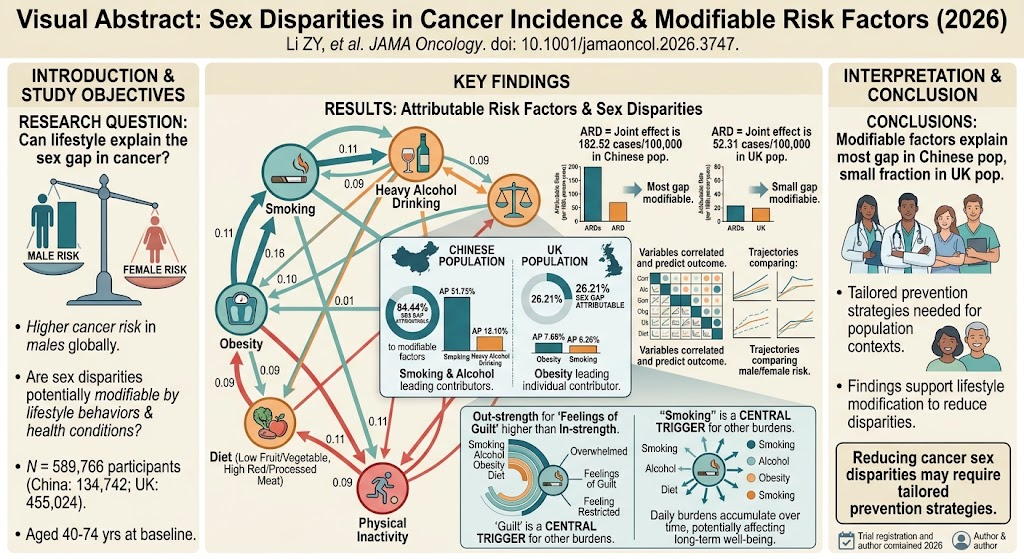
Sex disparities in cancer incidence are evident globally, with males at higher risk than females.
Modifiable lifestyle factors such as smoking, heavy alcohol consumption, and obesity largely explain this disparity in some populations, notably in China.
Differences in attributable risk proportions between Chinese and UK cohorts underscore the need for population-specific prevention strategies.
Emerging evidence from meta-analyses supports the roles of diabetes, chronic diseases, oral health, and autoimmune conditions as modifiers of cancer risk differing by sex.