Highlight
This large national cohort study reveals that fewer than half of adults discharged from the emergency department (ED) for diabetes-related conditions engage in outpatient follow-up care within 30 days. Key factors influencing follow-up include age, insurance type, prior healthcare engagement, and socioeconomic and racial backgrounds. These findings signal significant gaps in the continuity of diabetes care post-ED discharge.
Study Background
Diabetes mellitus remains a prevalent and complex chronic disease affecting millions globally. In the United States alone, over 16 million adult patients annually visit emergency departments for acute complications or exacerbations related to diabetes. While many such patients are discharged without hospital admission, post-ED outpatient follow-up is crucial for monitoring glycemic control, adjusting medications, and preventing recurrent morbidity.
Despite the importance of outpatient care continuation, real-world data on follow-up care rates and factors influencing these visits after an ED discharge for diabetes are limited. Understanding these patterns is vital to addressing care gaps that contribute to morbidity, healthcare utilization, and disparities.
Study Design
This retrospective cohort study analyzed a nationally representative dataset of adults covered by commercial insurance or Medicare Advantage who were discharged from the ED with a principal diagnosis related to type 1 or type 2 diabetes mellitus. The index period spanned from 2016 through 2022.
The primary outcome was an outpatient visit specifically for diabetes-related care occurring within 30 days of ED discharge. A return ED visit before outpatient follow-up was considered a competing event in the analysis.
Researchers employed multivariable competing risk regression models to identify adjusted hazard ratios predicting outpatient follow-up. Covariates included demographic factors (age, sex, race/ethnicity), insurance status, socioeconomic indicators (such as Medicare low-income subsidy), clinical parameters (comorbidity burden, diabetes type), and prior outpatient healthcare engagement.
Key Findings
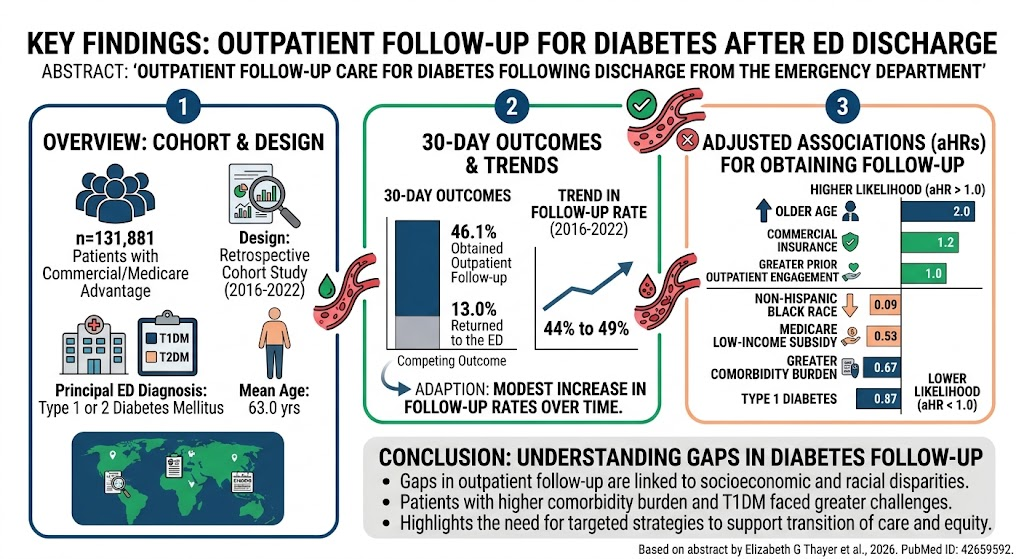
The study cohort comprised 131,881 adults with diabetes discharged from the ED, with a mean age of 63.0 years and a slight female predominance (51.6%). Within 30 days post-discharge, 46.1% (60,798 patients) engaged in outpatient follow-up care addressing diabetes, whereas 13.0% (17,099 patients) returned to the ED before receiving outpatient care.
There was a modest upward trend in outpatient follow-up rates from 44% in 2016 to 49% in 2022, suggesting some improvement over time.
Adjusted analyses identified several significant associations:
- Older age: Patients in older age groups had a higher likelihood of outpatient follow-up, potentially reflecting increased healthcare engagement or perceived vulnerability.
- Insurance type: Those with commercial insurance showed greater follow-up rates compared to Medicare Advantage beneficiaries.
- Prior outpatient engagement: Greater prior use of outpatient healthcare services strongly predicted timely follow-up, indicating established care patterns.
- Race and socioeconomic factors: Non-Hispanic Black patients were less likely to obtain follow-up care compared to non-Hispanic White patients, highlighting persistent racial disparities. Similarly, patients receiving Medicare low-income subsidies had lower follow-up rates, suggesting socioeconomic barriers.
- Clinical complexity: Higher comorbidity burden and a diagnosis of type 1 diabetes were associated with lower likelihood of outpatient follow-up, potentially reflecting distinct challenges in care coordination for these subgroups.
Expert Commentary
This study importantly illuminates a critical discontinuity in diabetes care following ED discharge. Given the risks of poor glycemic control, medication mismanagement, and recurrent acute complications, outpatient follow-up represents an essential component of comprehensive diabetes management.
The disparities identified align with broader systemic inequities in healthcare access and utilization, reinforcing the need for targeted approaches to support vulnerable populations. These might include enhanced care coordination, patient navigation services, telehealth expansions, or tailored education programs.
Despite the strengths of a large national sample and robust statistical modeling, the study’s retrospective nature and reliance on administrative claims data limit insight into patient-reported barriers, quality of follow-up care, and clinical outcomes beyond visit occurrence. Further prospective research is warranted to develop and test interventions aimed at improving post-ED care transitions for patients with diabetes.
Conclusion
This large-scale cohort study uncovers a concerning reality: fewer than half of adults discharged from the ED for diabetes-related issues receive outpatient follow-up care within 30 days. Factors such as older age and commercial insurance facilitate follow-up, whereas racial minority status, low socioeconomic status, and clinical complexity hinder it.
Addressing these gaps represents an urgent priority to improve care continuity, reduce preventable complications, and curb avoidable ED recidivism in this high-risk population. Future efforts should focus on systematic care transition strategies and equitable access to outpatient diabetes management.
Funding and Clinical Trials Information
The original study did not report funding sources or clinical trial registration data.
References
- Zikry HE, Mondal A, Jesteen S, Geng Z, Isenberg D, Duru OK, Elmore J, Kilaru AS. Outpatient Follow-up Care for Diabetes Following Discharge from the Emergency Department. J Gen Intern Med. 2026 Aug 26. doi:10.1007/s11606-026-xxxx-x. PMID: 42649455.
- American Diabetes Association. Standards of Medical Care in Diabetes—2024. Diabetes Care. 2024;47(Suppl 1):S1-S268.
- Poulsen MS, et al. Factors influencing follow-up care after emergency department visits for type 2 diabetes: A systematic review. Diabetes Res Clin Pract. 2023;197:110060.