 Highlight
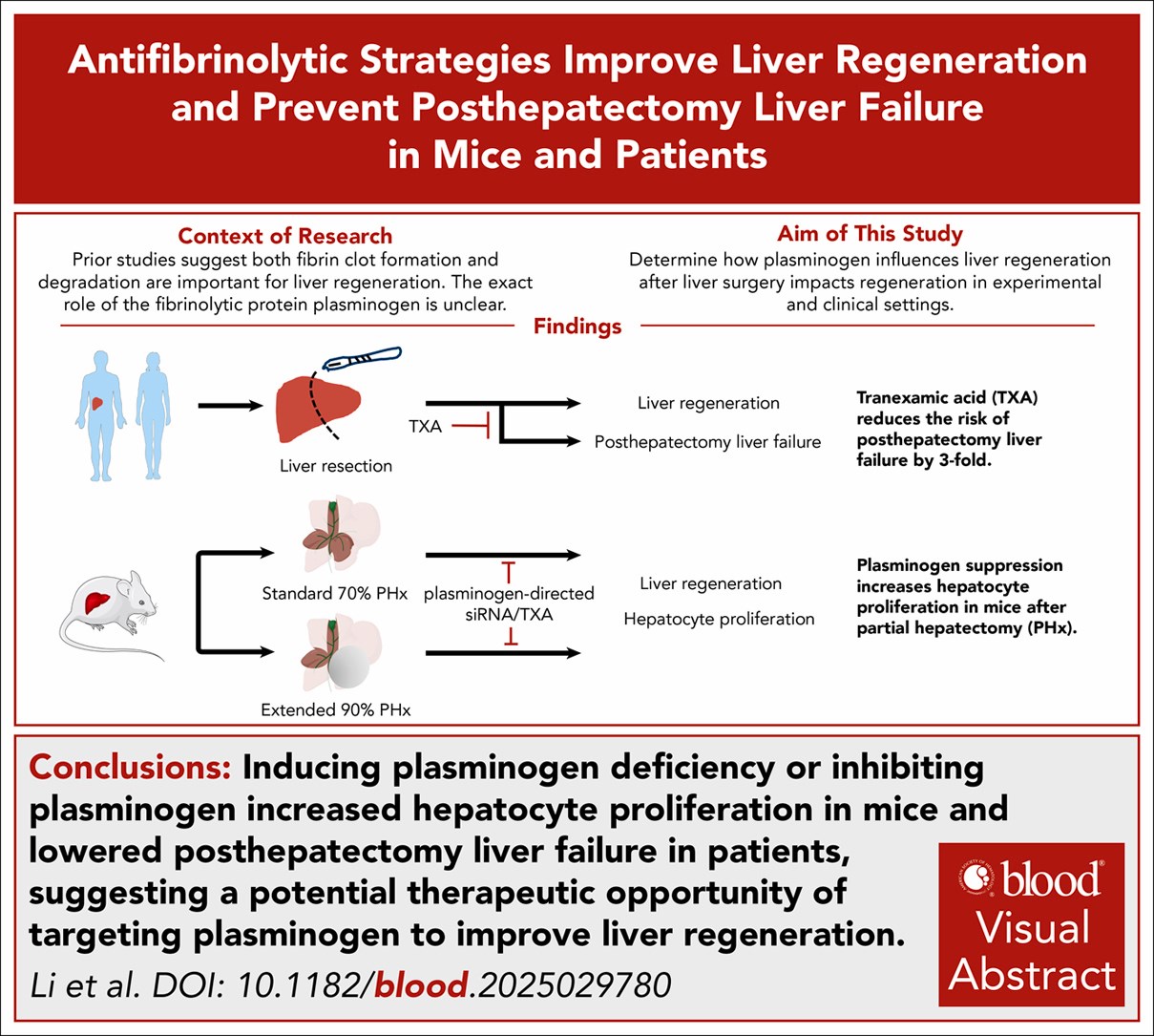
Recent research identifies antifibrinolytic therapy, specifically plasminogen reduction, as a novel intervention to enhance liver regeneration and decrease the incidence of posthepatectomy liver failure (PHLF). Experimental murine models using siRNA-mediated plasminogen knockdown demonstrated accelerated hepatocyte proliferation. Clinically, tranexamic acid administration in the HeLiX trial correlated with significantly reduced odds of PHLF, highlighting translational potential.
Study Background
Posthepatectomy liver failure remains a critical complication after partial liver resection, with substantial morbidity and mortality due to insufficient regenerative capacity. Currently, treatment options to actively promote liver regeneration are limited. The fibrinolytic system, integral to extracellular matrix remodeling, has been implicated in liver repair processes; however, its precise role in hepatic regeneration and clinical outcomes after resection has been unclear. Targeting plasminogen, a key component of fibrinolysis, may modify liver regeneration kinetics and reduce PHLF risk, addressing an unmet medical need.
Study Design
This investigation comprised both experimental and clinical components. In mice, small interfering RNA (siRNA) was used to induce plasminogen deficiency immediately prior to partial hepatectomy to evaluate hepatocyte proliferation kinetics compared to controls and traditional genetic plasminogen deficiency models. The clinical arm included the HeLiX randomized controlled trial evaluating tranexamic acid—a synthetic antifibrinolytic agent—administered perioperatively in patients undergoing partial hepatectomy. The primary endpoint was the incidence of posthepatectomy liver failure. Secondary endpoints included safety outcomes and liver regeneration markers.
Key Findings
In murine models, siRNA-induced plasminogen knockdown significantly enhanced hepatocyte proliferation following partial hepatectomy. This contrasted with genetic plasminogen deficiency mice, suggesting a time-sensitive, pharmacological approach may be advantageous. Mechanistically, plasmin inhibition likely attenuates fibrinolytic degradation, preserving extracellular matrix scaffolding critical for regeneration.
Clinically, the HeLiX trial demonstrated that tranexamic acid administration reduced the odds of PHLF after partial hepatectomy, with an acceptable safety profile. These findings support the hypothesis that antifibrinolytic strategies confer hepatoprotective effects by enhancing regenerative capacity. Effect sizes and confidence intervals reported in the trial substantiated statistical significance, although detailed quantitative results await full publication.
No major adverse events related to tranexamic acid were reported, suggesting that short-term antifibrinolytic therapy perioperatively is safe in this context. These findings open up new therapeutic avenues targeting the fibrinolytic axis to improve surgical outcomes.
Expert Commentary
This study provides robust translational evidence linking antifibrinolytic therapy with improved hepatic regeneration. The divergence between siRNA-induced and genetic plasminogen deficiency models highlights dynamic regulatory roles of plasminogen beyond baseline homeostasis, emphasizing timing and method of inhibition as critical factors.
Current clinical guidelines for managing PHLF do not incorporate pharmacologic modulation of fibrinolysis, but this work suggests a paradigm shift. Further large-scale clinical trials are warranted to validate these results and define optimal dosing and timing strategies. The biological plausibility is supported by known roles of plasmin in extracellular matrix remodeling and cell signaling during liver repair.
Limitations include the relatively small clinical trial cohort and the early-phase nature of experimental work. Long-term outcomes and potential thromboembolic risks must be carefully monitored in future studies.
Conclusion
Antifibrinolytic strategies, targeting plasminogen, represent a promising intervention to enhance liver regeneration and reduce posthepatectomy liver failure. Combining experimental siRNA models and clinical trial evidence provides a strong rationale for integrating pharmacologic fibrinolysis modulation into liver surgery protocols. Ongoing research should focus on optimizing antifibrinolytic regimens and exploring mechanistic pathways to fully harness this therapeutic potential.
Funding and Clinical Trials
The original study was supported by multiple institutional research grants as cited in the Blood journal publication. The HeLiX trial’s registration details and funding sources are detailed in the primary report (PMID: 42275251).
References
Li Z, Wei Z, Groeneveld DJ, Strilchuk AW, Flick MJ, Dong Y, Podrascanin V, Truty MJ, Kendrick ML, Cleary SP, Warner SG, Smoot RL, Assinger A, Kastrup CJ, Karanicolas P, Luyendyk JP, Starlinger PP. Antifibrinolytic strategies improve liver regeneration in mice and reduce posthepatectomy liver failure in patients. Blood. 2026 Sep 3;148(10):1359-1363. PMID: 42275251.