Highlight
- Ultrasound-guided suprascapular nerve block provides superior and sustained analgesia compared to intravenous fentanyl in traumatic scapular fractures.
- Significant reduction in rescue analgesia usage was observed with nerve block.
- Lower incidence of systemic adverse effects such as drowsiness and hypotension with suprascapular nerve block.
Study Background
Traumatic scapular fractures, although rare, are often associated with considerable pain that can impair respiratory mechanics and overall patient mobility. Timely and effective analgesia in the emergency department (ED) is crucial to optimize patient comfort, prevent complications, and facilitate early functional recovery. Opioids such as fentanyl are widely used for acute pain control but carry risks of systemic side effects like sedation, respiratory depression, and hypotension. Regional nerve blocks, specifically the suprascapular nerve block targeting the sensory innervation of the shoulder, have gained attention for their opioid-sparing potential and localized analgesia. However, comparative evidence between ultrasound-guided suprascapular nerve blocks and opioid analgesia in scapular fractures remains limited.
Study Design
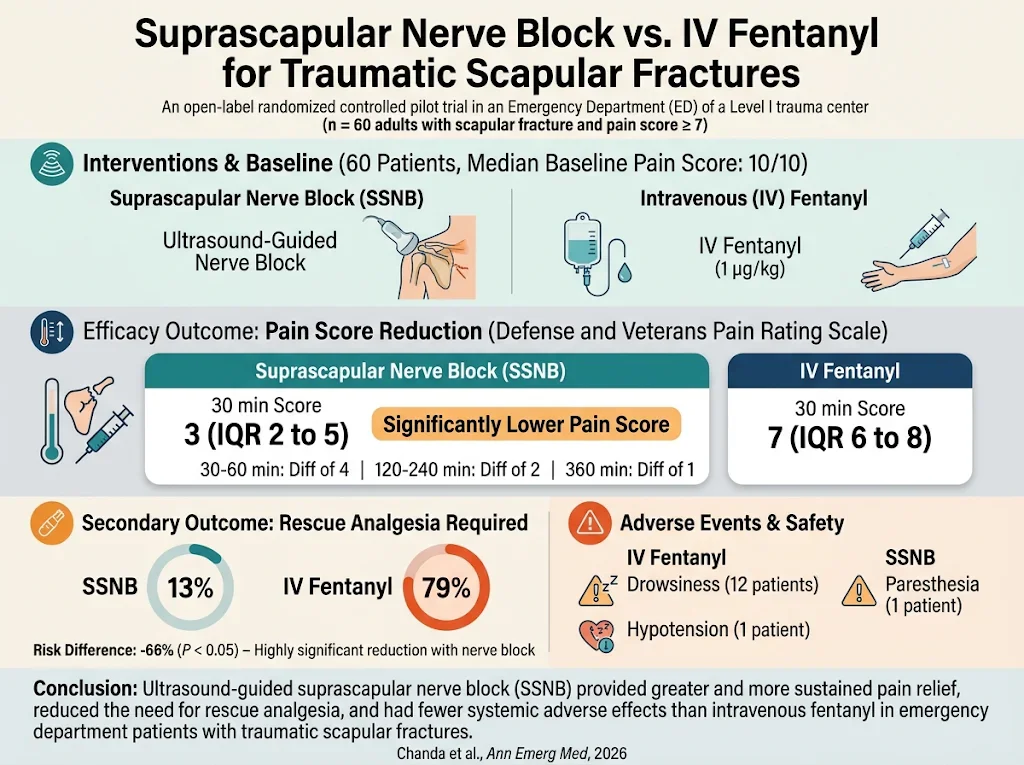
This was an open-label, randomized controlled pilot trial conducted at a Level I trauma center ED in North India. Adults presenting with traumatic scapular fractures and severe pain (Defense and Veterans Pain Rating Scale scores ≥7) were randomized (1:1) to receive either an ultrasound-guided suprascapular nerve block or intravenous fentanyl (1 μg/kg). Pain intensity was measured at baseline and at several intervals post-intervention (30, 60, 120, 240, and 360 minutes). Secondary outcomes included the requirement for rescue analgesics and the incidence of adverse effects.
Key Findings
Sixty patients were enrolled equally into two groups with a median baseline pain score of 10. Those who received suprascapular nerve blocks reported significantly lower pain scores across all measured time points compared to the fentanyl group. At 30 minutes, median pain scores were 3 (IQR 2 to 5) for the nerve block group versus 7 (IQR 6 to 8) in the fentanyl group, with a between-group difference of 4 (95% CI 3 to 4). This superiority persisted albeit diminishing over time, with median differences of 2 at 120 and 240 minutes, and 1 at 360 minutes.
The frequency of rescue analgesia was substantially lower in the nerve block group (13%) compared to fentanyl recipients (79%), with a risk difference of -66% (95% CI, 47.5 to 85.2). Adverse events were less frequent in the nerve block group: drowsiness was significantly more common in fentanyl-treated patients (12 vs. 2 cases), hypotension was reported once in the fentanyl group, and only one patient in the nerve block group experienced transient paresthesia.
Expert Commentary
This study provides compelling preliminary evidence supporting the analgesic and safety advantages of ultrasound-guided suprascapular nerve blocks over systemic opioids for scapular fracture pain management in the ED. The use of ultrasound guidance enhances accuracy and reduces procedural complications, while the nerve block’s site-specific action minimizes systemic opioid exposure and its associated side effects. Despite being a pilot trial with a limited sample size, the robust effect sizes observed warrant larger, multicenter studies to confirm reproducibility and assess long-term outcomes including opioid consumption and functional recovery.
Limitations include the open-label design potentially increasing bias and the single-center setting which may affect generalizability. Additionally, the study did not monitor respiratory parameters or long-term analgesic benefits. Future investigations could explore the integration of nerve blocks into multimodal pain management protocols across diverse trauma populations.
Conclusion
Ultrasound-guided suprascapular nerve block demonstrates superior and sustained analgesic efficacy with a better safety profile than intravenous fentanyl in patients with traumatic scapular fractures presenting to the ED. This approach may represent a valuable opioid-sparing strategy for acute pain control in this patient population. Confirmatory trials are needed to validate these findings, optimize procedural protocols, and evaluate broader clinical impacts including opioid stewardship and functional outcomes.
Funding and ClinicalTrials.gov
The original study did not specify funding sources or clinical trial registration details. Future studies should adhere to transparency standards by registering trial protocols prospectively.
References
- Chanda A, Bhoi S, Sinha TP, Gopinath B, Sahu AK, Gangdev A. Ultrasound-Guided Suprascapular Nerve Block Versus Intravenous Fentanyl for Analgesia in Patients Presenting to the Emergency Department With Traumatic Scapular Fractures. Ann Emerg Med. 2026 Nov 16. PMID: 43043325.
- Kim DH, Lin Y, Shafiq B, et al. Ultrasound-Guided Suprascapular Nerve Block for Shoulder Pain: A Systematic Review. Pain Med. 2019;20(9):1788-1799.
- Ganesh A, Prasad V. Pain management in scapular fractures: Role of regional nerve blocks. Trop Doct. 2021;51(3):184-189.
Specialty calculators
For clinical reference; use professional judgment.