Highlight
- First-episode optic neuritis often marks the initial presentation of chronic CNS inflammatory diseases such as MOGAD, NMOSD, and MS.
- Over 27% of patients with initial optic neuritis experience subsequent CNS inflammatory events within a median 2-year follow-up.
- The majority of secondary CNS events occur within two years after the initial optic neuritis episode, underlining the critical window for monitoring.
- Long-term neurological surveillance remains essential, given that only about one-third of patients remain classified as having isolated optic neuritis.
Study Background
Optic neuritis (ON) is a common acute inflammatory disorder of the optic nerve that frequently affects young adults and can lead to visual impairment. It often represents the first clinical manifestation of broader central nervous system (CNS) inflammatory diseases, such as multiple sclerosis (MS), neuromyelitis optica spectrum disorder (NMOSD), or myelin oligodendrocyte glycoprotein antibody-associated disease (MOGAD). Differentiating isolated ON from ON heralding systemic CNS inflammation remains crucial for prognosis, treatment planning, and long-term management. Until now, comprehensive longitudinal data on the evolution of diagnostic classifications and CNS event progression after an initial ON episode have been limited.Study Design
The ONSET Study is a multicenter retrospective cohort analysis involving 601 consecutive patients with a first episode of MRI-confirmed optic neuritis. These patients were recruited from 11 tertiary referral centers across Japan between January 2016 and December 2023. Clinical parameters including demographics, antibody status (notably for MOG and aquaporin-4 antibodies), initial treatments, subsequent neurological events, and final diagnoses were collected through detailed longitudinal follow-up. The primary outcome was the transition in diagnosis from isolated optic neuritis to other CNS inflammatory diseases by the study’s end.Key Findings
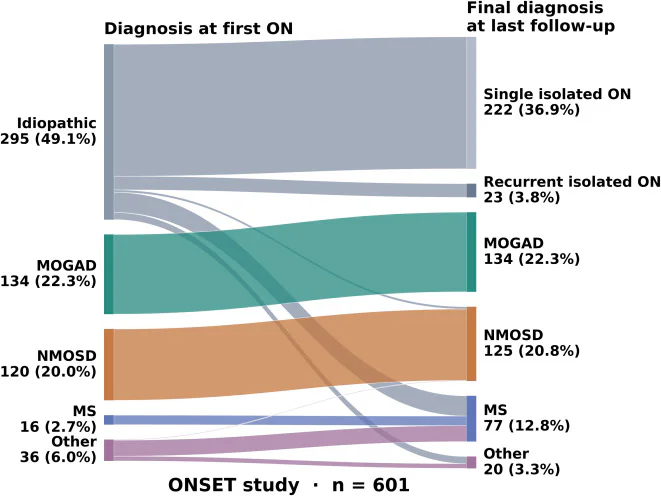
The median follow-up period was 2 years (interquartile range 1 to 4.5 years). At onset, diagnoses were distributed as idiopathic optic neuritis (49.1%), MOGAD (22.3%), NMOSD (20.0%), MS (2.7%), and other conditions (6.0%). By the end of follow-up, final diagnoses shifted notably with single isolated optic neuritis accounting for only 36.9%, recurrent isolated optic neuritis 3.8%, MOGAD unchanged at 22.3%, NMOSD increasing to 20.8%, MS rising substantially to 12.8%, and others decreasing to 3.3%. Approximately 27.6% (166 of 601) experienced CNS inflammatory events beyond the initial ON episode. Among these, recurrent optic neuritis was the most common subsequent event (58.8%), followed by encephalitis (22.9%) and myelitis (18.3%). Temporal analysis revealed that nearly half of the patients (48.9%) developed subsequent CNS inflammatory events within one year, and 74% within two years post initial ON. Critically, more than half (58.8%) of patients with post-onset events developed these events despite being off maintenance immunotherapy, including 68 patients after therapy discontinuation and 9 who never received maintenance treatment. This observation highlights challenges in treatment optimization and relapse prevention.Expert Commentary
The ONSET Study provides compelling evidence that optic neuritis is not merely an isolated ophthalmologic event but frequently a sentinel episode of systemic CNS inflammatory diseases. The high conversion rates to well-characterized autoimmune demyelinating conditions underscore the heterogeneity of ON and the diagnostic complexity clinicians face. The delineation of antibody status in this cohort aligns with current understanding that MOGAD and NMOSD are major contributors to inflammatory demyelinating syndromes presenting initially as ON. Recognition of these entities is vital due to their differing prognoses and treatment responses compared to classical MS. The study also raises important considerations regarding treatment duration and monitoring strategies. The fact that a majority of relapses occurred after immunotherapy withdrawal emphasizes the need for personalized long-term management plans balancing treatment risks and benefits. Limitations include the retrospective design and potential selection bias inherent in tertiary center cohorts, which may overrepresent more severe or complicated cases. Future prospective studies with standardized treatment protocols are warranted to optimize clinical care pathways.Conclusion
The ONSET Study substantiates that first-episode optic neuritis frequently heralds chronic CNS inflammatory disorders such as MOGAD, NMOSD, and MS. With over a quarter of patients experiencing additional CNS inflammatory events typically within two years, extended neurological surveillance and vigilant clinical follow-up is imperative. Recognition of antibody status and tailored immunotherapy are integral components to improving patient outcomes and preventing disease progression. This study highlights the evolving spectrum of optic neuritis and the importance of multidisciplinary approaches in diagnosis and management.Funding and Clinical Trials Registration
Details on study funding and trial registry are not provided in the primary publication.References
1. Mori S, Ueki S, Maekubo T, et al. The ONSET Study: Optic Neuritis Frequently Represents the Onset of Central Nervous System Inflammatory Disease. Ophthalmology. 2026 Nov 12. PMID: 43020384. 2. Jarius S, Paul F, Aktas O, et al. MOG encephalomyelitis: international recommendations on diagnosis and antibody testing. J Neuroinflammation. 2018;15(1):134. 3. Wingerchuk DM, Banwell B, Bennett JL, et al. International consensus diagnostic criteria for neuromyelitis optica spectrum disorders. Neurology. 2015;85(2):177-189. 4. Optic Neuritis Study Group. The clinical profile of optic neuritis: experience of the Optic Neuritis Treatment Trial. Arch Ophthalmol. 1991;109(12):1673-1678.Specialty calculators
For clinical reference; use professional judgment.