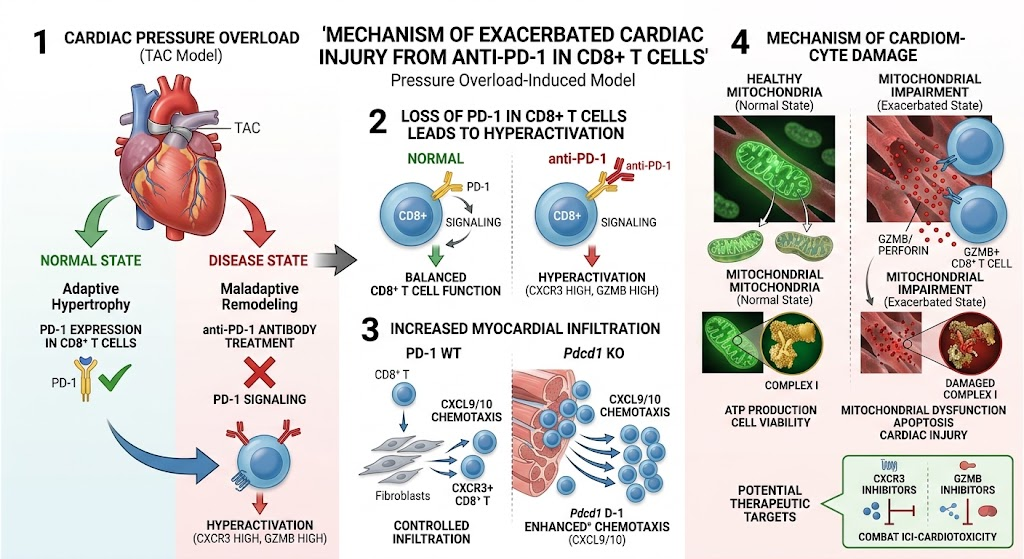
Anti-PD-1 antibody treatment and specific deletion of Pdcd1 in CD8+ T cells worsens pressure overload-induced cardiac remodeling and heart failure (HF) in murine models.
Increased myocardial infiltration of CXCR3+ CD8+ T cells under PD-1 inhibition leads to granzyme B and perforin-mediated mitochondrial complex I dysfunction in cardiomyocytes.
Cardiac fibroblast-derived chemokines CXCL9 and CXCL10 mediate chemotaxis of CXCR3+ CD8+ T cells, amplifying myocardial injury in pressure overload settings.
Targeting the CXCL9/CXCL10-CXCR3 axis or granzyme B pharmacologically or genetically rescues cardiac function, representing potential therapeutic strategies against anti-PD-1-associated cardiotoxicity.