Negative End-Expiratory Transpulmonary Pressure, Lung Collapse, and Non-Focal ARDS Drive Tidal Recruitment During Pressure Support Ventilation

Negative End-Expiratory Transpulmonary Pressure, Lung Collapse, and Non-Focal ARDS Drive Tidal Recruitment During Pressure Support Ventilation

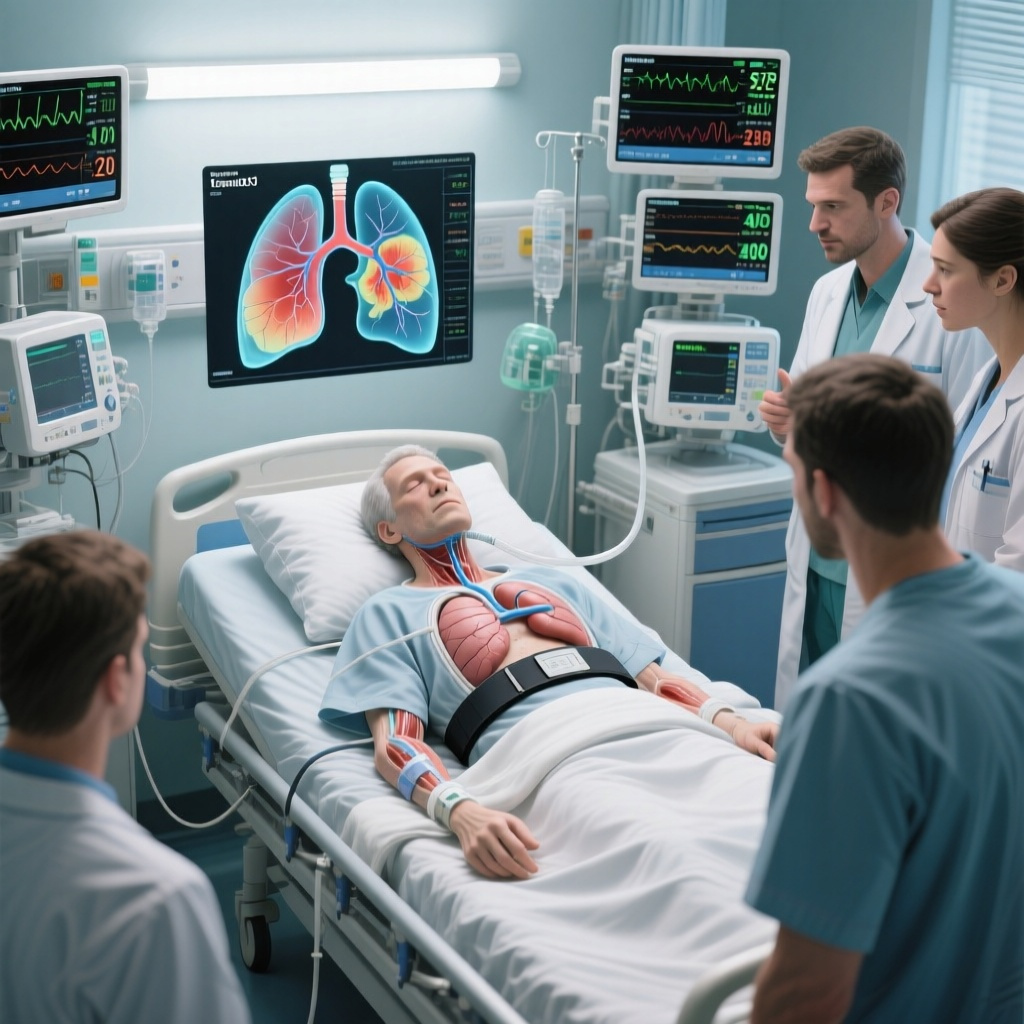
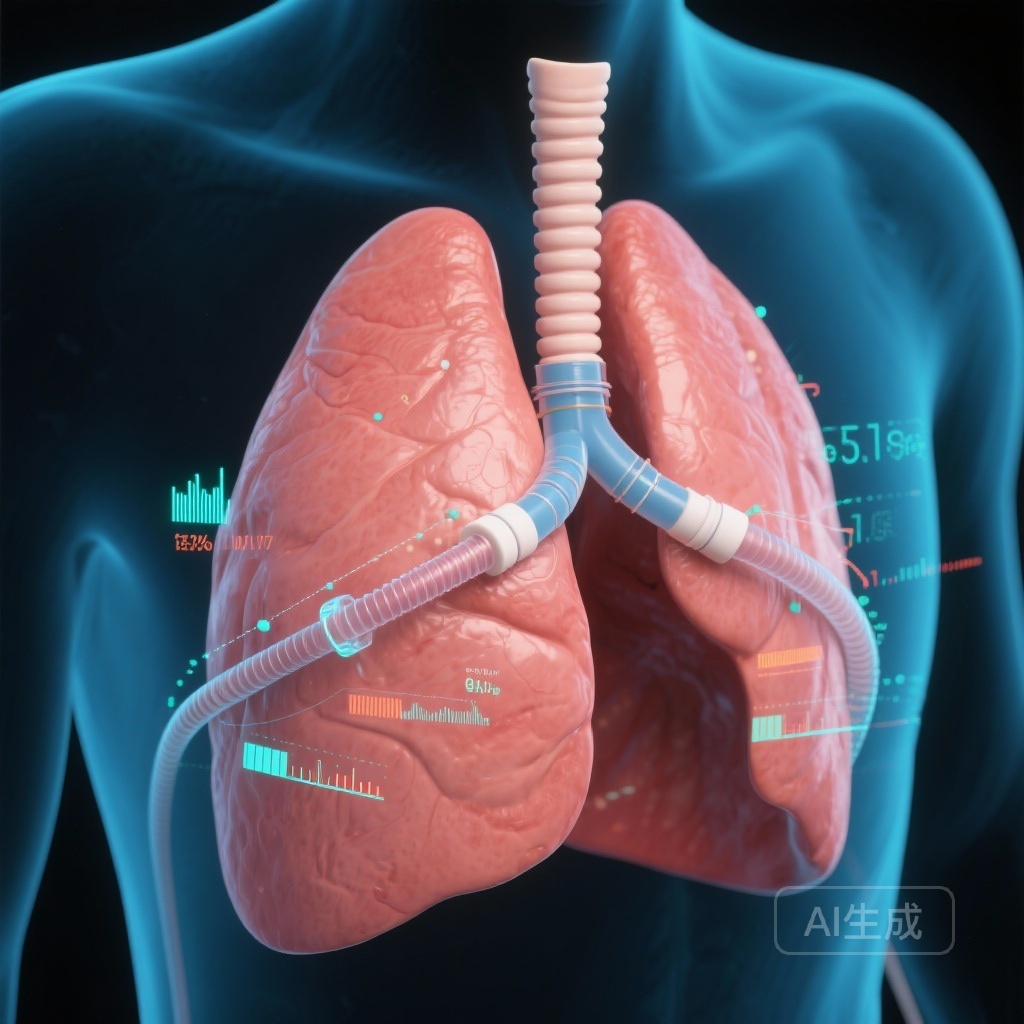
In spontaneously breathing ARDS patients on pressure support ventilation, tidal recruitment/derecruitment was strongly linked to more negative end-expiratory transpulmonary pressure, greater collapse, and non-focal infiltrates, while EIT-guided PEEP reduced recruitment/derecruitment compared with a low PEEP/FiO2 table approach.
High PEEP and Recruitment Manoeuvres Fail to Reduce Pulmonary Complications in One-Lung Ventilation: Insights from the PROTHOR Trial

High PEEP and Recruitment Manoeuvres Fail to Reduce Pulmonary Complications in One-Lung Ventilation: Insights from the PROTHOR Trial

The international PROTHOR trial reveals that using higher PEEP and recruitment manoeuvres during one-lung ventilation does not decrease postoperative pulmonary complications compared to a lower PEEP strategy, while notably increasing intraoperative hemodynamic risks like hypotension and arrhythmias.
The Paradox of Personalized PEEP: Why Driving Pressure-Guided Ventilation Failed to Improve Outcomes in Emergency Surgery

The Paradox of Personalized PEEP: Why Driving Pressure-Guided Ventilation Failed to Improve Outcomes in Emergency Surgery

This article evaluates the IMPROVE-2 trial and a recent meta-analysis on driving pressure-guided PEEP. Despite physiological improvements in lung compliance, individualized PEEP failed to reduce postoperative respiratory failure in emergency surgery, highlighting a disconnect between respiratory mechanics and clinical survival.