Introduction
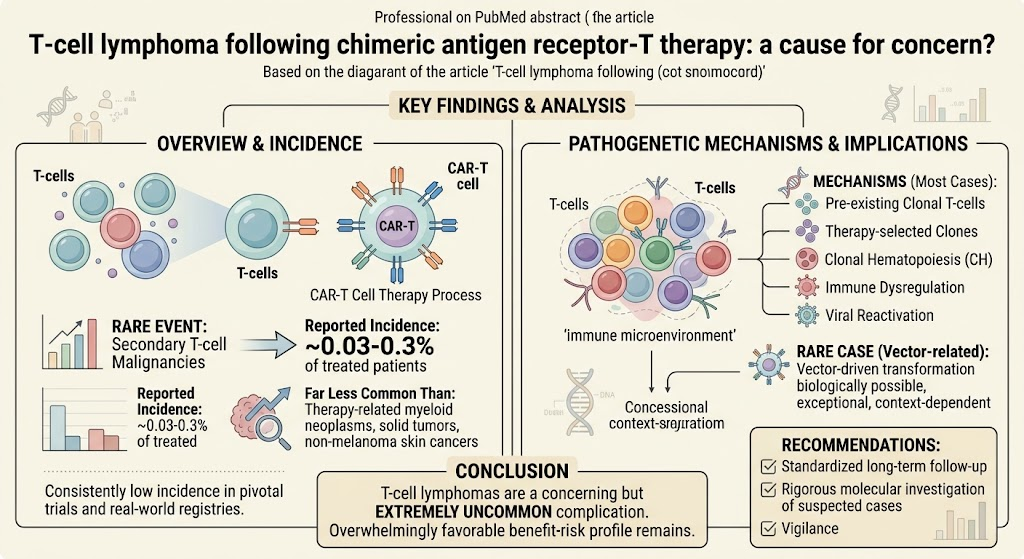
Chimeric antigen receptor (CAR) T-cell therapy has emerged as a revolutionary approach in the management of relapsed or refractory B-cell malignancies and multiple myeloma, significantly improving patient survival. However, as this therapeutic modality is used in a growing number of patients and long-term outcomes become clearer, safety concerns related to secondary malignancies have surfaced. Among these, the development of T-cell lymphomas post-CAR T infusion, although extremely rare, has gained increasing scrutiny from clinicians and regulatory agencies. This article critically examines the epidemiology, molecular underpinnings, pathogenesis, diagnostic complexities, and clinical considerations surrounding T-cell lymphomas arising after CAR T-cell therapy, situating these findings within the broader context of CAR T-cell safety and efficacy.