Targeted Monoclonal Antibody Therapy: Sotrovimab Shows Mortality Benefit in Hospitalized COVID-19 Patients with High Antigen Loads

Targeted Monoclonal Antibody Therapy: Sotrovimab Shows Mortality Benefit in Hospitalized COVID-19 Patients with High Antigen Loads

The RECOVERY trial demonstrates that sotrovimab significantly reduces 28-day mortality in hospitalized COVID-19 patients with high baseline serum antigen levels, highlighting the potential for biomarker-guided monoclonal antibody therapy despite the challenges of evolving viral variants.
Bridging the Care Gap: Smartphone-Based Pulmonary Rehabilitation Enhances Quality of Life and Physical Activity in Chronic Respiratory Disease

Bridging the Care Gap: Smartphone-Based Pulmonary Rehabilitation Enhances Quality of Life and Physical Activity in Chronic Respiratory Disease

A 12-week randomized controlled trial reveals that smartphone-based pulmonary rehabilitation significantly improves quality of life and physical activity in patients with chronic respiratory diseases, offering a scalable and feasible alternative to traditional center-based programs despite challenges in long-term adherence.

Precision Diabetology Validated: Algorithm for SGLT2i and DPP4i Selection Performs Accurately Across Major UK Ethnicity Groups

A retrospective cohort study validates an algorithm for choosing between SGLT2 and DPP4 inhibitors across diverse UK ethnicity groups, confirming its accuracy for precision medicine while highlighting the necessity of minor recalibration to optimize performance in different populations.
Short-Course Ianalumab Combined with Eltrombopag: A Potential Shift Toward Sustained Remission in Immune Thrombocytopenia

Short-Course Ianalumab Combined with Eltrombopag: A Potential Shift Toward Sustained Remission in Immune Thrombocytopenia

The VAYHIT2 Phase 3 trial demonstrates that adding the BAFF-R monoclonal antibody ianalumab to eltrombopag significantly extends treatment-free intervals and improves stable response rates in patients with relapsed or refractory immune thrombocytopenia (ITP) compared to eltrombopag alone.
Aspirin in the Healthy Elderly: ASPREE’s Clear Message — No Benefit, Higher Bleeding, and Unexpected Cancer Signal

Aspirin in the Healthy Elderly: ASPREE’s Clear Message — No Benefit, Higher Bleeding, and Unexpected Cancer Signal

ASPREE randomized ~19,000 older adults to low‑dose aspirin or placebo. Over ~4.7 years, aspirin did not improve disability‑free survival or reduce cardiovascular events, increased major bleeding, and showed a surprising rise in cancer‑related death; extended follow‑up confirmed no long‑term MACE benefit.
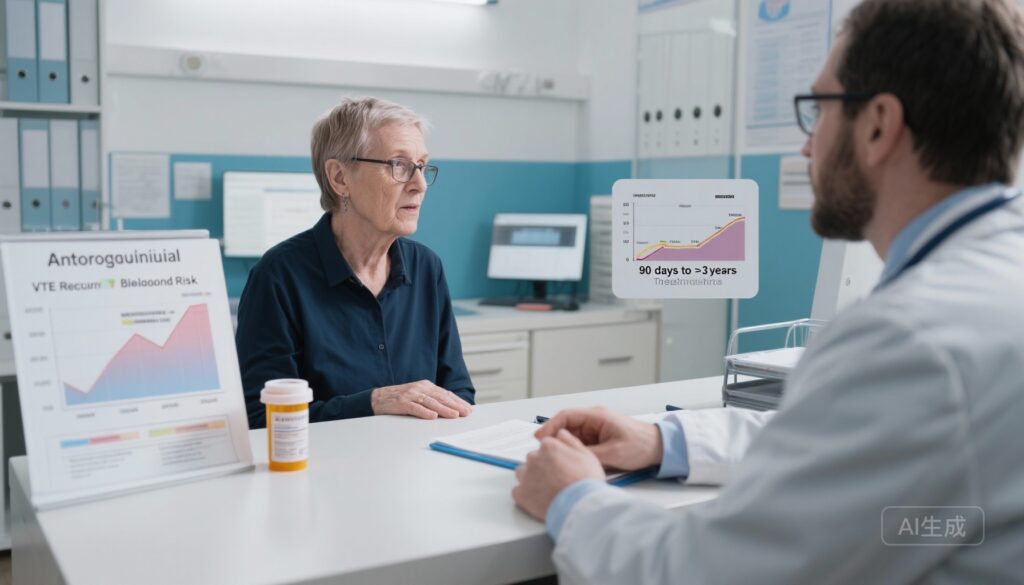
Continuing Anticoagulation After Unprovoked VTE Lowers Recurrence but Raises Bleeding — Real‑World Target Trial Emulation Shows Net Clinical Benefit

Continuing Anticoagulation After Unprovoked VTE Lowers Recurrence but Raises Bleeding — Real‑World Target Trial Emulation Shows Net Clinical Benefit

A large target‑trial emulation of US claims data found continued oral anticoagulation after ≥90 days for unprovoked VTE markedly reduced recurrent VTE and mortality, increased major bleeding, but produced an overall net clinical benefit that persisted through several years of follow‑up.
Remote Cognitive Training, Structured Rehabilitation and tDCS Failed to Improve Self‑Reported Cognitive Symptoms in Long COVID: Results from a 5‑Arm Phase 2 Randomized Trial

Remote Cognitive Training, Structured Rehabilitation and tDCS Failed to Improve Self‑Reported Cognitive Symptoms in Long COVID: Results from a 5‑Arm Phase 2 Randomized Trial

A multicenter phase 2 randomized trial found no differential benefit of adaptive computerized cognitive training, structured cognitive rehabilitation, or transcranial direct current stimulation (tDCS) versus active comparators for self‑reported cognitive symptoms in long COVID.