Highlight
– Contemporary fetal cardiomyopathy shows improved survival but remains associated with significant mortality and transplant risk in infancy.
– Genetic testing identifies causal variants in approximately one-third of cases, informing diagnosis and potential management.
– Fetal hydrops and prenatal diagnosis of extracardiac structural anomalies predict poorer outcomes by one year of age.
– Cardiac transplantation remains a critical therapeutic option for a subset of affected neonates.
Study Background
Fetal cardiomyopathy, a rare but severe condition characterized by abnormal myocardial function detected in utero, traditionally portends a high risk of perinatal morbidity and mortality. Advances in fetal cardiac screening, prenatal genetic diagnostics, and multidisciplinary management in recent years have transformed the landscape of diagnosis and potential interventions. Despite these advances, literature on current genetic associations and detailed clinical outcomes remains limited. Understanding contemporary outcomes and risk stratification markers is imperative to guide prenatal counseling, perinatal care planning, and postnatal management strategies.
Study Design
The study is a retrospective, descriptive cohort analysis conducted across 26 North American fetal cardiology centers in the Fetal Heart Society Research Collaborative, capturing cases diagnosed between January 2017 and December 2021. A rigorous inclusion criterion identified idiopathic fetal cardiomyopathy cases, excluding those with secondary causes such as maternal diabetes, extracardiac conditions, structural heart defects, or arrhythmias, thereby isolating primary myocardial disease. Genetic testing data, extracardiac structural anomaly status, clinical outcomes including fetal death, postnatal death, and cardiac transplantation were systematically evaluated. Statistical analyses included logistic regression to identify prenatal predictors of death or transplantation by one year of age, competing-risk analyses for cumulative incidence, and Kaplan-Meier survival estimation.
Key Findings
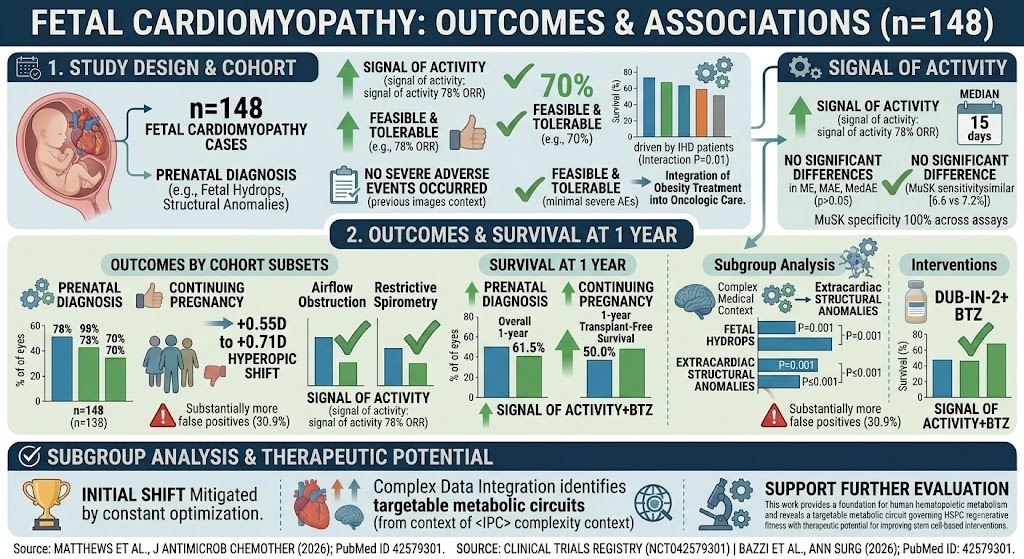
The study cohort consisted of 148 cases of fetal cardiomyopathy. Pregnancy termination was chosen in 6.7% (10/148). Among continuing pregnancies, fetal demise occurred in 8.6% (12/138), with 1.4% (2/138) lost to follow-up. One-year survival following continuation of pregnancy was 61.5% (85/138); however, only 50.0% (69/138) survived free of cardiac transplantation. Of the live births intending treatment (113 infants), 21.2% (24/113) were listed for cardiac transplantation, with 75% (18/24) successfully transplanted by age one year. Notably, a proportion (8.8%, 11/124) received palliative care from birth, reflecting severity variations.
Genetic testing yielded definitive etiologic variants in 34.0% (50/147), with an additional 27.2% (40/147) presenting variants of uncertain significance, underscoring the substantial genetic contribution and complexity in fetal cardiomyopathy. The presence of fetal hydrops at diagnosis was strongly associated with adverse outcomes (P=0.001), as was the prenatal detection of extracardiac structural anomalies (P≤0.001). These factors were independent predictors of death or necessity for cardiac transplantation before one year, emphasizing their utility in prenatal risk stratification. The data suggest a growing role for comprehensive genetic assessment alongside detailed anatomic evaluation in prognostic assessment.
This contemporary analysis indicates improved survival compared to historical cohorts, likely reflecting advances in prenatal detection, intensive neonatal care, and availability of cardiac transplantation. Nevertheless, the morbidity burden remains substantial, with half of survivors requiring transplant or succumbing within the first year.
Expert Commentary
This multicenter study represents a landmark characterization of fetal cardiomyopathy in the modern era, illuminating significant genetic underpinnings and validated risk factors for mortality leveraged from a robust cohort. It highlights the essential role of multidisciplinary fetal cardiology programs employing integrated genetic counseling and imaging. Notwithstanding improved outcomes, challenges remain, including variable interpretation of variants of uncertain significance and the need for longer-term follow-up extending beyond infancy to fully appreciate functional outcomes and quality of life.
From a mechanistic standpoint, fetal hydrops signifies gross cardiac decompensation and systemic congestion, explaining its strong prognostic influence. The association with extracardiac anomalies points toward potential syndromic forms of cardiomyopathy or broader developmental impact, reinforcing the importance of comprehensive fetal anatomical surveys.
Limitations include retrospective design and the inherent selection bias from exclusion of secondary cardiomyopathies. Future prospective studies incorporating next-generation sequencing panels and investigating prenatal therapeutic interventions are warranted. These findings align with contemporary guidelines advocating for systematic genetic evaluation in fetal cardiomyopathy and careful multidisciplinary counseling to navigate complex prenatal decisions.
Conclusion
The contemporary era of fetal cardiomyopathy is marked by improved survival and a clearer genetic etiologic landscape. However, only approximately half of affected fetuses survive transplant-free beyond one year. The identification of fetal hydrops and extracardiac structural anomalies as key prenatal risk factors provides valuable prognostic guidance. Genetic testing plays a critical role in diagnosis and should be integrated into fetal evaluation protocols. This work underscores the ongoing need for enhanced prenatal risk stratification, optimized perinatal care pathways, and expanded access to advanced therapies including cardiac transplantation to improve outcomes for this vulnerable population.
Funding and ClinicalTrials.gov
The original study did not specify external funding. It was conducted under the auspices of the Fetal Heart Society Research Collaborative. No associated clinical trial registration was referenced.
References
- McBrien A, et al. Fetal Cardiomyopathy in the Contemporary Era: A Multicenter Fetal Heart Society Research Collaborative Study. Circulation. Heart Failure. 2026 Aug 7:e014394. PMID:42565234.
- Santoro P, et al. Congenital cardiomyopathies: clinical features and genetics. Eur J Hum Genet. 2017;25(7):747-754.
- Moon-Grady AJ, et al. Prenatal diagnosis and outcomes of primary fetal cardiomyopathies. Prenat Diagn. 2014;34(3):252-259.
- Kaufman BD, et al. Genetic testing in fetal cardiomyopathy: current status and challenges. Prenat Diagn. 2020;40(7):842-849.