The Intersection of Ecosystems and Human Organs
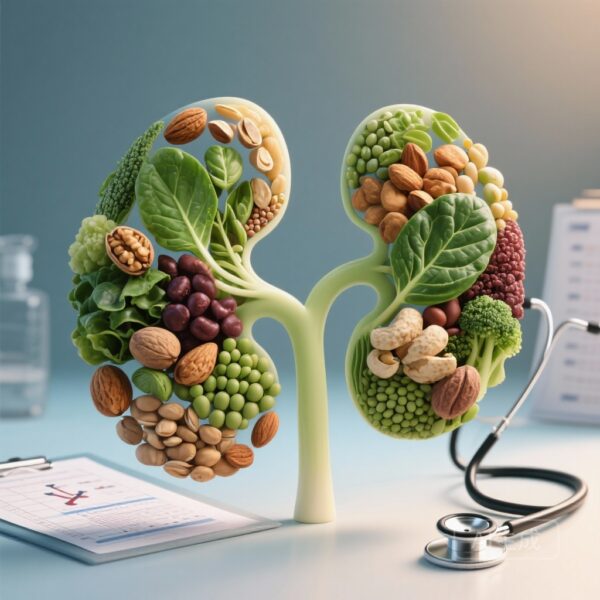
In an era defined by the twin crises of climate change and a global surge in non-communicable diseases, medical science is increasingly looking toward ‘One Health’ solutions—strategies that benefit both the environment and the human body. Among the most promising of these is the Planetary Health Diet (PHD). Originally proposed by the EAT-Lancet Commission in 2019, this dietary framework was designed to feed a growing global population within planetary boundaries. However, emerging evidence suggests its benefits extend far beyond carbon sequestration and biodiversity preservation. New data indicates that what is good for the Earth is remarkably protective for the human kidney.
A Case Study: Mark’s Path to Prevention
Consider Mark, a 54-year-old high school teacher from Columbus, Ohio. With a family history of hypertension and a personal habit of high-protein, meat-heavy ‘grab-and-go’ meals, Mark’s latest lab results showed a creeping rise in serum creatinine and a slight dip in his estimated glomerular filtration rate (eGFR). While not yet in the territory of Chronic Kidney Disease (CKD), he was on a trajectory that concerned his primary care physician. Mark felt overwhelmed by traditional diets. He was worried about his health but also increasingly anxious about the environmental footprint of his lifestyle. When his doctor suggested a ‘Planetary Health’ approach, Mark found a motivation that transcended just ‘watching his numbers.’ By shifting his focus to whole grains, legumes, and a rainbow of vegetables, Mark wasn’t just filtering his blood more efficiently; he was participating in a global movement. Within six months, his blood pressure stabilized, and his kidney function markers leveled off. Mark’s story is becoming a blueprint for modern preventive nephrology.
Scientific and Clinical Evidence: What the Data Tell Us
The scientific foundation for Mark’s success is bolstered by a landmark study recently published in Mayo Clinic Proceedings. Researchers Gómez-Cao et al. analyzed data from 98,374 middle-aged adults within the UK Biobank, a massive longitudinal cohort. The participants were followed for a median of 9.41 years to see who would develop Chronic Kidney Disease.The researchers used a Planetary Health Diet Index (PHDI) to score participants’ adherence to the EAT-Lancet recommendations. The results were striking: those in the highest quintile of adherence—those whose diets most closely mirrored the planetary health ideal—had a 26% lower risk of developing CKD compared to those in the lowest quintile (Hazard Ratio 0.74). The study highlighted specific dietary drivers of this protection:
Key Protective Factors:
- High consumption of vegetables, fruits, and whole grains.
- Low consumption of starchy vegetables (like potatoes).
- Minimal intake of added sugars and fruit juices.
- Reduced consumption of red meat and poultry.
The robust nature of this study, involving nearly 100,000 individuals, provides high-level evidence that dietary patterns prioritized for environmental sustainability are intrinsically linked to renal longevity.
Why the Kidney Prefers a Planetary Diet
To understand why a plant-forward diet protects the kidneys, we must look at the physiological ‘workload’ of the organ. The kidneys are responsible for maintaining acid-base balance and filtering nitrogenous waste.
1. The Acid Load Theory
Animal proteins, particularly red meats and aged cheeses, are high in sulfur-containing amino acids. When metabolized, these produce a significant amount of fixed acid. To neutralize this, the kidneys must work harder, a state known as hyperfiltration. Over decades, this high ‘Potential Renal Acid Load’ (PRAL) can cause tubular injury and interstitial fibrosis. In contrast, fruits and vegetables provide alkaline precursors that ease this burden.
2. Inflammation and Oxidative Stress
CKD is increasingly recognized as a state of chronic low-grade inflammation. The Planetary Health Diet is rich in antioxidants, phytonutrients, and fiber. These components modulate the gut microbiome, reducing the production of uremic toxins like p-cresol sulfate and indoxyl sulfate, which are known to accelerate kidney decline.
3. Endothelial Health
The kidneys are essentially massive bundles of delicate blood vessels (the glomeruli). The high-fiber, low-saturated-fat profile of the PHDI improves endothelial function and systemic blood pressure, the two most critical factors in preventing the vascular damage that leads to CKD.
The Planetary Health Diet Index (PHDI) Components
To help clinicians and patients visualize this shift, the following table outlines the 14 food groups evaluated in the PHDI and their target directions for kidney health.
| Food Group | Recommended Action | Kidney Health Impact |
|---|---|---|
| Whole Grains | High Intake | Improved fiber; lower inflammation |
| Tubers/Starchy Veg | Limited Intake | Lower glycemic load |
| Vegetables | High Intake | Alkaline load; antioxidant boost |
| Fruits | High Intake | Vitamin C; blood pressure regulation |
| Dairy Foods | Moderate/Low | Balance of calcium vs. phosphorus |
| Red Meat (Beef/Lamb/Pork) | Very Low | Reduced acid load and saturated fat |
| Poultry | Low/Moderate | Lower nitrogenous waste than red meat |
| Eggs | Low/Moderate | Efficient protein source |
| Fish | Moderate | Omega-3 fatty acids |
| Legumes | High Intake | Plant-based protein; low phosphorus absorption |
| Nuts | Moderate/High | Healthy fats; satiety |
| Unsaturated Oils | Primary Fat Source | Cardiovascular/endothelial support |
| Saturated Fats | Minimal | Reduced arterial stiffness |
| Added Sugars | Minimal | Prevention of diabetic nephropathy |
Misconceptions and Harmful Behaviors
One of the biggest hurdles in transitioning patients to a planetary health diet is the ‘Protein Myth.’ Many patients believe they need large quantities of animal protein to maintain muscle mass, especially as they age. However, the UK Biobank data suggests that the kidneys process plant proteins far more efficiently. Another misconception is that ‘plant-based’ automatically means ‘healthy.’ A diet high in French fries, white bread, and sugary sodas is technically plant-based but scores poorly on the PHDI and is detrimental to kidney health.Furthermore, many clinicians previously feared that high-plant diets would cause hyperkalemia (high potassium) in kidney patients. Recent evidence suggests that the potassium in whole plants is absorbed more slowly and is often accompanied by fiber that promotes potassium excretion in the stool, making it safer than once thought for those with early-stage CKD.
Practical Recommendations for Clinicians and Patients
Shifting to a Planetary Health Diet does not require an overnight transition to veganism. The EAT-Lancet model is a ‘flexitarian’ approach. Here are practical steps to get started:
- The 50% Rule: Aim for half of every plate to be filled with non-starchy vegetables and fruits.
- Swap the Grains: Replace white rice and pasta with farro, quinoa, or barley. These have a lower glycemic index and higher fiber.
- Legume-Forward Proteins: Replace red meat with lentils or chickpeas at least three times a week. Legumes have a ‘phosphorus-to-protein’ ratio that is much more favorable for the kidneys because plant-based phosphorus (phytates) is less bioavailable to humans.
- Mind the Sugars: Fruit juices are often seen as healthy, but the concentrated fructose can lead to uric acid production, which is a known kidney stressor. Stick to whole fruits.
Expert Insights and Commentary
Dr. Elena Richardson, a specialist in lifestyle nephrology (fictional expert), notes: ‘For years, we focused on what patients should *remove* from their diets—less salt, less protein. The Planetary Health Diet shifts the conversation to what we should *add*. It’s a positive, proactive framework. By protecting the planet’s resources, we are inherently using the tools—fiber, antioxidants, and alkalinity—that our kidneys evolved to thrive on.’The Gomez-Cao study is a clarion call for public health policy. If adherence to these guidelines can reduce CKD risk by over a quarter, the implications for healthcare cost savings are astronomical. CKD is one of the most expensive chronic conditions to manage, particularly once it reaches the dialysis stage.
Conclusion
The Planetary Health Diet represents a rare ‘win-win’ in the world of medicine. It addresses the macro-level challenge of environmental sustainability while providing micro-level protection for the delicate filtration systems within our own bodies. As the data from the UK Biobank suggests, we no longer have to choose between a healthy planet and a healthy self. By embracing a diet rich in whole grains, fruits, and vegetables, and lowering our reliance on processed sugars and animal fats, we can filter out the toxins of the modern world—both in our atmosphere and in our blood.
References
1. Gómez-Cao M, Maroto-Rodriguez J, Ortolá R, Carballo-Casla A, Rodriguez-Artalejo F, Sotos-Prieto M. Adherence to a Planetary Health Diet and Risk of Chronic Kidney Disease: A Longitudinal Cohort Study From the UK Biobank. Mayo Clin Proc. 2025;S0025-6196(25)00466-5. doi:10.1016/j.mayocp.2025.07.035.
2. Willett W, Rockström J, Loken B, et al. Food in the Anthropocene: the EAT-Lancet Commission on healthy diets from sustainable food systems. Lancet. 2019;393(10170):447-492. doi:10.1016/S0140-6736(18)31788-4.
3. Kalantar-Zadeh K, Joshi S, Schlueter R, et al. Plant-Dominant Low-Protein Diet for Conservative Management of Chronic Kidney Disease. Nutrients. 2020;12(7):1931. doi:10.3390/nu12071931.