Highlight
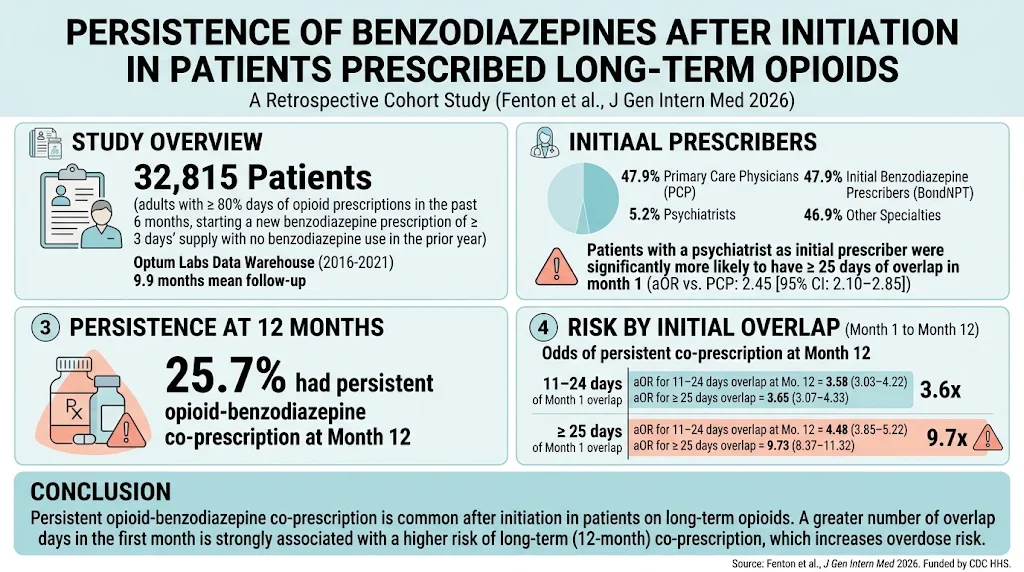
- Approximately 26% of patients on long-term opioids persist with overlapping benzodiazepine prescriptions one year after initiation.
- Longer durations of opioid-benzodiazepine overlap early after benzodiazepine initiation strongly predict persistent co-prescription at one year.
- Initial benzodiazepine prescriptions by psychiatrists are associated with higher overlap days compared to primary care providers.
- Persistent overlapping prescriptions pose increased clinical risk, including heightened overdose potential, warranting targeted prescribing interventions.
Study Background
The co-prescription of opioids and benzodiazepines represents a critical public health issue due to the synergistic respiratory depressant effects of these drugs, which significantly increase the risk of overdose and mortality. Despite guidelines that caution against concurrent use, benzodiazepine prescriptions remain common among patients on long-term opioid therapy, often driven by concurrent indications such as anxiety or insomnia. Understanding the patterns and persistence of benzodiazepine use after initiation in this vulnerable population is essential to inform clinical risk mitigation strategies and guide prescribing practices.
Study Design
This retrospective cohort study leveraged data from the Optum Labs Data Warehouse, encompassing de-identified medical and pharmacy claims along with enrollment information from a nationally representative sample of commercial and Medicare Advantage enrollees in the United States. The study population included 32,815 adults who were prescribed opioids for at least 80% of days during a six-month baseline period and received a new benzodiazepine prescription (defined as a supply of ≥3 days) between July 1, 2016, and December 31, 2021, with no benzodiazepine use in the preceding year.
Outcomes focused on quantifying the extent of overlapping opioid and benzodiazepine prescriptions in each 30-day interval during up to one year of follow-up. Overlap was categorized into four groups per month: no overlap (0 days), minimal overlap (1–10 days), moderate overlap (11–24 days), and extensive overlap (≥25 days). The study further assessed associations between initial overlap days, prescriber specialty, and persistence of overlapping use at one year through adjusted odds ratios (aORs).
Key Findings
The cohort’s mean follow-up duration was 9.9 months. Initial benzodiazepine prescriptions were primarily issued by primary care physicians (47.9%), other specialties (46.9%), and psychiatrists (5.2%). At 12 months post-initiation, 25.7% of patients exhibited persistent opioid-benzodiazepine overlap.
Risk of persistent overlap was strongly related to the extent of overlap during the first month following benzodiazepine initiation. Compared with patients having 1–10 days of overlap in month one, the odds of moderate overlap (11–24 days) at month 12 were substantially elevated if initial overlap was 11–24 days (aOR 3.58; 95% CI 3.03–4.22) or ≥25 days (aOR 4.48; 95% CI 3.85–5.22). The odds of extensive overlap (≥25 days) at one year were even higher for those with initial extensive overlap in month one (aOR 9.73; 95% CI 8.37–11.32), indicating a strong dose-response relationship.
Notably, benzodiazepine initiation by psychiatrists was associated with a significantly higher likelihood of extensive overlap in month one compared to primary care physicians (aOR 2.45; 95% CI 2.10–2.85), suggesting specialty-related differences in prescribing patterns or patient complexity.
Expert Commentary
This study adds valuable real-world evidence on the persistence of concurrent benzodiazepine use in patients receiving long-term opioids, highlighting a substantial proportion who continue overlapping therapy well beyond initial benzodiazepine introduction. The clear dose-response relationship between early and persistent overlap suggests that initial prescribing decisions have long-term implications for patient risk.
Benzodiazepines and opioids each carry individual risks, but their combined sedative effects magnify the risk of respiratory depression, overdose, and death. Clinical guidelines from agencies such as the CDC emphasize caution and recommend avoiding co-prescribing whenever possible. The findings of a higher risk of persistent overlap when psychiatrists initiate benzodiazepine prescriptions might reflect patient complexity, psychiatric comorbidities, or differing specialty prescribing cultures. These observations underscore the need for coordinated care and careful medication review, especially in psychiatric populations also exposed to opioids.
Study limitations include reliance on claims data without direct information on actual medication consumption or clinical indications, which may influence prescribing persistence. Furthermore, confounding factors such as severity of underlying pain or psychiatric disorders were not fully explored and may contribute to ongoing benzodiazepine use.
Conclusion
The persistence of overlapping benzodiazepine and opioid prescriptions is common in patients receiving long-term opioid therapy, with early duration of overlap strongly predictive of continued co-prescription. Given the amplified overdose risks associated with combined use, this study reinforces the urgent need for targeted interventions to optimize prescribing practices, including vigilant monitoring after benzodiazepine initiation and enhanced collaboration among prescribers. Future research should explore patient-centered strategies to safely reduce or avoid dual prescribing when feasible, balancing symptom management with overdose prevention.
Funding and ClinicalTrials.gov
The study utilized de-identified administrative claims data from a previously established commercial database and did not receive specific external funding. No clinical trials registration applicable.
References
- Fenton JJ, Fang SY, Stewart S, et al. Persistence of Benzodiazepines After Initiation in Patients Prescribed Long-term Opioids: Retrospective Cohort Study. J Gen Intern Med. 2026 Nov 10. PMID: 43009704.
- Centers for Disease Control and Prevention. CDC Guideline for Prescribing Opioids for Chronic Pain — United States, 2016. MMWR Recomm Rep. 2016;65(RR-1):1-49.
- Park TW, Saitz R, Ganoczy D, Ilgen MA, Bohnert ASB. Benzodiazepine prescribing patterns and deaths from drug overdose among US veterans receiving opioid analgesics: case-cohort study. BMJ. 2015 Jul 30;350:h2698.
- Bachhuber MA, Hennessy S, Cunningham CO, Starrels JL. Increasing Benzodiazepine Prescriptions and Overdose Mortality in the United States, 1996–2013. Am J Public Health. 2016 May;106(5):686-8.
Specialty calculators
For clinical reference; use professional judgment.