Highlight
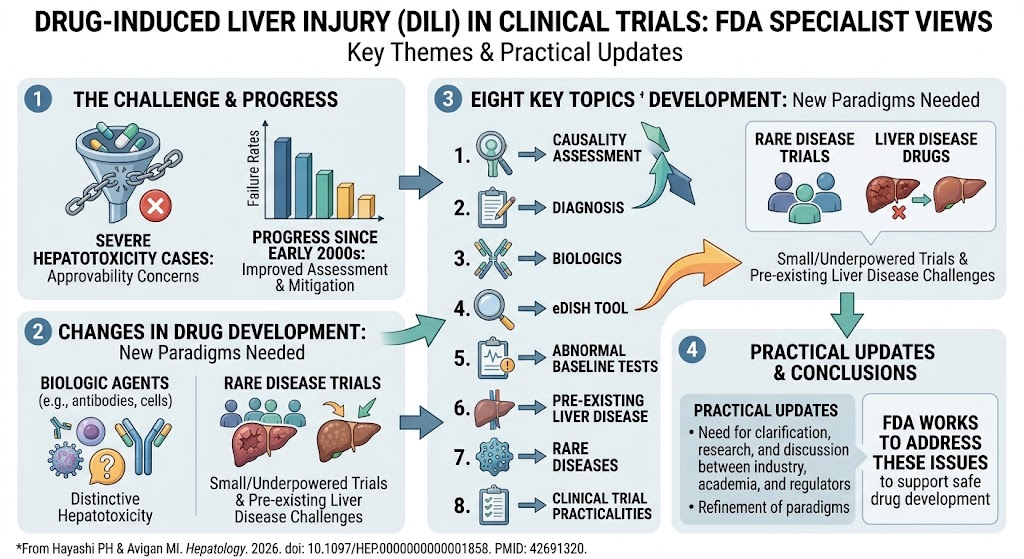
Drug-Induced Liver Injury (DILI) continues to jeopardize drug development and approval despite advances in risk assessment. The FDA specialists highlight the complexity of assessing hepatotoxicity with emerging biologic agents, the challenges posed by small rare disease trials, and the increasing focus on therapies targeting liver disease itself. Eight critical topics merit ongoing scrutiny to optimize DILI evaluation frameworks between regulators, industry, and academia.
Study Background
Drug-Induced Liver Injury is a leading cause of acute liver failure and a major reason for drug withdrawal or non-approval. Even a single case of severe DILI during clinical trials can halt drug development or raise serious concerns about a medication’s safety profile. Historically, progress in assessing and mitigating DILI risk emerged during the early 2000s; however, substantial challenges persist. Particularly, late-phase trial failures and post-marketing cases highlight the urgency of refining DILI detection and management.
The landscape of drug development is evolving with increased utilization of biologic agents, which may induce liver damage through immunologic or idiosyncratic mechanisms distinct from small molecules. Furthermore, regulatory evaluation is complicated by smaller, underpowered trials often inevitable in rare diseases, and an expanding pipeline of drugs aimed specifically at acute and chronic liver disorders. These shifts necessitate revisiting FDA paradigms for DILI risk assessment.
Study Design
This perspective article synthesizes the viewpoints and practical updates from DILI specialists at the FDA. It does not present novel clinical trial data but serves to review current challenges and proposed strategies in the context of clinical trial design, endpoints, and regulatory considerations. The discussion emphasizes the integration of clinical, biochemical, histological, and emerging biomarker data to determine causality and severity in DILI cases observed during drug development.
Key Topics and Findings
The FDA specialists identified eight key areas warranting focused review and discussion to improve DILI assessment in clinical trials:
- DILI Case Definition and Standardization: Ensuring consistent and clear criteria to identify and classify hepatotoxicity helps reduce variability in detection and reporting.
- Integration of Emerging Biomarkers: Incorporation of novel biomarkers could enhance early detection of DILI and distinguish it from underlying liver pathology or other confounders.
- Distinct DILI Phenotypes from Biologics: Unlike small molecules, biologic agents may cause immune-mediated liver injury or idiosyncratic reactions, necessitating different monitoring approaches and mechanistic understanding.
- Trial Size and Statistical Power for Rare Diseases: Smaller trials commonly used in rare diseases limit the ability to detect infrequent hepatotoxic events, calling for innovative trial designs or post-marketing surveillance strategies.
- Drugs Targeting Liver Disease: Drugs aimed at treating liver conditions pose unique challenges as baseline liver abnormalities may confound DILI assessment. Differentiating disease progression from drug-induced injury is critical.
- Benefit-Risk Assessment Frameworks: Stronger contextualization of DILI risk within the therapeutic benefit landscape is necessary to balance safety with unmet needs.
- Regulatory Guidance and Collaboration: Enhanced dialogue among regulators, industry, and academia is vital to harmonize DILI evaluation methods and responses to potential hepatotoxicity signals.
- Post-Market Surveillance: Continued vigilance after approval remains important to identify late-onset or rare DILI events not captured in trials.
The report underscores that despite strides in DILI risk management, hepatotoxicity remains a leading hurdle in drug development. FDA’s evolving strategies aim to refine detection algorithms, support innovation in biomarkers and trial design, and foster collaborative approaches to manage DILI risk effectively across diverse drug classes.
Expert Commentary
The FDA experts emphasize the critical need for precision in diagnosing and attributing DILI in the complex milieu of clinical trials. Given that DILI is often a diagnosis of exclusion, they advocate for standardized data collection, comprehensive causality assessment tools, and incorporation of mechanistic data when available. Furthermore, they highlight the challenges biologics present due to immune-related mechanisms and call for tailored monitoring protocols.
The reliance on smaller trials in orphan or rare diseases is recognized as a fundamental limitation for safety signal detection, suggesting complementary strategies such as adaptive trial designs and enhanced post-market registries. The complexity of distinguishing DILI from worsening baseline liver disease in studies targeting hepatic indications also requires careful interpretation of laboratory and histologic findings.
International regulatory harmonization and open industry-academia dialogue are encouraged to address gaps and align methodologies globally. The overall sentiment reflects cautious optimism that targeted research and transparent collaboration will improve the prediction, detection, and mitigation of DILI risk, ultimately facilitating safer drug development.
Conclusion
Drug-Induced Liver Injury remains a significant regulatory and clinical concern in drug development. Emerging drug classes and trial methodologies introduce complexity that demands adaptive, evidence-based frameworks for hepatotoxicity risk assessment. The FDA specialists’ outlined topics serve as a roadmap for ongoing refinement of DILI evaluation, emphasizing biomarker innovation, tailored monitoring for biologics, better trial designs especially in rare diseases, and enhanced collaboration across stakeholders. Addressing these challenges will be crucial to balancing drug safety with therapeutic innovation in the coming decade.
Continued research to validate novel diagnostic markers, mechanistic insights into diverse DILI phenotypes, and real-world safety data integration will strengthen future regulatory decision-making. Ultimately, this comprehensive, multidisciplinary approach aims to minimize DILI-related drug development failures and optimize patient safety.
Funding and ClinicalTrials.gov
As this article is a perspective from FDA specialists, no specific funding disclosures or registered clinical trials are associated.
References
- Hayashi PH, Avigan MI. Drug-Induced Liver Injury (DILI) in clinical trials: Views and practical updates from DILI specialists at FDA. Hepatology (Baltimore, Md.). 2026 Sep 2. PMID: 42691320.
- Temple RJ, Himmel MH. Safety of Newly Approved Drugs: Implications for Prescribing. JAMA. 2020;323(18):1829–1830.
- Robles-Diaz M, et al. Drug-induced liver injury: challenges and future perspectives. Expert Rev Gastroenterol Hepatol. 2019;13(5):409-419.
- European Medicines Agency. Guideline on the Investigation of Drug-Induced Liver Injury. EMA/CHMP/ICH/856522/2017.
- Senior JR. Drug Hepatotoxicity. Annu Rev Med. 2012;63:345-355.