Highlights
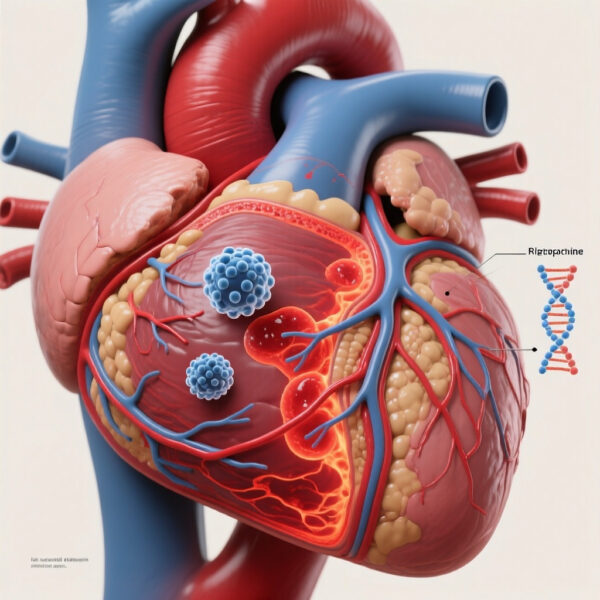
- A 2026 European Heart Journal study positions macrophage-enriched circular RNA circHIPK2 as a candidate upstream regulator of post-infarction inflammation, fibrosis, and ventricular dysfunction.
- The proposed mechanism extends beyond conventional macrophage polarization schemas: circHIPK2 binds G3BP1, promotes stress-granule formation, and amplifies inflammatory signaling.
- Macrophage-targeted circHIPK2 silencing improved remodeling in murine MI and showed ex vivo activity in living human myocardial slices co-cultured with engineered human macrophages.
- The work strengthens a broader translational concept in cardiovascular medicine: cell-specific RNA therapeutics may permit immune reprogramming after MI without broadly suppressing reparative healing.
Background
Myocardial infarction (MI) remains a leading cause of heart failure despite major advances in reperfusion, antithrombotic therapy, neurohormonal blockade, and secondary prevention. A substantial share of residual morbidity is driven not by ongoing epicardial occlusion, but by maladaptive infarct healing and remote ventricular remodeling. This remodeling process is shaped by a tightly timed inflammatory response in which innate immune cells, particularly monocytes and macrophages, coordinate debris clearance, matrix turnover, angiogenesis, scar maturation, and resolution of inflammation.
The biology is more nuanced than the traditional binary M1/M2 framework. Following MI, inflammatory Ly6Chigh monocytes/macrophages dominate early and support phagocytosis and cytokine release, whereas later reparative macrophage programs promote efferocytosis, extracellular matrix organization, and healing. Both insufficient inflammation and prolonged inflammation can be harmful. Excessive or persistent inflammatory macrophage activation contributes to infarct expansion, matrix degradation, ventricular dilation, fibrosis, and progression to heart failure.
These concepts have motivated repeated efforts to therapeutically modulate post-MI inflammation. Yet broad anti-inflammatory strategies have produced mixed results clinically, in part because they often fail to distinguish injurious from necessary immune functions. This has shifted attention toward higher-resolution targets such as cell subsets, temporal windows, and intracellular regulatory circuits.
Noncoding RNAs have emerged as one such regulatory layer. MicroRNAs and long noncoding RNAs have been implicated in vascular inflammation, fibrosis, and cardiomyocyte stress responses. Circular RNAs (circRNAs), covalently closed RNA molecules generated by back-splicing, are increasingly recognized as stable, cell- and context-specific regulators. They can modulate gene expression through several mechanisms, including microRNA sequestration, protein scaffolding, transcriptional regulation, and stress-response signaling. In the cardiovascular field, circRNAs have been linked to hypertrophy, ischemia-reperfusion injury, fibroblast activation, and vascular disease, but cell-specific functional evidence in post-MI immune remodeling has remained limited.
Against this background, Jung and colleagues report that circHIPK2 is selectively upregulated in inflammatory cardiac macrophages after MI and functions as a molecular switch for inflammatory signaling and fibrosis progression. Their study is notable not only for identifying a new circRNA target, but also for integrating mechanistic RNA biology, in vivo immune-cell targeting, multimodal phenotyping, and a translational human myocardial slice platform.
Key Content
1. The established biological framework: macrophages as central regulators of infarct healing
The new circHIPK2 study sits within a mature body of literature showing that macrophages are indispensable in post-MI repair. Foundational work by Frangogiannis and others established that infarct healing unfolds through overlapping inflammatory, proliferative, and maturation phases. Early recruitment of neutrophils and inflammatory monocytes clears necrotic tissue and releases cytokines, proteases, and alarmins. Subsequently, macrophage phenotypes shift toward reparative programs that support fibroblast crosstalk, angiogenesis, collagen deposition, and scar stabilization.
Experimental studies over the past two decades have shown that perturbing macrophage recruitment or phenotype can profoundly change infarct size, scar quality, and ventricular geometry. Nahrendorf and colleagues demonstrated the temporal recruitment of distinct monocyte subsets after MI, helping define the concept of sequential inflammatory and reparative waves. Subsequent work refined this paradigm by showing that tissue-resident and monocyte-derived cardiac macrophages are heterogeneous, that their ontogeny matters, and that their functions cannot be reduced to a simple M1/M2 dichotomy. Single-cell RNA sequencing has further clarified that macrophage states after MI are distributed across dynamic transcriptional continua rather than fixed categories.
Clinically, these insights help explain why broad anti-inflammatory approaches have often been disappointing: blocking the inflammatory response indiscriminately may impair clearance of necrotic tissue and destabilize healing, whereas late or selective dampening of persistent inflammatory macrophage programs may be beneficial. The challenge is therefore precision immunomodulation.
2. Why circRNAs are attractive candidates in cardiovascular immunobiology
CircRNAs are unusually stable because their covalently closed structure resists exonuclease degradation. Many are enriched in specific tissues or cell states and may serve both as biomarkers and functional mediators. Cardiovascular circRNA research initially focused on cardiomyocytes and endothelial cells, but immune-cell circRNAs are increasingly relevant because inflammatory activation involves rapid remodeling of RNA-protein complexes, translational arrest, and stress adaptation.
From a therapeutic standpoint, circRNAs offer several advantages and several unknowns. Their stability makes them attractive as disease markers, but the same property may complicate target suppression. They may act through diverse mechanisms that are not captured by canonical miRNA-sponge models. Importantly, a circRNA may have strong cell specificity even when its host gene is broadly expressed, potentially enabling more selective intervention than targeting the linear transcript.
Prior to the circHIPK2 report, cardiovascular circRNA studies had implicated molecules such as HRCR, circNFIB, circFoxo3, and circRNA_000203 in hypertrophy, fibroblast activation, or myocardial injury models. However, robust examples of macrophage-specific circRNAs functionally driving post-MI remodeling were sparse. This limited the translational maturation of the field.
3. The 2026 Jung et al. study: study design and core findings
In their European Heart Journal report, Jung, Schmidt, Sansonetti, Al Soodi, Thum, and colleagues identify circHIPK2 as a circRNA enriched in inflammatory cardiac macrophages after MI. The study is methodologically notable because it bridges several levels of evidence.
First, the investigators mapped circHIPK2 expression in macrophages during post-MI inflammatory evolution, linking expression kinetics to macrophage activation state. Second, they manipulated circHIPK2 in vitro using siRNA-mediated knockdown and overexpression approaches, demonstrating that circHIPK2 promotes inflammatory signaling and cytokine release. Third, they employed a murine MI model with macrophage-targeted inhibition via AAV9-mediated shRNA delivery, allowing an in vivo test of whether immune-cell circHIPK2 influences remodeling and function. Fourth, they added translational depth through an ex vivo platform combining living myocardial slices from patients with heart failure and human iPSC-derived macrophages in which circHIPK2 was silenced.
The central mechanistic finding is that circHIPK2 interacts with G3BP1, a canonical stress-granule nucleator. This interaction promotes stress-granule formation in macrophages and initiates a downstream inflammatory cascade. This is an important conceptual advance: instead of placing circHIPK2 primarily in a competing endogenous RNA framework, the study implicates an RNA-protein interaction that reshapes stress adaptation and innate immune signaling.
Functionally, circHIPK2 inhibition suppressed inflammatory signaling and reduced secretion of pro-inflammatory cytokines. In mice, macrophage-targeted inhibition improved echocardiographic parameters, attenuated fibrotic remodeling on histology, and favorably altered inflammatory activity assessed with PET imaging. In the ex vivo human platform, circHIPK2 silencing in macrophages promoted more favorable tissue responses, suggesting translational relevance beyond prophylactic or very early post-MI intervention.
4. Mechanistic significance: circHIPK2, G3BP1, and stress granules
Stress granules are membraneless ribonucleoprotein assemblies that form under cellular stress and regulate mRNA storage, translation, and signaling. G3BP1 is a key scaffold protein in this process. In innate immune cells, stress granules intersect with antiviral pathways, inflammasome activity, and translational control of inflammatory mediators. Their exact role is context dependent: they can buffer stress, limit translation, or sustain selected inflammatory programs.
The implication that circHIPK2 enhances G3BP1-dependent stress-granule formation in macrophages is therefore mechanistically rich. It suggests that post-MI macrophage activation may be governed not only by extracellular cytokines and pattern-recognition receptor signaling but also by intracellular RNA-condensate biology. This could help explain why inflammatory macrophage states are persistent and self-reinforcing in the infarcted heart.
From a translational perspective, this matters because stress-granule biology is potentially druggable at multiple levels: RNA-protein interactions, condensate assembly, post-translational modifications of scaffold proteins, and upstream metabolic stress pathways. CircHIPK2 may thus represent a more selective handle on this axis than direct inhibition of broadly expressed inflammatory kinases.
5. How the findings fit with prior post-MI immunomodulation studies
The circHIPK2 study should not be interpreted in isolation, but rather as a targeted extension of several broader streams of evidence.
One stream involves inflammatory cytokine targeting. Clinical trials of anti-inflammatory therapy in atherosclerosis and coronary disease, such as CANTOS with canakinumab, demonstrated that interleukin-1β pathway suppression can reduce recurrent cardiovascular events, validating inflammation as a therapeutic target. However, these studies were not designed specifically around infarct-healing macrophage biology, and they do not resolve how best to tune inflammation after acute MI to preserve repair while limiting fibrosis.
Another stream involves chemokine and leukocyte recruitment pathways. Experimental interventions targeting CCR2, monocyte mobilization, or leukocyte adhesion have often improved remodeling in preclinical models, but translation has been challenging due to timing constraints, redundancy in chemokine systems, and concern about infection or impaired healing.
A third stream involves macrophage reprogramming rather than depletion. Investigators have explored nanoparticles, exosomes, siRNA payloads, and metabolic modulators to shift macrophages toward reparative states. The circHIPK2 work is aligned with this reprogramming approach. Its novelty lies in focusing on a circular RNA in macrophages, and in doing so through a mechanism linked to stress granules rather than solely surface receptors or canonical cytokine pathways.
6. Strengths of the translational package
Several features of the Jung et al. study increase its importance.
First, cell specificity is central. Macrophage-targeted inhibition is more informative than whole-heart knockdown because the same RNA may have very different actions in cardiomyocytes, fibroblasts, or endothelial cells. This is especially relevant for circRNAs derived from host genes with pleiotropic roles.
Second, the phenotype is multimodal. The investigators did not rely solely on molecular readouts; they linked circHIPK2 suppression to functional imaging, histologic fibrosis, and inflammatory activity. This creates a more convincing remodeling narrative than transcriptomics alone.
Third, the ex vivo human myocardial slice system substantially strengthens translational credibility. Many cardiovascular RNA studies remain limited to immortalized cells or young rodent models. By incorporating living slices from failing human myocardium together with engineered human macrophages, the authors partially bridge the gap between murine proof-of-concept and eventual human therapy.
Fourth, the work advances the field methodologically by illustrating how immune-cell circRNA targets can be studied in complex tissue environments rather than in reductionist monocultures alone.
7. Limitations and unresolved questions
Despite its promise, circHIPK2 should still be viewed as an early-stage therapeutic concept.
The first limitation is model dependence. Murine infarct healing differs from human healing in immune kinetics, collateral circulation, scar architecture, and comorbidity burden. A therapy that performs well in young, otherwise healthy mice after experimental coronary ligation may have attenuated or different effects in older humans with diabetes, chronic kidney disease, prior infarcts, obesity, or delayed reperfusion.
Second, macrophage polarization is increasingly recognized as an oversimplified shorthand. Although the paper frames circHIPK2 as a molecular switch of macrophage polarization, future work should clarify how circHIPK2 maps onto specific single-cell states, metabolic programs, and tissue niches across infarct core, border zone, and remote myocardium.
Third, safety remains unknown. Because stress granules participate in broad cellular stress responses, excessive suppression could theoretically impair host defense, antiviral responses, or adaptation to ischemic stress. Even macrophage-selective delivery may not fully avoid off-target effects in monocytes, splenic macrophages, or liver-resident macrophages.
Fourth, the delivery platform requires further optimization. AAV9-mediated shRNA delivery is powerful experimentally but may not be the ideal eventual clinical modality for transient post-MI immunomodulation. For acute or subacute indications, lipid nanoparticles, chemically modified antisense oligonucleotides, or targeted extracellular vesicles may offer more controllable pharmacokinetics and redosing flexibility.
Fifth, the precise therapeutic window is unknown. Early inflammation is necessary for clearance of necrotic tissue. If circHIPK2 is suppressed too early or too strongly, one could imagine impairing debridement; if targeted too late, benefits may be modest once fibrotic programs are fixed. The human slice data suggest activity in established heart failure tissue, but this must be validated in vivo.
8. Clinical relevance: what should clinicians take from this now?
For practicing cardiologists, there is no immediate change in guideline-directed therapy. No circHIPK2-targeted therapy is available clinically, and the study is preclinical/translational rather than a human interventional trial.
Its clinical importance is conceptual and strategic. It reinforces three messages.
First, immune remodeling remains a major determinant of post-MI heart failure risk even in the era of rapid reperfusion and comprehensive secondary prevention.
Second, future cardioprotective therapies may come from precision immunology rather than exclusively from cardiomyocyte-centered approaches.
Third, RNA medicine in cardiovascular disease is moving beyond liver-directed silencing and circulating biomarkers toward cell-specific reprogramming inside diseased tissue.
If successfully developed, macrophage-directed RNA therapies could complement existing standards such as revascularization, beta-blockers, renin-angiotensin system inhibition or angiotensin receptor-neprilysin inhibition, mineralocorticoid receptor antagonists, and sodium-glucose cotransporter-2 inhibitors. The likely niche would be prevention of adverse remodeling in high-risk patients after large MI, or potentially treatment of chronic inflammatory-remodeling phenotypes in ischemic heart failure.
9. Future directions for the field
Several next steps are now apparent.
One priority is validation in larger and more clinically realistic models, including reperfused MI, aged animals, and models with cardiometabolic comorbidity. Another is single-cell and spatial transcriptomic mapping to determine where circHIPK2-high macrophages localize and how they interact with fibroblasts, endothelial cells, and cardiomyocytes.
A second priority is biomarker development. It will be important to know whether circHIPK2 or related signatures can be detected in blood-derived monocytes, extracellular vesicles, or plasma, and whether they correlate with infarct size, inflammatory activity, or future remodeling.
A third priority is therapeutic engineering. The field needs delivery vehicles that can target macrophages efficiently in the heart while minimizing hepatic uptake and systemic immunotoxicity. Ligand-directed nanoparticles, modified oligonucleotides, and transient RNA editing strategies may all be relevant.
A fourth priority is mechanistic refinement. The G3BP1 finding opens the door to a broader investigation of RNA-protein condensates in cardiovascular inflammation. CircHIPK2 may be only one component of a wider stress-granule program that could include other noncoding RNAs, RNA-binding proteins, and translational checkpoints.
Finally, eventual clinical translation will require careful patient selection and endpoint design. The most plausible early studies may focus on high-risk anterior MI with large infarct burden, or on biomarker-defined patients with persistent inflammatory remodeling despite optimal contemporary therapy.
Expert Commentary
The study by Jung and colleagues is one of the more compelling recent examples of how cardiovascular immunology and RNA biology are converging. The paper advances the field in three meaningful ways.
First, it moves beyond descriptive circRNA profiling and demonstrates functional relevance in a specific immune cell type that is already known to govern infarct healing. This is a critical step because many noncoding RNA studies identify associations without establishing mechanistic causality or disease-cell specificity.
Second, it proposes a mechanistic axis that feels biologically plausible and conceptually fresh. The stress-granule/G3BP1 link distinguishes circHIPK2 from many earlier circRNA papers that relied heavily on generic miRNA-sponging narratives. Given the centrality of translational control and stress adaptation in activated macrophages, this mechanism integrates well with current cell biology.
Third, the translational scaffolding is stronger than average for a preclinical cardiovascular RNA paper. The inclusion of multimodal imaging and human myocardial slice co-culture reduces, though does not eliminate, the risk that the findings are a model-specific artifact.
At the same time, enthusiasm should be tempered by the field’s history. Numerous anti-inflammatory strategies that appeared elegant in preclinical MI models have not translated into routine clinical practice. The reasons are familiar: timing is difficult, immune responses are redundant, repair and injury are intertwined, and delivery platforms that work in rodents often struggle in humans. Cell-specific targeting is likely necessary but may still be insufficient.
Guideline implications are therefore indirect for now. Current post-MI management rightly remains anchored in rapid reperfusion, antiplatelet therapy, lipid lowering, and neurohormonal antagonism. Nonetheless, the circHIPK2 study helps define what a next-generation adjunctive therapy might look like: temporally tuned, cell selective, mechanistically anchored, and measurable with imaging and molecular biomarkers.
If future work confirms these findings, circHIPK2 could become relevant in two translational domains. The first is therapeutic targeting, particularly with antisense or small interfering RNA approaches directed to monocyte/macrophage compartments. The second is risk stratification, if circulating or cellular circHIPK2 signatures prove to identify patients at risk of inflammatory-fibrotic remodeling. Both are plausible, but neither is established.
Conclusion
Macrophage-specific circHIPK2 has emerged as a promising new regulator of post-MI inflammation and fibrosis. The 2026 European Heart Journal study by Jung et al. links circHIPK2 to G3BP1-dependent stress-granule formation, inflammatory cytokine production, and adverse remodeling, while showing that macrophage-targeted silencing can improve function and attenuate fibrosis in preclinical models and influence healing in human myocardial slice systems.
The broader significance is not limited to one circRNA. This work exemplifies a larger shift toward precision immunomodulation in cardiovascular disease, where the goal is not blanket suppression of inflammation but selective reprogramming of maladaptive immune states. For clinicians, circHIPK2 is not yet a therapeutic option, but it is a credible marker of where the field is heading. For translational investigators, it provides a strong rationale to explore circRNA-directed, cell-specific RNA therapeutics as a strategy to prevent heart failure after MI.
References
- Jung M, Schmidt A, Sansonetti M, Al Soodi B, Thum S, Pfanne A, Just A, Xiao K, Huang CK, Erschow S, Ricke-Hoch M, Oehlsen L, Agyapong W, Jansen K, Blume J, Büchler G, Hilbold E, Bär C, Weber N, Schinke M, Nguyen AHH, Wollert KC, Thackeray JT, Bengel F, Lachmann N, Thum T. Macrophage-specific circular RNA circHIPK2, inflammation, and fibrosis after myocardial infarction. Eur Heart J. 2026;47(22):2831-2847. PMID: 41667113.
- Frangogiannis NG. The inflammatory response in myocardial injury, repair, and remodelling. Nat Rev Cardiol. 2014;11(5):255-265.
- Nahrendorf M, Swirski FK, Aikawa E, Stangenberg L, Wurdinger T, Figueiredo JL, Libby P, Weissleder R, Pittet MJ. The healing myocardium sequentially mobilizes two monocyte subsets with divergent and complementary functions. J Exp Med. 2007;204(12):3037-3047.
- Epelman S, Lavine KJ, Randolph GJ. Origin and functions of tissue macrophages. Immunity. 2014;41(1):21-35.
- Lavine KJ, Epelman S, Uchida K, Weber KJ, Nichols CG, Schilling JD, Ornitz DM, Randolph GJ, Mann DL. Distinct macrophage lineages contribute to disparate patterns of cardiac recovery and remodeling in the neonatal and adult heart. Proc Natl Acad Sci U S A. 2014;111(45):16029-16034.
- Dick SA, Macklin JA, Nejat S, Momen A, Clemente-Casares X, Althagafi MG, Chen J, Kantores C, Hosseinzadeh S, Aronoff L, Wong A, Zaman R, Barbu I, Besla R, Lavine KJ, Epelman S. Self-renewing resident cardiac macrophages limit adverse remodeling following myocardial infarction. Nat Immunol. 2019;20(1):29-39.
- Swirski FK, Nahrendorf M. Cardioimmunology: the immune system in cardiac homeostasis and disease. Nat Rev Immunol. 2018;18(12):733-744.
- Aufiero S, Reckman YJ, Pinto YM, Creemers EE. Circular RNAs open a new chapter in cardiovascular biology. Nat Rev Cardiol. 2019;16(8):503-514.
- Devaux Y, Creemers EE, Boon RA, Werfel S, Thum T, Engelhardt S, Dimmeler S, Squire IB. Circular RNAs in heart failure. Eur J Heart Fail. 2017;19(6):701-709.
- Ridker PM, Everett BM, Thuren T, MacFadyen JG, Chang WH, Ballantyne C, Fonseca F, Nicolau J, Koenig W, Anker SD, Kastelein JJP, Cornel JH, Pais P, Pella D, Genest J, Cifkova R, Lorenzatti A, Forster T, Kobalava Z, Vida-Simiti L, Flather M, Shimokawa H, Ogawa H, Dellborg M, Rossi PRF, Troquay RPT, Libby P, Glynn RJ; CANTOS Trial Group. Antiinflammatory therapy with canakinumab for atherosclerotic disease. N Engl J Med. 2017;377(12):1119-1131.
- Libby P, Loscalzo J, Ridker PM, Farkouh ME, Hsue PY, Fuster V, Hasan AA, Amar S, Aikawa M, Buring JE. Inflammation, immunity, and infection in atherothrombosis: JACC review topic of the week. J Am Coll Cardiol. 2018;72(17):2071-2081.
- Tucker NR, Chaffin M, Fleming SJ, Hall AW, Parsons VA, Bedi KC Jr, Akkad AD, Herndon CN, Arduini A, Papangeli I, Roselli C, Aguet F, Choi SH, Ardlie KG, Babadi M, Margulies KB, Stegmann CM, Ellinor PT. Transcriptional and cellular diversity of the human heart. Circulation. 2020;142(5):466-482.