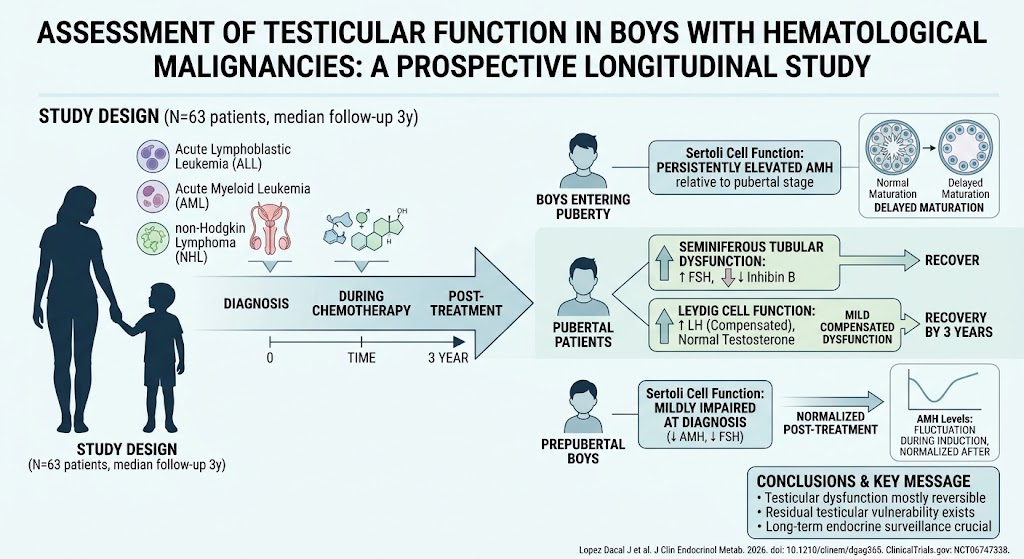
Early testicular dysfunction in pediatric hematologic malignancy patients is characterized by disturbed Sertoli and Leydig cell hormonal markers, predominantly reversible over 3 years post-chemotherapy.
Prepubertal boys show transient Sertoli cell impairment and FSH suppression during intensive corticosteroid exposure, with AMH dynamics suggesting delayed maturation.
Pubertal patients develop transient seminiferous tubular dysfunction with biochemical recovery by 3 years, but Leydig cell insufficiency persists in a compensated form.
Long-term endocrine follow-up is critical given residual testicular vulnerability despite apparent clinical recovery.