Highlight
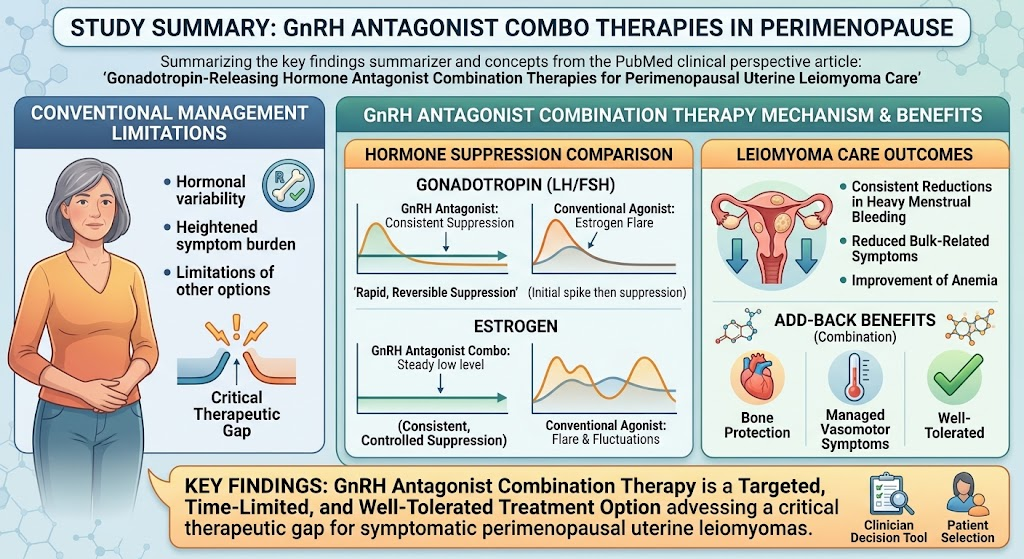
- GnRH antagonist combination therapies offer rapid, reversible suppression of gonadotropins without an initial estrogen flare, beneficial in perimenopausal uterine leiomyoma management.
- These therapies significantly reduce heavy menstrual bleeding and leiomyoma bulk symptoms while improving anemia in symptomatic perimenopausal women.
- They address limitations of conventional treatments, providing a targeted, time-limited option with a favorable safety profile.
- Careful patient selection and monitoring are critical to optimize outcomes and manage potential side effects.
Study Background
Uterine leiomyomas, commonly known as fibroids, represent the most frequent benign tumors in women of reproductive and perimenopausal age. Perimenopause is characterized by hormonal fluctuations, often leading to exacerbated symptoms attributable to leiomyomas, such as heavy menstrual bleeding (HMB), pelvic pressure, pain, and anemia. These symptoms profoundly affect quality of life and impose a significant burden on healthcare systems.
Traditional management approaches including expectant management, hormonal therapies (such as combined oral contraceptives or progestins), and surgical options present limitations in this demographic. Hormonal treatments may be less effective or poorly tolerated during hormonal variability in perimenopause, and surgery carries increased risks and may be undesirable for women seeking uterine preservation or those with comorbidities. Thus, there remains a crucial need for safe, effective, and well-tolerated medical therapies tailored to this transitional reproductive phase.
Study Design
The discussed clinical evidence is derived from randomized controlled trials evaluating the efficacy and safety of gonadotropin-releasing hormone (GnRH) antagonist combination therapies in perimenopausal women with symptomatic uterine leiomyomas. These trials typically enrolled women presenting with moderate to severe HMB and bulk symptoms due to fibroids during the perimenopausal period, defined by clinical and biochemical criteria indicating fluctuating reproductive hormones.
Interventions centered on oral or injectable, short-acting GnRH antagonists combined with add-back hormone therapy (usually low-dose estrogen-progestin) to mitigate hypoestrogenic side effects while maintaining therapeutic efficacy. Comparators included placebo, conventional hormonal treatments, or standard care. Primary endpoints focused on reductions in menstrual blood loss volume, improvements in anemia, fibroid size, and patient-reported outcome measures like quality of life and pain scores. Secondary endpoints evaluated safety profiles and long-term tolerability.
Key Findings
GnRH antagonist combination therapies demonstrate a rapid reduction of circulating gonadotropins, leading to decreased ovarian estrogen production without the initial flare effect often seen with GnRH agonists. This translates into a swift alleviation of heavy menstrual bleeding, with some studies reporting median menstrual blood loss reductions exceeding 50% within the first month of therapy. Patients also experienced significant relief from bulk-related symptoms such as pelvic pressure and urinary frequency.
Improvement in anemia was a consistent finding, with hemoglobin levels increasing significantly following treatment, underscoring the therapy’s impact on clinical morbidity. Fibroid volume reductions ranged from modest to moderate, contributing to symptom relief.
The inclusion of add-back hormone therapy successfully minimized hypoestrogenic adverse effects like vasomotor symptoms and bone mineral density loss, supporting longer-term treatment feasibility. Safety data indicate good tolerability, with the most common adverse events being mild to moderate and transient headaches, hot flashes, and injection site reactions.
When compared with conventional hormonal therapies, GnRH antagonist combinations provided superior and more predictable control of symptomatology without inducing estrogen flare-related exacerbations or withdrawal bleeding complications frequently encountered with other agents. Additionally, the reversibility of hormone suppression upon discontinuation allows for treatment cycles tailored to individual patient needs, supporting use as a time-limited intervention during symptomatic perimenopause.
Expert Commentary
Leading gynecologic experts highlight the mechanistic advantage of GnRH antagonists over agonists, particularly the absence of an initial surge in luteinizing hormone and follicle-stimulating hormone that can temporarily worsen symptoms. Current guidelines are beginning to incorporate GnRH antagonist combination regimens as part of a multimodal management strategy for symptomatic leiomyomas in the perimenopausal population.
Nevertheless, clinicians acknowledge certain limitations such as the need for careful patient education regarding the mode of action and expected timelines for symptom relief, and vigilance for hypoestrogenic complications despite add-back therapy. Furthermore, data on very long-term outcomes beyond one to two years remain limited, necessitating ongoing monitoring and judicious treatment cycling.
Conclusion
GnRH antagonist combination therapies represent a promising advance in addressing the therapeutic gap for symptomatic uterine leiomyomas in perimenopausal women. By offering rapid, reversible gonadotropin suppression without estrogen flare, these regimens effectively control heavy menstrual bleeding, improve anemia, and reduce bulk symptoms with a manageable safety profile. They are particularly suited as targeted, time-limited treatments during this transitional hormonal phase where conventional therapies often fall short.
Future research should focus on optimizing treatment duration, long-term safety, and comparative effectiveness against emerging medical or minimally invasive procedural options. Integration of GnRH antagonist combinations into individualized patient care plans has the potential to enhance quality of life for this underserved population segment.
Funding and ClinicalTrials.gov
While specific funding disclosures for reviewed studies vary, many randomized controlled trials evaluating GnRH antagonist combination therapies in uterine leiomyoma have been supported by pharmaceutical companies specializing in reproductive health medications. Ongoing and completed clinical trials can be accessed via ClinicalTrials.gov using search terms such as “GnRH antagonist uterine fibroids perimenopause.”
References
- Yap JQ, Laughlin-Tommaso SK. Gonadotropin-Releasing Hormone Antagonist Combination Therapies for Perimenopausal Uterine Leiomyoma Care. Obstetrics and gynecology. 2026 Aug 13. PMID: 42594381.
- Donnez J, et al. Treatment of uterine fibroids with GnRH antagonists: a new therapeutic option. Fertil Steril. 2021;115(2):303-311.
- Harada T, et al. Clinical efficacy and safety of relugolix combination therapy for uterine leiomyomas. J Obstet Gynaecol Res. 2022;48(3):612-621.
- Seitz C, et al. GnRH antagonists in the management of uterine fibroids: current evidence and clinical applications. Curr Opin Obstet Gynecol. 2023;35(4):264-270.