Highlight
1. Plasma ammonia elevation in cirrhosis patients is independently associated with higher hospitalisation rates for bacterial infections.
2. A 1.4 times upper limit of normal (ULN) ammonia threshold effectively stratifies risk of infection and overt hepatic encephalopathy (OHE).
3. The AMMON-OHE predictive model incorporating ammonia outperforms MELD and matches Child-Pugh in forecasting infection and OHE.
4. Hyperammonaemia defines a vulnerable clinical phenotype linking immune dysfunction and neurocognitive susceptibility in cirrhosis.
Study Background
Cirrhosis is a chronic liver disease characterized by progressive liver fibrosis and functional impairment, often complicated by infections and neuropsychiatric conditions such as overt hepatic encephalopathy (OHE). Traditionally, elevated blood ammonia, or hyperammonaemia, has been implicated primarily in the pathogenesis of OHE due to its neurotoxic effects. However, recent evidence suggests ammonia may also contribute to cirrhosis-associated immune dysfunction, predisposing patients to bacterial infections, which are a leading cause of morbidity and mortality in this population. Despite this, the clinical utility of ammonia measurement for infection risk stratification remains controversial.
Study Design
This multicentre, retrospective cohort study analyzed data from 1855 outpatients with cirrhosis enrolled in prospective cohorts across five European medical centers and one center in Singapore. The primary endpoint was hospitalisation for bacterial infection within one year after baseline plasma ammonia measurement. Plasma ammonia levels were standardized as multiples of the upper limit of normal (ULN). The study also assessed the prognostic performance of ammonia, the AMMON-OHE model (a predictive algorithm integrating ammonia), and standard prognostic scores including Child-Pugh and the Model for End-Stage Liver Disease (MELD) for predicting bacterial infection and other liver-related outcomes such as OHE, ascites, and variceal bleeding.
Key Findings
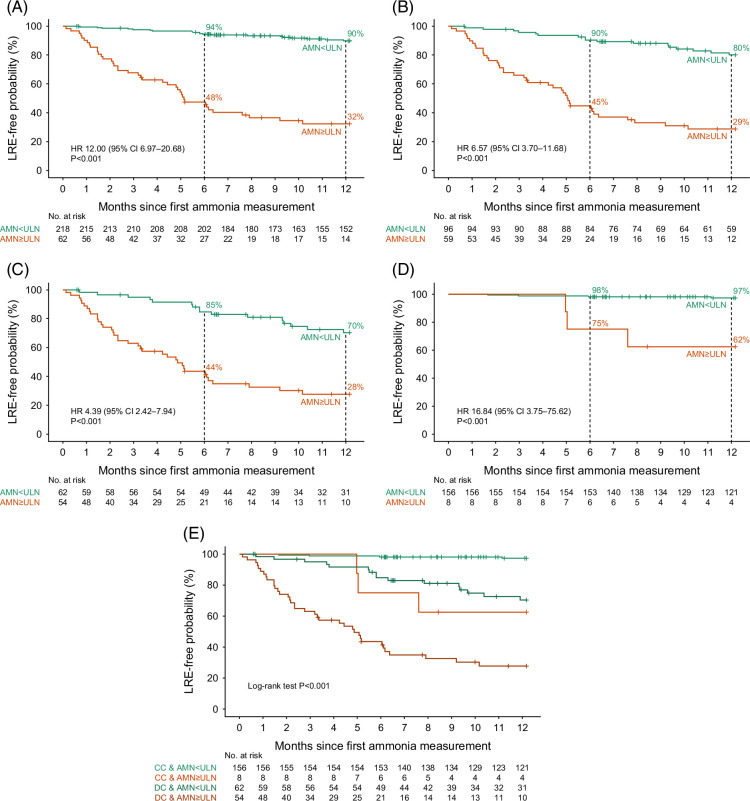
Within one year, 8% of European patients experienced hospitalisation due to bacterial infection. These patients demonstrated significantly higher plasma ammonia levels (median 1.75 vs. 0.97 times ULN; p<0.001). Moreover, hospitalised patients had a sevenfold elevated risk of liver-related death (37% vs. 5%; p<0.001). Logistic regression and variable selection methods consistently identified ammonia as an independent risk factor for bacterial infection, with each unit increase in ammonia raising infection risk by 12–14%.
A plasma ammonia cutoff at 1.4 times ULN effectively delineated patients at increased risk for both bacterial infection and overt hepatic encephalopathy (both p<0.001). Using this threshold, the AMMON-OHE model yielded superior discrimination for infection prediction compared to ammonia alone, achieving a concordance index (C-index) of 0.805 in Europe and 0.877 in Singapore. The model demonstrated good calibration and clinical utility comparable to the Child-Pugh score and noticeably better than MELD for predicting hospitalisation with infection.
Similarly, ammonia and the AMMON-OHE model performed well in predicting OHE, exhibiting a C-index as high as 0.904. In contrast, predictive performance was weaker for other liver-related complications such as ascites and variceal bleeding.
Expert Commentary
This study underscores hyperammonaemia as more than a neurotoxic biomarker, highlighting its integral role in modulating systemic immune function and vulnerability to bacterial infections in cirrhosis. Elevated ammonia may impair neutrophil oxidative burst and cytokine responses, which aligns biologically with the observed infection susceptibility. Importantly, the validation of an ammonia threshold (1.4 times ULN) offers a pragmatic approach for clinicians to identify high-risk patients warranting closer surveillance or preventive interventions.
The novel AMMON-OHE model, integrating plasma ammonia, provides a nuanced individualized risk stratification tool. Its superior predictive performance relative to MELD suggests that traditional prognostic scores may undervalue the immune risk component encapsulated by ammonia. Nonetheless, limitations include the retrospective design and potential variability in ammonia measurement techniques across centers. Also, generalisability beyond outpatient settings and ethnic populations requires further exploration.
Conclusion
This robust multicentre study definitively associates hyperammonaemia with elevated hospitalisation risk for bacterial infection in cirrhosis, concurrently predicting overt hepatic encephalopathy. The findings advocate for routine ammonia measurement and application of the AMMON-OHE model in clinical practice to enable early identification of patients with an ammonia-related vulnerability phenotype characterized by immune dysfunction and neurocognitive impairment. Future research should investigate therapeutic strategies targeting ammonia reduction and immune modulation to mitigate infection risk and improve outcomes in this high-risk cohort.
Specialty calculators
For clinical reference; use professional judgment.