Highlights
- The eSMARTER trial validates the noninferiority of a digital platform versus clinician-mediated telehealth for returning APOE genotype results regarding Alzheimer’s disease risk.
- Optional disclosure of plasma phosphorylated tau 217 (p-tau217) biomarker results via digital means also showed no difference in patient anxiety, distress, or disease knowledge compared to clinical delivery.
- These findings support the scalability and accessibility of digital delivery models for complex AD genetic and biomarker information while maintaining psychological safety.
- The study addresses a critical gap in digital health applications for precision risk communication in aging populations at risk for dementia.
Background
Alzheimer’s disease (AD) is a major neurodegenerative disorder with a growing global burden linked to aging populations. Genetic testing for apolipoprotein E (APOE) alleles, particularly APOE4, and emerging plasma biomarkers like phosphorylated tau 217 (p-tau217) have transformed risk stratification and early diagnosis efforts in AD. Concurrent advances in electronic health information technologies have facilitated patient access to such personal genetic and biomarker data via electronic health portals and digital platforms. However, the optimal modes to deliver this sensitive information—balancing thorough understanding and psychological well-being—remain underexplored. Traditional disclosure involves clinician-mediated counseling, which may be resource-intensive and less scalable. The Evaluation of Self-Mediated Alternatives for Risk Testing Education and Return of Results (eSMARTER) trial was designed to directly compare a dedicated digital educational and return-of-results platform against standard clinician-led telehealth in an aging cohort previously genotyped for APOE but undiagnosed and uninformed of their status. This trial aimed to evaluate if scalable digital return could maintain noninferior patient knowledge gains and psychological safety, critical for broad adoption.Key Content
Study Design and Population
The eSMARTER trial was a fully decentralized, randomized noninferiority study enrolling 651 cognitively screened adults aged 60 to 80 years across the contiguous US who had prior non-disclosed APOE genotyping via the GeneMatch registry. Participants were randomized in a 2:1 ratio to either a digital platform or clinician-mediated telehealth for return of APOE genotype results, followed by an optional disclosure of plasma p-tau217 biomarker data at 6 months in the same modality. Baseline characteristics (age, sex, cognition scores, APOE genotype distribution) were balanced between groups, with approximately 67% female, mean age 68, and a distribution of APOE4 homozygotes (10%), heterozygotes (58%), and noncarriers (32%).Intervention Modalities
The digital platform delivered education and test results via an interactive, user-friendly interface designed to facilitate self-paced learning and comprehension without direct clinician interaction. The clinician-mediated arm involved scheduled telehealth sessions with trained clinicians providing personalized counseling and disclosure. The key outcome timeframe was 1 to 7 days post-APOE disclosure to capture immediate effects on psychological health and knowledge.Primary Outcomes and Efficacy
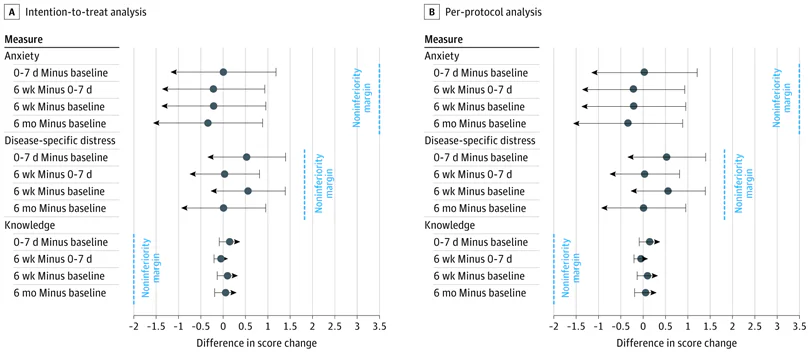
Primary endpoints assessed were changes in anxiety (using Patient-Reported Outcomes Measurement Information System Anxiety T-scores), AD-specific distress, and AD-related knowledge. The digital platform met prespecified noninferiority margins for all primary outcomes compared to clinician-mediated disclosure shortly after result return. This parity extended to the optional p-tau217 biomarker disclosures, with no significant differences observed between delivery modes for psychological impacts or knowledge.Safety and Psychological Well-being
Importantly, no elevation in distress or anxiety beyond clinically acceptable thresholds occurred in either arm, addressing concerns about remote self-mediated disclosure potentially causing undue psychological harm. This safety profile was consistent across APOE genotype strata, including APOE4 homozygotes who carry higher genetic risk.Contextualizing Digital Disclosure in AD Risk Communication
Digital return models align with trends in patient-centered care, empowering patients with accessible health data and educational resources. Prior research in genetic counseling for hereditary diseases suggests digital platforms can augment traditional counseling, but data specifically in AD genetics and biomarker communication have been sparse until this trial. eSMARTER thus represents a pivotal step establishing an evidence base for digitized AD risk disclosure.Expert Commentary
The eSMARTER trial addresses a critical clinical and public health need to efficiently communicate complex AD risk factors to an aging population increasingly engaged with digital health technologies. Its decentralized and fully remote design enhances generalizability by including a geographically and demographically diverse sample. The noninferiority findings alleviate concerns about knowledge retention and psychological distress when results are self-mediated digitally versus clinician-mediated. Mechanistically, APOE genotype and plasma p-tau217 represent distinct yet complementary risk markers, with APOE genotype conferring genetic susceptibility and p-tau217 reflecting neurodegenerative pathology. Accurate and sensitive communication of these results is paramount given potential implications for lifestyle choices, clinical trial eligibility, and future planning. The demonstrated safety and efficacy of the digital approach may facilitate large-scale risk stratification efforts and personalized interventions in preclinical and prodromal AD stages. Nevertheless, some limitations persist. The study population was English-speaking and internet-accessible, which may limit applicability in underserved or non-English-speaking populations. The trial focused on short-term outcomes, and longer-term behavioral and psychosocial effects require further study. Additionally, nuanced counseling around complex risk interpretation might still benefit from clinician involvement, especially in populations with lower health literacy or greater psychological vulnerability. This trial complements evolving guidelines emphasizing informed consent, psychological screening, and tailored disclosure strategies in AD genetic testing. Integration of such digital platforms in clinical practice could reduce bottlenecks in specialized genetic counseling, expand outreach, and harmonize data return approaches in multi-site research.Conclusion
The eSMARTER trial robustly demonstrates that digital platforms can provide a noninferior alternative to traditional clinician-mediated telehealth delivery for returning APOE genotype and plasma p-tau217 biomarker results in older adults. This scalable, evidence-based approach maintains patient knowledge and psychological well-being without increasing anxiety or distress, thereby supporting broader implementation in clinical, research, and public health domains. Future efforts should focus on validating these findings across diverse populations, assessing long-term consequences, and integrating digital disclosures into personalized AD risk management frameworks to optimize early detection and preventive strategies.References
- Langbaum JB, Erickson CM, Langlois CM, et al. Digital Delivery of Apolipoprotein E Genotype and Phosphorylated Tau 217 Results: The eSMARTER Randomized Clinical Trial. JAMA Neurol. 2026; doi:10.1001/jamaneurol.2026.43049195. PMID: 43049195.
- Roberts JS, Karlawish J, Meschino WS. Disclosure of APOE genotype for Alzheimer’s disease risk: implications for clinical practice and counseling. Nat Rev Neurol. 2021;17(7):377–390. doi:10.1038/s41582-021-00485-8.
- Ashton NJ, Pascoal TA, Karikari TK, et al. Plasma p-tau217 accurately predicts Alzheimer’s disease pathology at least 8 years prior to post-mortem. Brain. 2021;144(4):1132-1146. doi:10.1093/brain/awab054.
- Green RC, Lautenbach D, McGuire AL. GINA, genetic discrimination, and genomics at the intersection of medicine and law. Nat Rev Genet. 2015;16(5):283-289. doi:10.1038/nrg3880.
Specialty calculators
For clinical reference; use professional judgment.