Highlight
- Randomized controlled trial assessed vulvar fractionated CO2 laser combined with topical clobetasol versus placebo for vulvar lichen sclerosus (VLS).
- No significant difference in proportion achieving clinically meaningful improvement on Skindex-29 primary outcome.
- Clobetasol group showed greater symptom relief, improved skin-related quality of life, and higher patient treatment satisfaction.
- Both treatments were well tolerated with low and comparable adverse event rates.
Study Background
Vulvar lichen sclerosus (VLS) is a chronic inflammatory dermatosis chiefly affecting the vulvar skin, characterized by itching, pain, and architectural changes that impair quality of life. The disease commonly affects postmenopausal women but can present at any age. Standard first-line therapy involves high-potency topical corticosteroids such as clobetasol propionate, which can alleviate symptoms and prevent progression. However, not all patients respond adequately or maintain long-term remission, prompting investigation into adjunct or alternative therapies.
Fractionated carbon dioxide (CO2) laser therapy has emerged as a novel interventional option for refractory VLS, aimed at improving tissue remodeling and symptom control. Initial observational studies demonstrated promising results, but robust comparative evidence remains limited. This multicenter randomized controlled trial sought to examine whether combining topical clobetasol with fractionated CO2 laser affords superior symptomatic and quality-of-life benefits compared with laser plus placebo ointment.
Study Design
This double-blind, placebo-controlled trial was conducted across nine U.S. medical centers between March 2022 and April 2025. Eligible participants were adult women diagnosed with VLS electing fractionated CO2 laser treatment. Exclusion criteria included prior vaginal mesh prolapse repair, previous radiation, prior laser or systemic immunomodulatory therapies for VLS, active genital infection or malignancy, pregnancy, or poor wound healing.
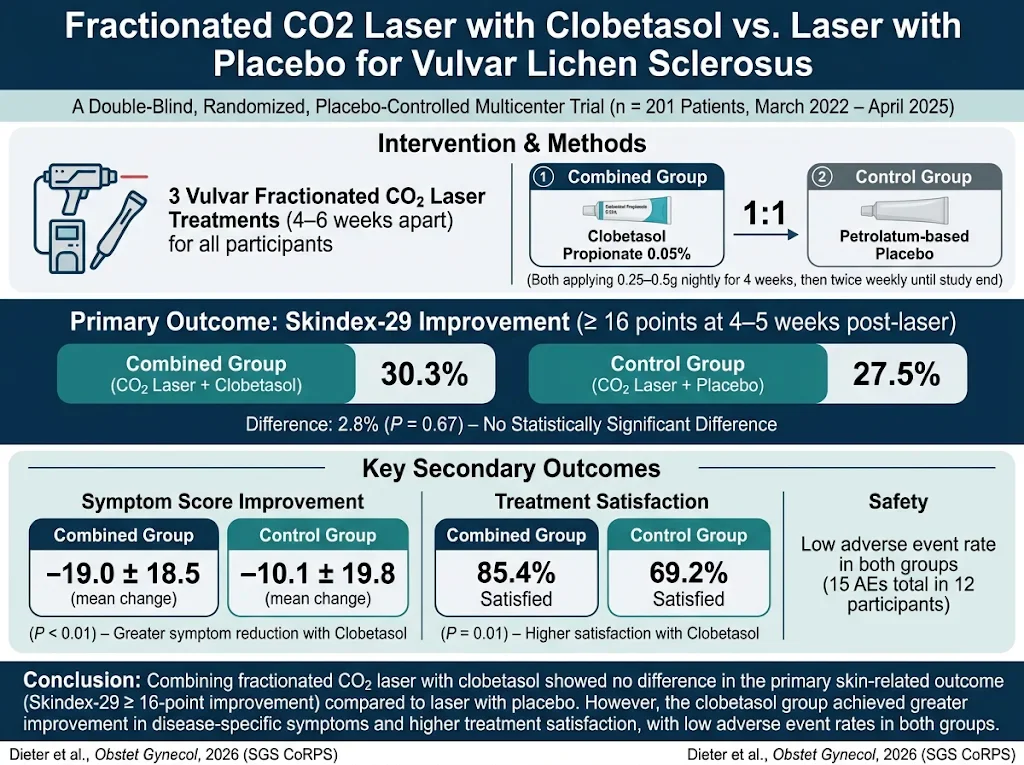
Participants were randomized 1:1 to receive either topical clobetasol propionate 0.05% ointment or a petrolatum-based placebo ointment, administered nightly (0.25-0.5 grams) for four weeks starting with the first laser treatment, followed by twice-weekly application until study completion.
Each participant underwent three fractionated CO2 laser treatments of the vulvar region, spaced 4–6 weeks apart. The primary endpoint was the proportion of women achieving an improvement of 16 or more points on the Skindex-29 questionnaire, a validated tool quantifying skin-related symptoms and functional impact, assessed 4–5 weeks post final laser treatment.
Secondary endpoints included changes in Skindex-29 domain and total scores, patient global impression of improvement (PGI-I), treatment satisfaction, and recording of adverse events.
Key Findings
A total of 201 women were randomized, with 180 completing the study and providing complete data (89 clobetasol, 91 placebo). Most had symptom onset over one year prior to diagnosis, with nearly 90% having previous experience using topical corticosteroids, underscoring a treatment-experienced cohort.
Regarding the primary outcome, 30.3% in the clobetasol arm versus 27.5% in the placebo arm achieved at least a 16-point improvement on Skindex-29 (P=0.67), indicating no statistically significant difference between groups in the primary measure of clinical improvement.
However, when examining secondary outcomes, the clobetasol group had significantly greater improvement in the Skindex-29 symptom domain (-19.0 ± 18.5 vs. -10.1 ± 19.8, P<0.01) and total scores (-13.0 ± 15.9 vs. -8.1 ± 15.5, P=0.04), suggesting enhanced symptomatic relief and broader skin-related quality-of-life benefits compared with placebo.
Patient-reported treatment satisfaction was higher in the clobetasol group (85.4% satisfied or very satisfied vs. 69.2% placebo, P=0.01), reflecting better subjective outcomes despite a comparable proportion meeting the primary endpoint.
Safety profiles were favorable in both cohorts with 15 adverse events reported among 12 participants; events were mild to moderate and equally distributed between groups (6 events per arm), affirming the tolerability of both treatment regimens.
Expert Commentary
This trial provides valuable evidence on the adjunctive role of topical clobetasol with fractionated CO2 laser therapy for VLS, reinforcing the complexity of treatment response metrics in this condition. The lack of difference in the primary endpoint could reflect multiple factors including the stringency of the chosen threshold for Skindex-29 improvement or the placebo ointment’s potential emollient effects.
The marked benefit in symptom-specific domains and patient satisfaction supports the continued use of clobetasol as a cornerstone of VLS management, even when combined with novel modalities such as laser treatment. Given the chronicity and significant symptom burden of VLS, patient-centered outcome measures and individualized therapy remain paramount.
Limitations include potential variability in laser application across centers and patient heterogeneity. Long-term durability of combined treatments was not assessed and warrants further study. Additionally, safety data, although reassuring, requires ongoing surveillance especially regarding skin atrophy risks with corticosteroid exposure.
Conclusion
In women with vulvar lichen sclerosus undergoing fractionated CO2 laser treatment, addition of topical clobetasol did not increase the proportion achieving substantial improvement on the Skindex-29 compared to placebo. Nevertheless, clobetasol provided greater symptom relief and improved patient satisfaction without increasing adverse events. These findings suggest that while the laser itself may contribute to clinical benefits, adjunctive potent topical corticosteroids remain essential for optimal symptom management and patient-perceived outcomes. Future research should explore long-term effects, dose optimization, and mechanistic insights into combined laser and topical therapy in VLS.
Funding and Clinical Trial Registration
This investigator-initiated trial was conducted under the auspices of the Society of Gynecologic Surgeons Collaborative Research in Pelvic Surgery Consortium (SGS CoRPS). Clinical trial registration: ClinicalTrials.gov NCT04951206.
References
- Dieter AA, Ferrante K, et al. A Randomized Trial of Fractionated CO2 Laser With Topical Clobetasol Compared With Fractionated CO2 Laser With Placebo for Treatment of Vulvar Lichen Sclerosus. Obstet Gynecol. 2026 Nov 17. PMID: 43044089.
- Chi C, Wedgwood L, et al. Management strategies and guidelines for vulvar lichen sclerosus. J Low Genit Tract Dis. 2020.
- Lee A, Tran DQ. Novel laser therapies in dermatology: role in vulvar dermatoses. Dermatol Ther. 2023.
Specialty calculators
For clinical reference; use professional judgment.