Highlight
- Hofbauer cells are the predominant immune cells in placental villi and are key drivers of inflammation in spontaneous preterm birth (PTB).
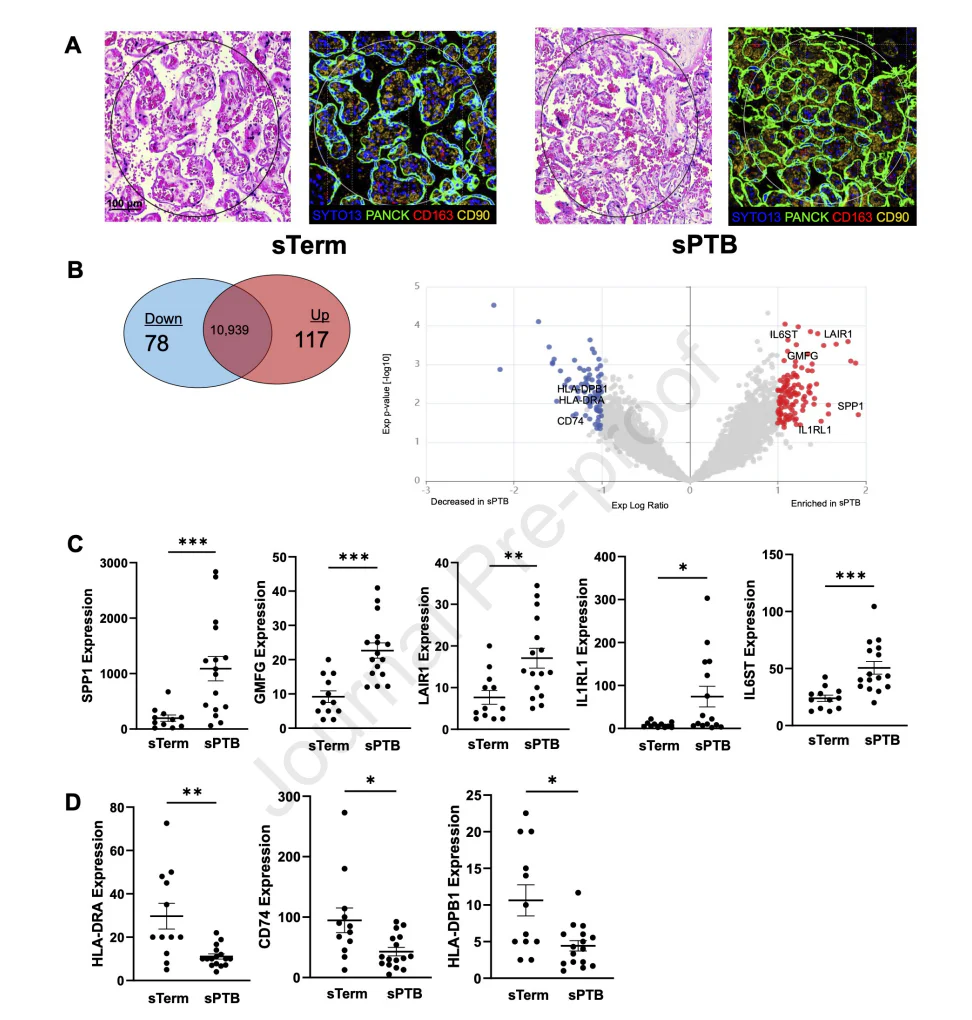
- Preterm placentas show increased CD163+ and CD68+ macrophages compared to term placentas, indicating heightened macrophage activity correlating with inflammation.
- Spatial transcriptomics reveal distinct inflammatory gene expression and pathway activation, notably TNF⍺ signaling in spontaneous PTB versus non-inflammatory IL-2 pathways in term deliveries.
- Ex vivo placental explant and primary cell studies corroborate Hofbauer cells’ role in producing pro-inflammatory mediators, suggesting therapeutic targeting potential.
Study Background and Disease Burden
Preterm birth, defined as delivery before 37 weeks of gestation, remains a leading cause of neonatal morbidity and mortality globally. Spontaneous preterm birth (sPTB), often associated with pathological inflammation of the placenta, results in heightened risks of respiratory, neurological, and developmental complications among neonates. Despite recognition of placental inflammation’s pivotal role, the precise cellular and molecular mechanisms orchestrating this inflammatory state in preterm placentas are not well understood. Clarifying these mechanisms is crucial for developing targeted interventions to mitigate inflammation-related adverse outcomes in sPTB.Study Design
The investigation included 228 patients delivering either preterm or term, encompassing spontaneous and non-spontaneous etiologies. Placental tissues were collected for detailed histological and immunophenotypic evaluation. Advanced imaging mass cytometry and spatial transcriptomics were performed on a subset (n=24), preserving tissue spatial context while identifying cell-specific profiles. Fresh placentas (n=8-11) provided material for quantifying inflammatory mediators through enzyme-linked immunosorbent assay (ELISA) and flow cytometry to assess cell-specific protein expression. Comparisons were drawn between spontaneous preterm, non-spontaneous preterm, and term placentas to delineate inflammatory signatures and cellular contributors.Key Findings
Predominance of Hofbauer Cells in Placental Villi
Imaging mass cytometry revealed that Hofbauer cells, characterized by CD163 and CD68 markers, dominate the immune cell population within placental villi. These placental macrophages exhibited significantly increased presence in both spontaneous and non-spontaneous preterm placentas compared to term, suggesting active macrophage involvement in preterm-related placental pathology.Distinct Inflammatory Profiles in Spontaneous Preterm Birth
Spatial transcriptomic analysis demonstrated a clear enrichment of inflammatory genes and pathways in spontaneous preterm placentas. Key inflammatory mediators such as TNF⍺ signaling pathways were significantly upregulated in spontaneous preterm samples but not identified in term placentas, where alternative signaling pathways like IL-2 predominated. This implies that spontaneous PTB is driven by specific inflammatory processes distinct from those observed in term or non-spontaneous preterm births.Cellular Crosstalk Evident in Placental Inflammation
Transcriptomic data indicated that trophoblast cells contributed to sustaining the inflammatory milieu, while stromal cells were implicated in extracellular matrix remodeling, underscoring complex cell-cell interactions within the placenta that facilitate inflammation and structural changes associated with preterm labor.Ex Vivo and Primary Cell Validation
In placental explant cultures modeling inflammation, increases in pro-inflammatory mediators mirrored the transcriptomic findings. Isolated cytotrophoblasts and Hofbauer cells from primary cultures confirmed that Hofbauer cells significantly contribute to the production of these mediators, reinforcing their central role in the placental inflammatory response linked to sPTB.Expert Commentary
These findings illuminate the critical role of placental macrophages in the pathogenesis of spontaneous preterm birth via driving localized inflammation. The use of spatial transcriptomics and imaging mass cytometry elegantly preserves tissue architecture to ascertain inflammatory loci at the cellular level—a significant advancement over traditional bulk analyses. The distinction between inflammatory pathways in spontaneous versus non-spontaneous and term placentas highlights potential molecular targets for interventions aiming to temper macrophage-mediated placental inflammation. However, mechanistic studies exploring how Hofbauer cell activation triggers preterm labor remain essential, alongside evaluation of potential therapeutic modulators in clinical settings.Conclusion
This comprehensive study advances understanding of the cellular contributors to placental inflammation in spontaneous preterm birth, emphasizing the pivotal role of Hofbauer cells in mediating pro-inflammatory signaling within placental villi. These insights pave the way for future translational research targeting macrophage-driven inflammation to improve outcomes for infants at risk of preterm birth complications.Funding and ClinicalTrials.gov
The original study’s funding sources and clinical trial registry details were not specified in the abstract. Further inquiry into the full-text publication may provide this information.References
1. Weng J, et al. Hofbauer Cells and Placental Villous Inflammation in Spontaneous Preterm Birth: Spatial and Functional Analyses. Am J Obstet Gynecol. 2026 Nov 13. PMID: 43025534. 2. Redline RW. Placental inflammation. Semin Neonatol. 2004;9(4):265-274. 3. Kim CJ, et al. Placental inflammatory response and preterm birth. Semin Fetal Neonatal Med. 2008;13(3):155-160. 4. Gomez-Lopez N, et al. Inflammation in preterm and term labour and delivery. Semin Fetal Neonatal Med. 2014;19(1):20-25.Specialty calculators
For clinical reference; use professional judgment.