Highlight
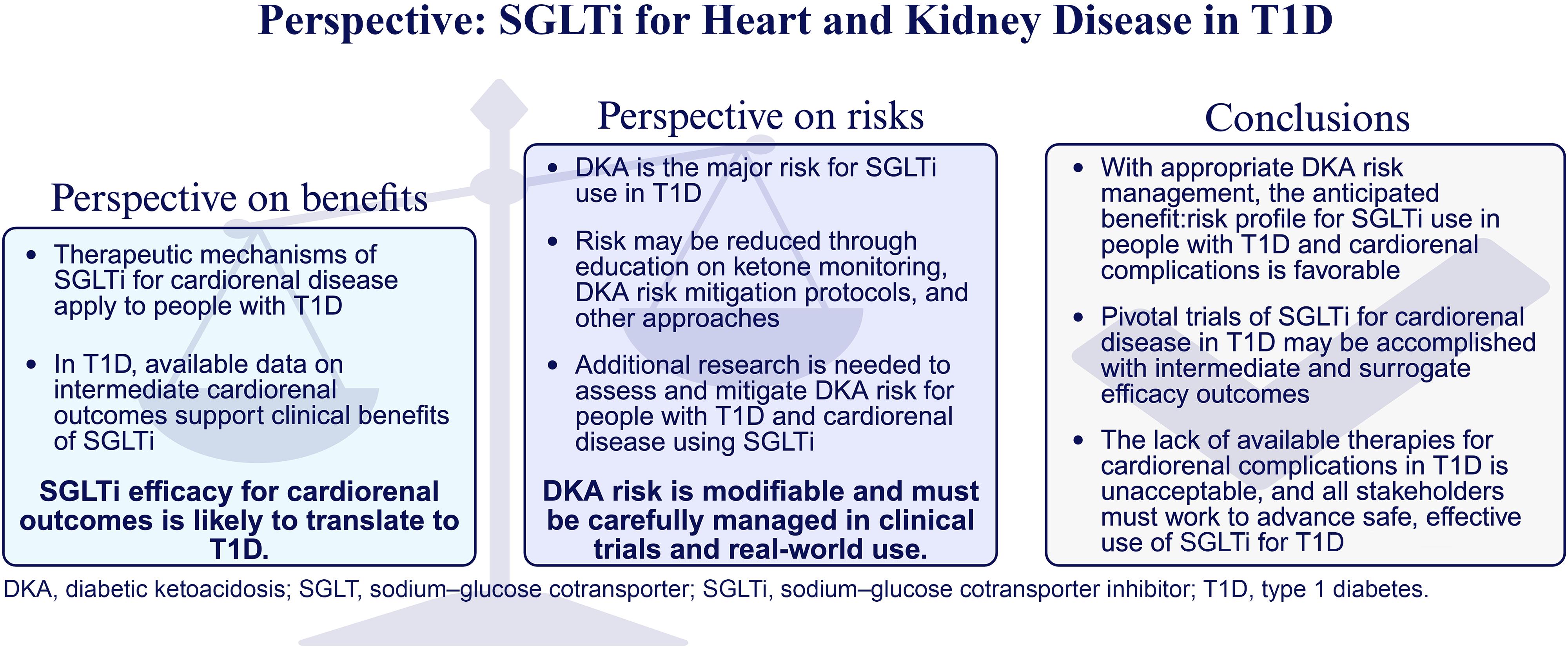
– SGLT inhibitors demonstrate potential benefits for heart and kidney disease in type 1 diabetes (T1D) based on mechanisms established in type 2 diabetes (T2D) and non-diabetic populations.
– Registrational trials in T1D may successfully employ surrogate endpoints rather than event-driven outcomes to feasibly assess efficacy.
– Diabetic ketoacidosis (DKA) remains a critical safety concern requiring robust risk mitigation protocols.
– A strategic roadmap integrating surrogate marker trials and stringent safety monitoring is vital to advance regulatory approvals and clinical uptake of SGLT inhibitors in T1D.
Background: Disease Burden and Unmet Need in Type 1 Diabetes
Type 1 diabetes (T1D) is a chronic autoimmune condition characterized by insulin deficiency, typically arising in childhood or young adulthood. Despite advances in insulin therapy and glucose monitoring, individuals with T1D face significant risk of cardiovascular and kidney complications. Cardiovascular disease (CVD) remains a leading cause of morbidity and mortality among this population, with accelerated atherosclerosis, heart failure, and ischemic heart disease prevalent.
Similarly, diabetic kidney disease (DKD) contributes substantially to morbidity, with increased rates of albuminuria, declining glomerular filtration rate (GFR), and eventual progression to end-stage kidney disease. Current management largely relies on tight glycemic control and renin-angiotensin system blockade; however, residual risk remains substantial, underscoring a critical unmet need for adjunctive therapies targeting heart and kidney protection in T1D.
Study Design and Intervention Landscape
Sodium-glucose cotransporter (SGLT) inhibitors have revolutionized management of T2D and heart failure, demonstrating cardiovascular and renal benefits in large, event-driven randomized controlled trials. However, their role in T1D remains investigational due to safety concerns, particularly diabetic ketoacidosis (DKA).
Emerging clinical studies have evaluated SGLT inhibitors as adjuncts to insulin in T1D populations, focusing on glycemic control, with secondary assessments of cardiovascular and kidney surrogate markers. These studies often include endpoints such as reductions in albuminuria, estimated GFR changes, blood pressure lowering, and markers of cardiac function. Importantly, no large, definitive cardiovascular or renal outcomes event trials have been completed in T1D to date.
Key Findings: Efficacy and Safety Insights
Translational Efficacy: Mechanistically, SGLT inhibitors improve heart and kidney outcomes through multiple pathways including natriuresis, reduced intraglomerular pressure, modulation of tubular-glomerular feedback, improved myocardial metabolism, and anti-inflammatory effects. These mechanisms are largely independent of glycemic control and thus potentially applicable to T1D.
Data extrapolated from the extensive evidence base in T2D and non-diabetic chronic kidney disease (CKD) populations suggest substantial applicability to the T1D population, albeit with careful consideration of distinct pathophysiology and safety.
Safety Considerations: The paramount safety concern in T1D is DKA, which has been observed at increased rates with SGLT inhibitor use. The pathophysiology relates to insulin dose reduction, increased ketogenesis, and euglycemic DKA presentations that can complicate diagnosis and timely management.
Risk mitigation strategies, including patient education, ketone monitoring, protocolized insulin adjustments, and close clinical follow-up, have been proposed and partially implemented. However, rigorous data confirming the effectiveness of these protocols remain limited.
Trial Design Feasibility: Given the low absolute event rates and feasibility constraints, future registrational trials in T1D might not require powering for classical cardiovascular and renal outcomes. Instead, trials could employ validated surrogate endpoints such as albuminuria reduction, GFR slope, or cardiac biomarkers that reliably predict long-term clinical benefit. This approach would allow timely, manageable studies while still informing regulatory and clinical decision-making.
Expert Commentary
Leading experts in endocrinology, nephrology, and cardiology recognize the compelling promise of SGLT inhibitors for heart and kidney protection in T1D, while emphasizing cautious, evidence-based progression. The consensus suggests leveraging mechanistic parallels from T2D and CKD trials but underscores the necessity for tailored safety protocols focusing on DKA prevention.
Further, there is recognition that simplified trial designs emphasizing surrogate endpoints will enhance study feasibility, accelerate data generation, and aid regulatory assessment, thereby speeding clinical translation.
Nonetheless, concerns remain about generalizability, given heterogeneity in T1D patients and comorbidities, and the need for real-world data post-approval to confirm safety and effectiveness.
Conclusion and Future Directions
SGLT inhibitors represent a promising therapeutic advance for heart and kidney disease in type 1 diabetes. The mechanistic rationale and supporting evidence from T2D and nondiabetic populations strongly support their potential efficacy in T1D.
A pragmatic path forward involves conducting registrational trials utilizing surrogate endpoints, which will facilitate trial feasibility and timely regulatory consideration. Parallel efforts must focus on establishing and validating rigorous DKA risk mitigation strategies to safeguard patient safety.
Collaboration across specialties—endocrinology, nephrology, cardiology—and regulatory bodies will be critical in developing comprehensive clinical guidelines and implementation frameworks. Such multi-disciplinary engagement will ultimately enhance clinical uptake and improve outcomes for people living with T1D facing cardiovascular and kidney disease risks.
Funding and ClinicalTrials.gov
The original article does not specify funding sources or list clinical trial registration numbers. Future trials should ensure transparency regarding funding and registration to best support evidence quality and clinical implementation.
References
1. Rosen J, de Boer IH, Eckel RH, et al. SGLT Inhibitors for Heart and Kidney Disease in Type 1 Diabetes. Diabetes Care. 2026 Sep 3; PMID: 42690158.
2. Zinman B, Wanner C, Lachin JM, et al. Empagliflozin, Cardiovascular Outcomes, and Mortality in Type 2 Diabetes. N Engl J Med. 2015;373(22):2117-2128.
3. Heerspink HJL, Stefánsson BV, Correa-Rotter R, et al. Dapagliflozin in Patients with Chronic Kidney Disease. N Engl J Med. 2020;383(15):1436-1446.
4. Cherney DZ, Perkins BA, Soleymanlou N, et al. Renal hemodynamic effect of sodium-glucose cotransporter 2 inhibition in patients with type 1 diabetes mellitus. Circulation. 2014;129(5):587-597.
5. Danne T, Garg S, Peters AL, et al. International consensus on risk management of diabetic ketoacidosis in patients with type 1 diabetes treated with sodium-glucose cotransporter (SGLT) inhibitors. Diabetes Care. 2019;42(6):1147-1154.
6. Petrie JR, et al. Sodium-glucose cotransporter type 2 inhibitors in type 1 diabetes: A call to action. Diabetologia. 2022;65(8):1341-1349.