Highlight
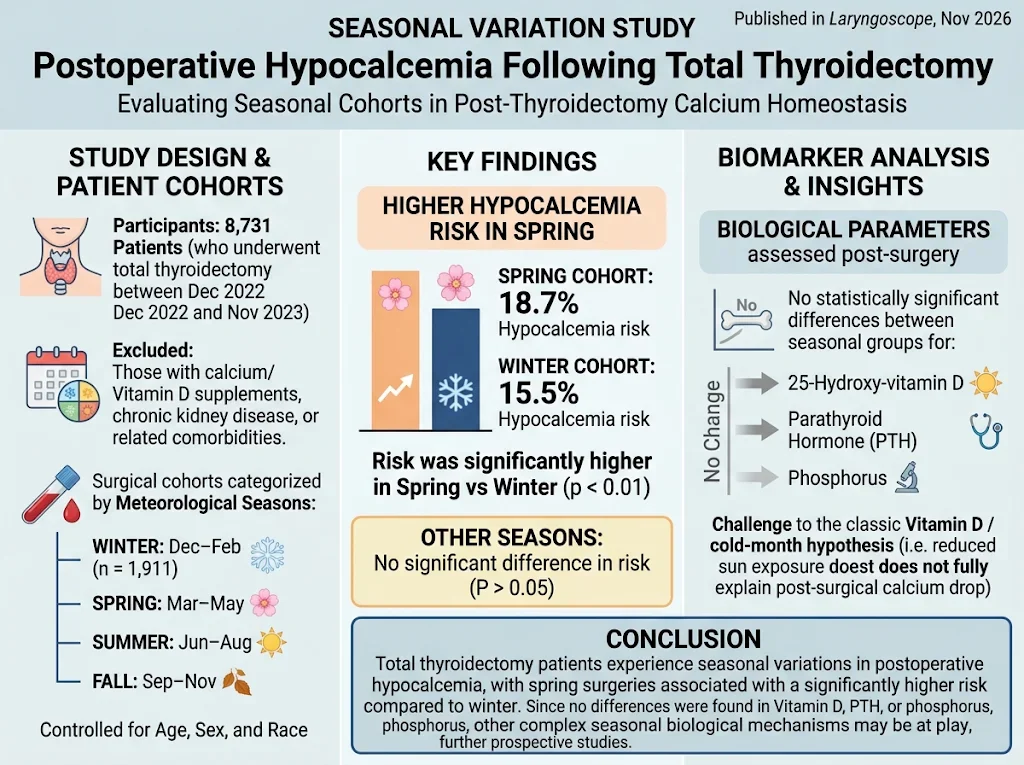
- Post-thyroidectomy hypocalcemia risk varies seasonally, with higher incidence in spring compared to winter.
- No significant differences in postoperative vitamin D, parathyroid hormone (PTH), or phosphorus levels between seasons were observed.
- Findings contradict the assumption that hypocalcemia risk is higher in colder months due to reduced sun exposure and vitamin D deficiency.
- Suggests that seasonal influences on calcium metabolism after thyroidectomy extend beyond vitamin D status, warranting further investigation.
Study Background
Total thyroidectomy, the surgical removal of the entire thyroid gland, is a common treatment for various thyroid diseases including malignancies and multinodular goiter. Despite advances in surgical technique, hypocalcemia remains the most frequent postoperative complication, resulting primarily from transient or permanent hypoparathyroidism due to inadvertent injury or devascularization of the parathyroid glands. Hypocalcemia manifests clinically with symptoms ranging from perioral numbness and paresthesias to severe tetany and cardiac arrhythmias, necessitating vigilant perioperative management. Vitamin D status and parathyroid gland function are critical regulators of calcium homeostasis. Seasonal variation in vitamin D synthesis, driven by fluctuations in sun exposure, typically peaks in summer and declines during winter months in temperate climates. It has been hypothesized that lower vitamin D levels in colder seasons could predispose patients to heightened risk of hypocalcemia after thyroidectomy. However, data supporting this concept are limited and inconclusive. Recognizing this knowledge gap, Bendapudi et al. conducted a comprehensive observational cohort study assessing the potential seasonal effects on postoperative hypocalcemia incidence and associated biochemical markers after total thyroidectomy.Study Design
This retrospective analysis included 8731 patients who underwent total thyroidectomy between December 1, 2022, and November 20, 2023. To assess potential seasonal impacts, patients were stratified into groups based on meteorological seasons: Winter (December-February), Spring (March-May), Summer (June-August), and Fall (September-November). Stringent inclusion criteria controlled for confounders: patients were matched for age, sex, and race, and those with history of calcium or vitamin D supplementation, chronic kidney disease, or related comorbidities affecting calcium metabolism were excluded. Postoperative hypocalcemia was defined as serum calcium levels below 8.5 mg/dL. Additionally, serum parathyroid hormone (PTH), 25-hydroxyvitamin D, and phosphorus levels were measured perioperatively to explore biochemical correlations.Key Findings
The primary outcome revealed a statistically significant higher incidence of postoperative hypocalcemia in the spring cohort (18.7%) compared with the winter cohort (15.5%, p < 0.01). When comparing other seasonal groups to winter or spring, no statistically significant differences in hypocalcemia risk were observed. Importantly, mean perioperative serum levels of 25-hydroxyvitamin D, PTH, and phosphorus did not differ significantly between the seasonal cohorts, suggesting that these biochemical parameters alone do not account for the observed increased hypocalcemia risk in spring. Subgroup analyses controlling for demographic variables confirmed the robustness of these findings. No overt seasonal trends in preoperative vitamin D status were evident, contradicting the expectation that vitamin D deficiency in winter would correlate with higher hypocalcemia. Additionally, no differences in surgical factors such as operative time or extent of lymph node dissection were reported across seasons, minimizing procedural bias.Expert Commentary
These results challenge the commonly held assumption that postoperative hypocalcemia risk peaks in winter due to reduced ultraviolet exposure impairing vitamin D synthesis. The paradoxical finding of increased hypocalcemia risk in spring, despite ostensibly adequate vitamin D levels, implicates more complex, potentially multifactorial seasonal influences. Potential contributors could include variations in dietary calcium intake, physical activity, hormonal rhythms, or seasonal fluctuations in parathyroid gland responsiveness and calcium receptor sensitivity. Environmental factors such as temperature or daylight changes might modulate systemic calcium regulation indirectly. Moreover, springtime inflammatory or infectious triggers could transiently affect parathyroid function. Limitations of this study include its retrospective design and lack of standardized, serial measurements of calcium and associated hormones immediately post-surgery. While large in scale, the study is confined to a single geographical region and climate, potentially limiting generalizability. Future prospective studies with rigorous perioperative biochemical monitoring and controlled supplementation trials are needed to elucidate the mechanisms by which seasonality impacts post-thyroidectomy calcium homeostasis and to develop optimized perioperative management protocols.Conclusion
The study by Bendapudi et al. identifies a novel seasonal pattern in postoperative hypocalcemia risk, with a surprising increased incidence in spring compared to winter after total thyroidectomy. The lack of correlation with vitamin D, PTH, or phosphorus levels suggests that the interplay of seasonal factors affecting calcium homeostasis is complex and not solely dependent on vitamin D status. Clinicians should remain vigilant for hypocalcemia following thyroidectomy across all seasons, and this evidence underscores the need for individualized perioperative monitoring strategies. Further research is essential to unravel the underlying biological and environmental mechanisms and to enhance patient outcomes through targeted prevention of postoperative hypocalcemia.Funding and ClinicalTrials.gov
The article does not specify funding sources or clinical trial registration details. Further inquiries may be directed to the original research authors.References
1. Bendapudi A, Clark DES, Smith M, Shabani S, Coblens O, Ranasinghe V. Seasonal Differences in Postoperative Hypocalcemia Following Total Thyroidectomy. The Laryngoscope. 2026 Nov 9. PMID: 43003496. 2. Khan AA, Khan A, Jamshed S, Khan MA. Postoperative hypocalcemia after thyroidectomy: risk factors and prevention. Int J Endocrinol Metab. 2017 Jul;15(4):e44803. 3. Holick MF. Vitamin D deficiency. N Engl J Med. 2007 Jul 19;357(3):266-81. 4. Sitges-Serra A, Ruiz S, Girvent M, et al. Postoperative hypocalcemia: predictors and management in 580 patients. Surgery. 2010 Nov;148(5):936-41. 5. Pattou F, Combemale F, Fabre S, et al. Hypocalcemia following thyroid surgery: incidence and prediction of outcome. World J Surg. 1998 Jun;22(6):718-24.Specialty calculators
For clinical reference; use professional judgment.