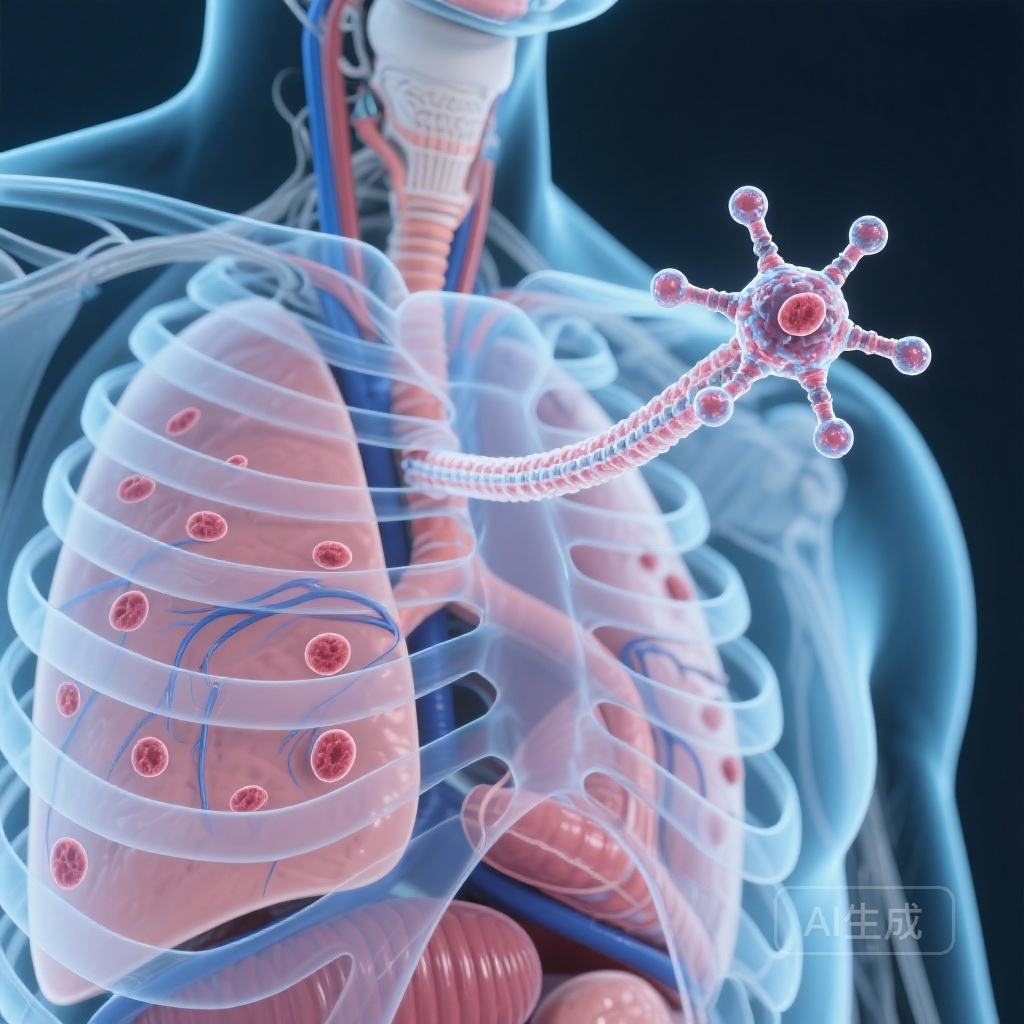
Bridging the Care Gap: Smartphone-Based Pulmonary Rehabilitation Enhances Quality of Life and Physical Activity in Chronic Respiratory Disease

Bridging the Care Gap: Smartphone-Based Pulmonary Rehabilitation Enhances Quality of Life and Physical Activity in Chronic Respiratory Disease

A 12-week randomized controlled trial reveals that smartphone-based pulmonary rehabilitation significantly improves quality of life and physical activity in patients with chronic respiratory diseases, offering a scalable and feasible alternative to traditional center-based programs despite challenges in long-term adherence.
High-Dose Influenza Vaccine Fails to Significantly Reduce Combined Influenza and Pneumonia Hospitalizations: Insights from the DANFLU-2 Trial

High-Dose Influenza Vaccine Fails to Significantly Reduce Combined Influenza and Pneumonia Hospitalizations: Insights from the DANFLU-2 Trial

The DANFLU-2 trial found that while high-dose influenza vaccines significantly reduced influenza-specific hospitalizations in older adults, they did not reach statistical significance for the combined primary endpoint of influenza or pneumonia hospitalizations compared to standard-dose vaccines.
High-frequency Oscillatory Ventilation in Near‑Term and Term Infants: Inconclusive Benefit and Possible Increased Mortality — What the 2025 Cochrane Update Tells Clinicians

High-frequency Oscillatory Ventilation in Near‑Term and Term Infants: Inconclusive Benefit and Possible Increased Mortality — What the 2025 Cochrane Update Tells Clinicians

A 2025 Cochrane update (3 RCTs, 368 infants) finds very low- to low-certainty evidence that HFOV neither clearly reduces treatment failure nor pulmonary air leak and may increase mortality versus conventional ventilation in term/near‑term infants with severe pulmonary dysfunction.
Effectiveness of Automated Closed-Loop Ventilation versus Protocolized Conventional Ventilation in Critically Ill Adults: A Comprehensive Evidence Review

Effectiveness of Automated Closed-Loop Ventilation versus Protocolized Conventional Ventilation in Critically Ill Adults: A Comprehensive Evidence Review

Automated closed-loop ventilation improves ventilation quality but does not increase ventilator-free days at day 28 compared to protocolized conventional ventilation in critically ill adults, with benefits in safety profiles and caregiver workload.
Digital twins suggest APRV can lower mechanical power and tidal recruitment versus PCV in ARDS — modeling evidence and clinical implications

Digital twins suggest APRV can lower mechanical power and tidal recruitment versus PCV in ARDS — modeling evidence and clinical implications

High-fidelity digital twins of 98 ARDS patients indicate APRV (Phigh 25/Plow 0, long Tinsp, short Tlow to 75% peak expiratory flow) reduced mechanical power by ~32% and tidal recruitment by ~34% versus recorded PCV, at the cost of controlled hypercapnia; clinical trials are needed.
Frailty Amplifies Mortality Risk Across the PaO2/FiO2 Spectrum: Insights from a 497,185‑Patient ANZICS Cohort

Frailty Amplifies Mortality Risk Across the PaO2/FiO2 Spectrum: Insights from a 497,185‑Patient ANZICS Cohort

In a 497,185‑patient registry study, frailty (CFS ≥5) was common and associated with substantially higher in‑hospital mortality across all severities of acute hypoxemic respiratory failure (AHRF). The relationship between PaO2/FiO2 and death was nonlinear and distinctly separated by frailty category.
Both Too Little and Too Much Respiratory Drive and Effort Predict Worse Outcomes on Mechanical Ventilation: Insights from a Prospective Toronto Cohort

Both Too Little and Too Much Respiratory Drive and Effort Predict Worse Outcomes on Mechanical Ventilation: Insights from a Prospective Toronto Cohort

A prospective registry study found a U-shaped relationship between respiratory drive/effort and ICU outcomes: both low and high drive/effort linked with higher mortality and slower discharge, especially when oxygenation (PaO2:FiO2) ≤150 mmHg; ventilator driving pressure effects were amplified by patient effort.
Checkpoint inhibition for frail patients: Durvalumab with carboplatin–etoposide shows tolerability and a 1‑year survival signal in poor‑performance‑status extensive‑stage SCLC (NEJ045A)

Checkpoint inhibition for frail patients: Durvalumab with carboplatin–etoposide shows tolerability and a 1‑year survival signal in poor‑performance‑status extensive‑stage SCLC (NEJ045A)

NEJ045A shows durvalumab plus carboplatin–etoposide is feasible in ES‑SCLC patients with PS2–3, with induction completion rates above thresholds and a 1‑year survival of 43.4% overall, supporting cautious use of chemo‑immunotherapy in selected frail patients.
Dupilumab Surpasses Omalizumab for Type‑2 Respiratory Disease: Converging Evidence from a Head‑to‑Head RCT, Real‑World US Data, and a Target‑Trial Emulation

Dupilumab Surpasses Omalizumab for Type‑2 Respiratory Disease: Converging Evidence from a Head‑to‑Head RCT, Real‑World US Data, and a Target‑Trial Emulation

Three complementary studies—EVEREST (head‑to‑head RCT), the US ADVANTAGE real‑world study, and a target‑trial emulation—consistently show greater reductions in nasal polyp burden, smell loss, asthma exacerbations, and systemic steroid use with dupilumab versus omalizumab in type‑2 respiratory disease.