CREST‑2: Stenting Reduces 4‑Year Ipsilateral Stroke vs Intensive Medical Therapy in Asymptomatic High‑Grade Carotid Stenosis; Endarterectomy Shows No Significant Benefit

CREST‑2: Stenting Reduces 4‑Year Ipsilateral Stroke vs Intensive Medical Therapy in Asymptomatic High‑Grade Carotid Stenosis; Endarterectomy Shows No Significant Benefit

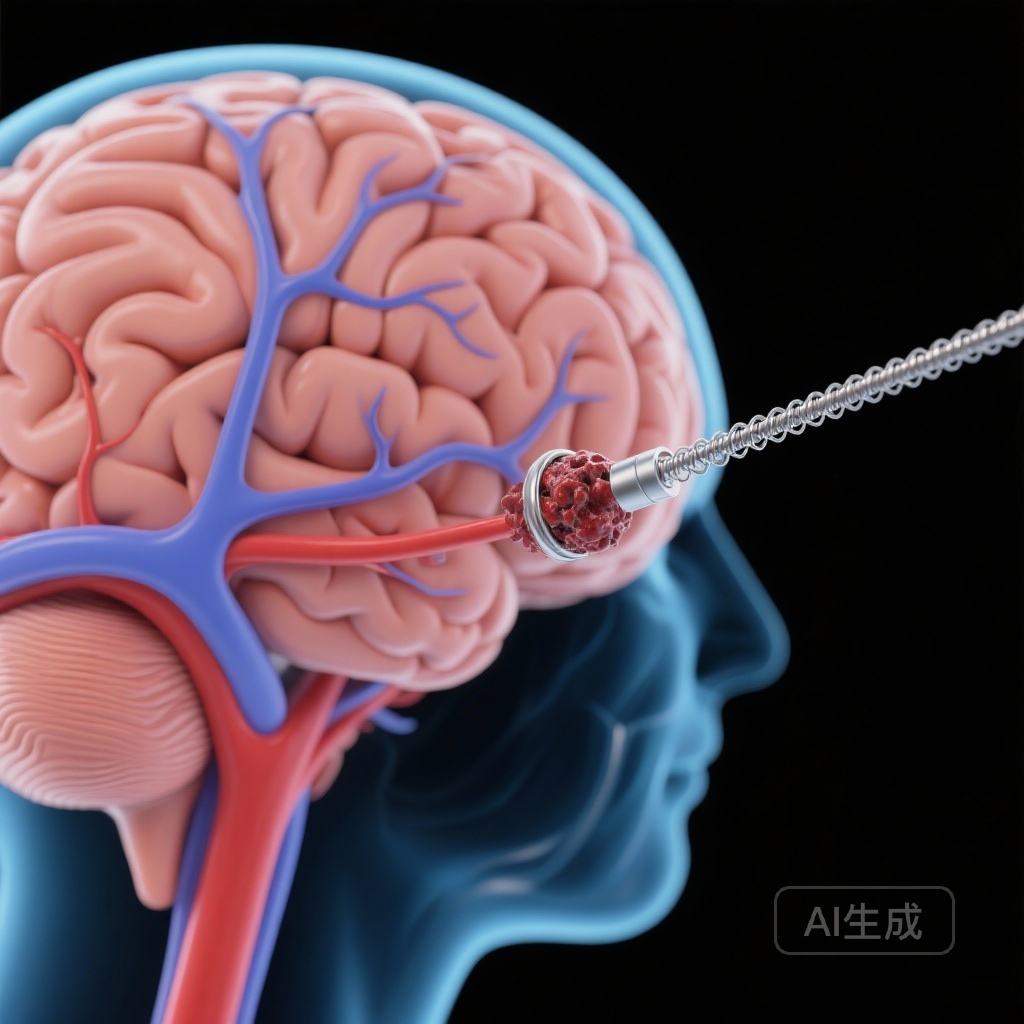
In CREST‑2, patients with ≥70% asymptomatic carotid stenosis randomized to carotid‑artery stenting plus intensive medical therapy had fewer perioperative-or-ipsilateral strokes over 4 years than intensive medical therapy alone; carotid endarterectomy did not show a statistically significant advantage.
Remote Cognitive Training, Structured Rehabilitation and tDCS Failed to Improve Self‑Reported Cognitive Symptoms in Long COVID: Results from a 5‑Arm Phase 2 Randomized Trial

Remote Cognitive Training, Structured Rehabilitation and tDCS Failed to Improve Self‑Reported Cognitive Symptoms in Long COVID: Results from a 5‑Arm Phase 2 Randomized Trial

A multicenter phase 2 randomized trial found no differential benefit of adaptive computerized cognitive training, structured cognitive rehabilitation, or transcranial direct current stimulation (tDCS) versus active comparators for self‑reported cognitive symptoms in long COVID.
Myocardial Infarction and Late-Onset Epilepsy: Unraveling Bidirectional Vascular Risks in Aging Populations

Myocardial Infarction and Late-Onset Epilepsy: Unraveling Bidirectional Vascular Risks in Aging Populations

Emerging cohort evidence reveals myocardial infarction significantly elevates late-onset epilepsy risk, with late-onset epilepsy also predicting subsequent myocardial infarction and vascular mortality, underscoring shared systemic vascular pathology and implications for integrated vascular risk management.
High‑Intensity Interval Training Fails to Rescue Hippocampal Integrity in Adults With Cannabis Use Disorder — but Exercise Is Feasible and May Reduce Craving

High‑Intensity Interval Training Fails to Rescue Hippocampal Integrity in Adults With Cannabis Use Disorder — but Exercise Is Feasible and May Reduce Craving

A randomized trial in adults with moderate–severe cannabis use disorder found 12 weeks of supervised HIIT did not improve a composite MRI measure of hippocampal integrity versus strength/resistance training; exercise participation was feasible and may reduce cannabis craving.
Prolonged Survival Transforms Leptomeningeal Metastasis in NSCLC: Contemporary Multicenter Cohort Shows TKIs and ICIs Improve Outcomes

Prolonged Survival Transforms Leptomeningeal Metastasis in NSCLC: Contemporary Multicenter Cohort Shows TKIs and ICIs Improve Outcomes

An international cohort of 2,052 NSCLC patients with leptomeningeal disease shows rising prevalence and improved survival in the modern treatment era. CNS‑penetrant tyrosine kinase inhibitors and immune checkpoint inhibitors are key drivers of delayed onset and longer leptomeningeal survival.
Does Anticoagulation After Successful AF Ablation Matter? The OCEAN Trial Shows No Clear Advantage of Rivaroxaban over Aspirin

Does Anticoagulation After Successful AF Ablation Matter? The OCEAN Trial Shows No Clear Advantage of Rivaroxaban over Aspirin

In patients who underwent successful catheter ablation for atrial fibrillation at least one year earlier, rivaroxaban did not significantly reduce the composite of clinical or covert embolic stroke compared with aspirin over 3 years, while numerically more major bleeding occurred with rivaroxaban.
Two-Year 40 Hz Audiovisual Stimulation in Mild Alzheimer’s: Safety, EEG Entrainment, and Early Biomarker Signals

Two-Year 40 Hz Audiovisual Stimulation in Mild Alzheimer’s: Safety, EEG Entrainment, and Early Biomarker Signals

An open-label two-year extension in five patients with mild Alzheimer's disease found daily 1‑hour 40 Hz audiovisual stimulation to be safe, produced sustained EEG gamma entrainment in late‑onset cases, and was associated with smaller cognitive decline and reductions in plasma pTau217 in two participants, warranting controlled trials.