Digital Phenotyping in Insomnia: Real-Time Smartphone Assessment Detects Daytime Benefits of Suvorexant Missed by Traditional Scales

Digital Phenotyping in Insomnia: Real-Time Smartphone Assessment Detects Daytime Benefits of Suvorexant Missed by Traditional Scales

A randomized clinical trial demonstrates that smartphone-based ecological momentary assessment (EMA) is significantly more sensitive than retrospective questionnaires in detecting the daytime clinical benefits of suvorexant, particularly regarding fatigue and subjective cognition in older adults with chronic insomnia.
Distinct Neuroimaging Signatures: Atrial Fibrillation and Atherosclerosis Drive Divergent Vascular Brain Lesion Patterns

Distinct Neuroimaging Signatures: Atrial Fibrillation and Atherosclerosis Drive Divergent Vascular Brain Lesion Patterns

A large-scale comparative study of 3,508 patients reveals that atrial fibrillation and atherosclerosis produce significantly different vascular brain lesions on MRI, with AF favoring non-lacunar infarcts and periventricular white matter changes, while atherosclerosis is linked to lacunar infarcts and micro-bleeds.
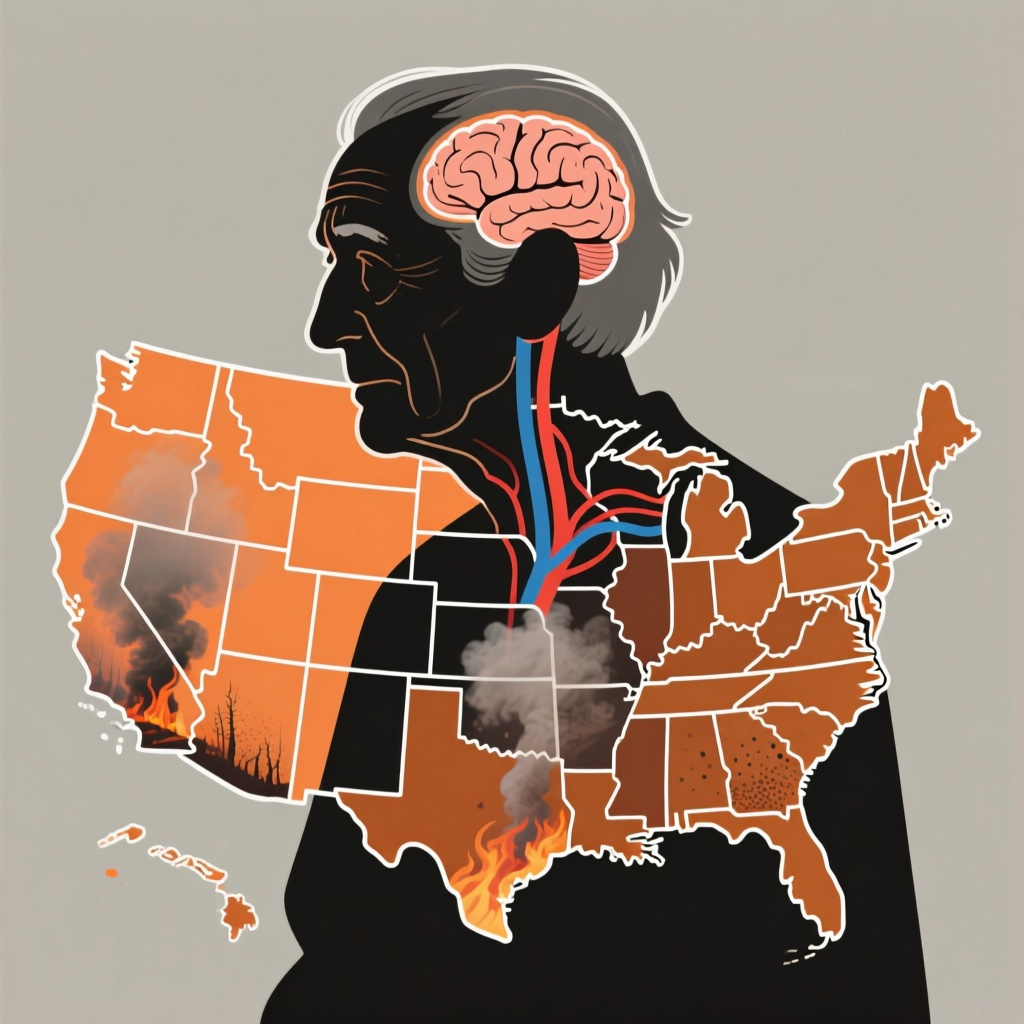
Beyond the Lungs: How Ambient Air Pollution Drives Alzheimer’s Neuropathology and Cognitive Decline

Beyond the Lungs: How Ambient Air Pollution Drives Alzheimer’s Neuropathology and Cognitive Decline

Emerging evidence confirms that air pollution, particularly PM2.5 and NO2, is directly associated with Alzheimer’s neuropathology, structural brain changes, and cognitive decline. New research highlights that these effects are partially mediated by pulmonary function and manifest as increased amyloid-related pathology at autopsy.
The Evolving Genetic Landscape of Parkinson’s Disease: Global Prevalence, Phenotypic Correlations, and the Precision Medicine Imperative

The Evolving Genetic Landscape of Parkinson’s Disease: Global Prevalence, Phenotypic Correlations, and the Precision Medicine Imperative

This review synthesizes recent large-scale genomic evidence (ROPAD, PD GENEration, MDSGene) to outline the diagnostic yield, ethnic variations, and genotype-phenotype correlations in Parkinson’s disease, emphasizing the transition toward universal genetic testing for clinical trial stratification.
One in Three Older Emergency Admissions Face Cognitive Morbidity: Insights from the ORCHARD-EPR Study

One in Three Older Emergency Admissions Face Cognitive Morbidity: Insights from the ORCHARD-EPR Study

A large-scale cross-sectional study of 51,202 admissions reveals that 35.6% of patients aged 70 and older experience cognitive morbidity, predominantly delirium. The findings underscore the urgent necessity for hospital-wide screening and multidisciplinary geriatric support across nearly all medical and surgical specialties.