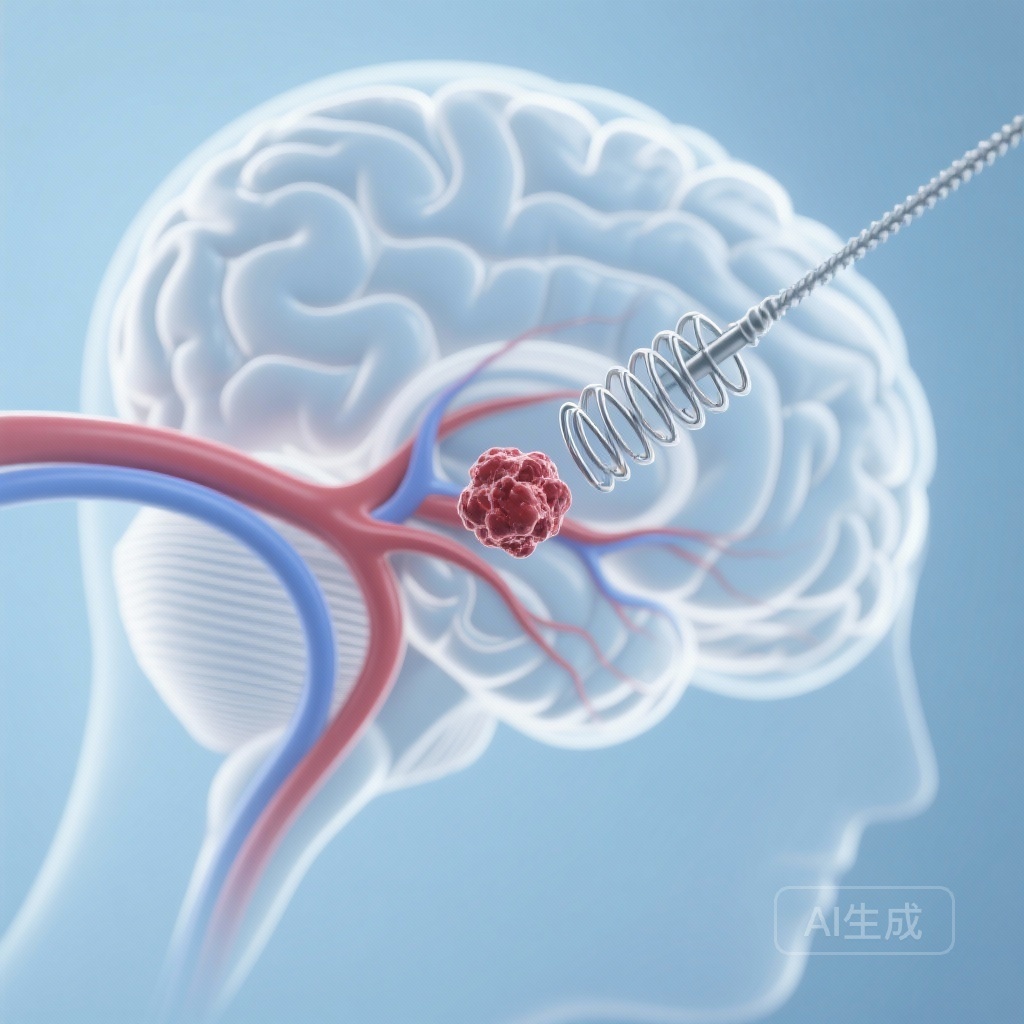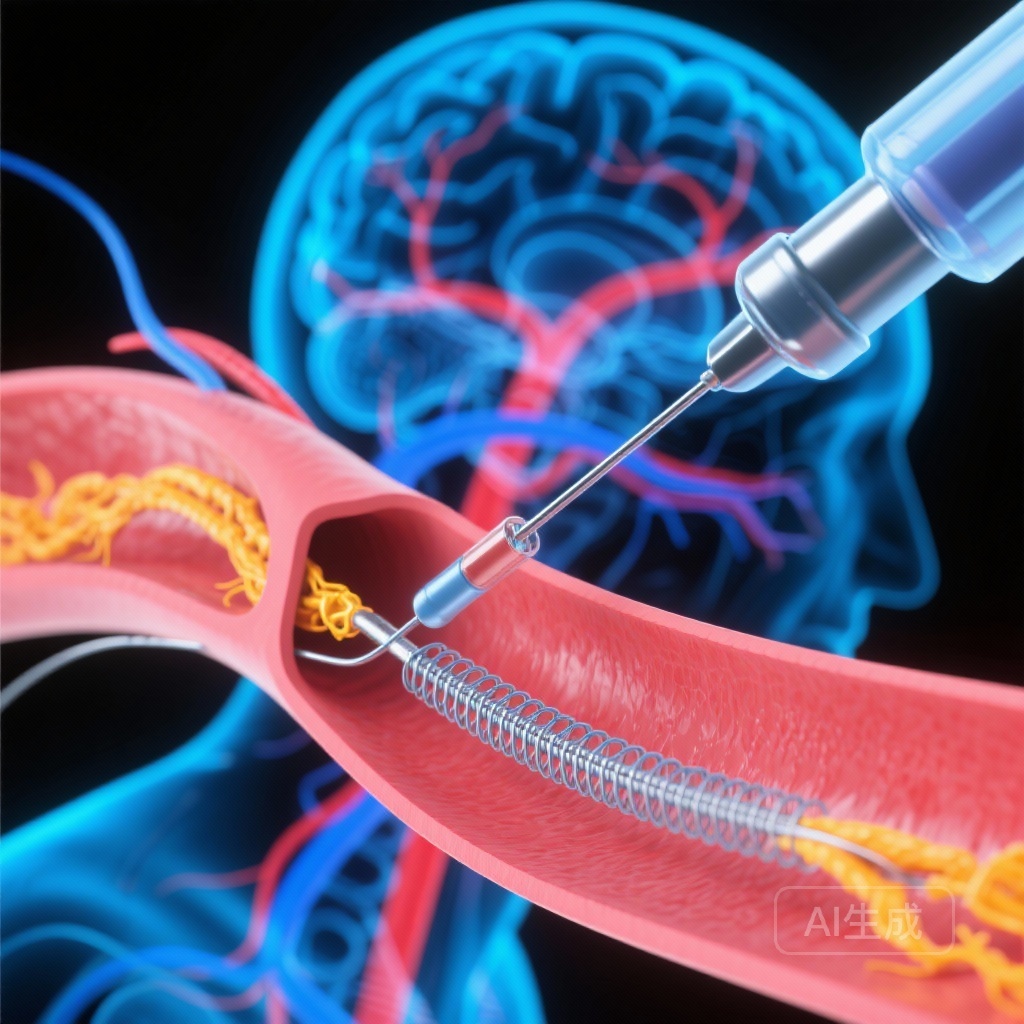
General vs Nongeneral Anesthesia in Endovascular Thrombectomy for Large Core Strokes: Insights from the SELECT2 Trial and Related Evidence

General vs Nongeneral Anesthesia in Endovascular Thrombectomy for Large Core Strokes: Insights from the SELECT2 Trial and Related Evidence

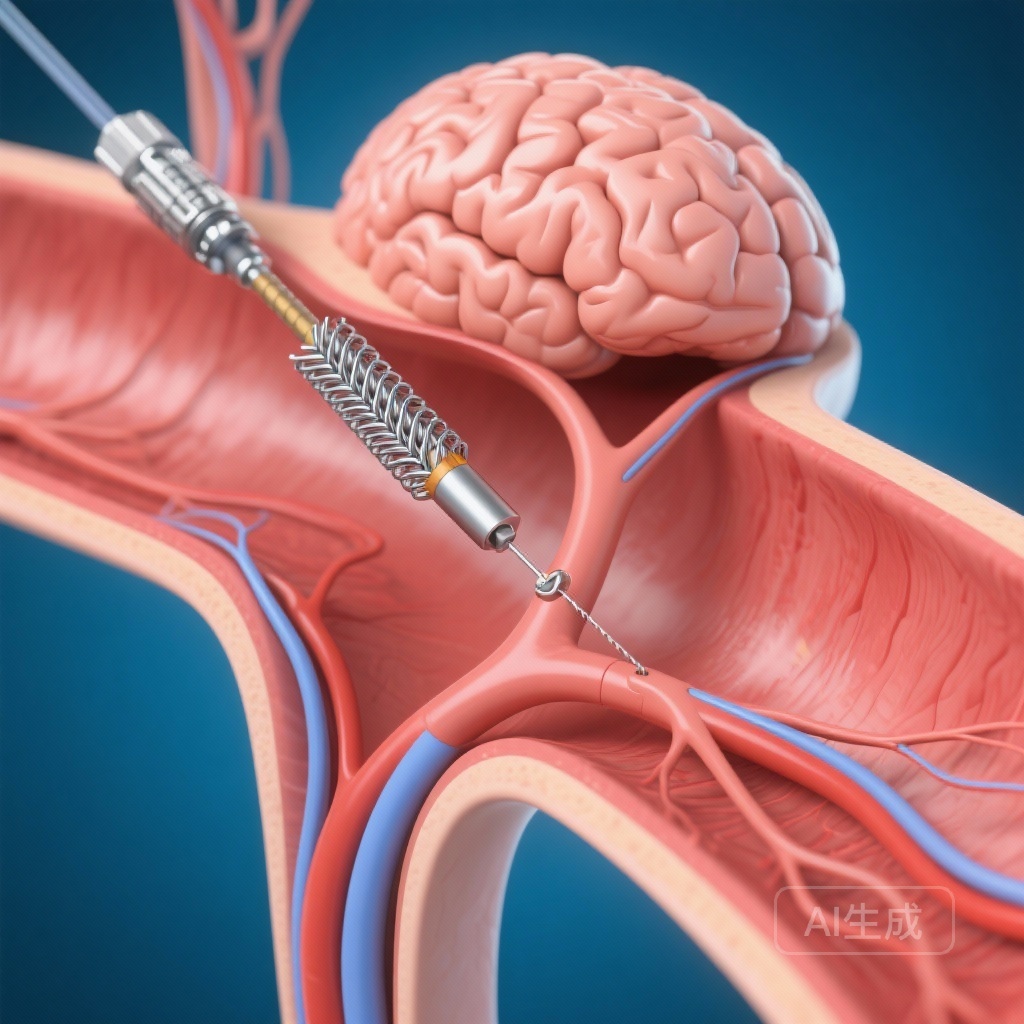
This review synthesizes evidence on anesthesia approaches during endovascular thrombectomy (EVT) for large core ischemic strokes, focusing on a prespecified secondary analysis of the SELECT2 trial that shows comparable 90-day outcomes between general anesthesia and non-general anesthesia.
General Anesthesia May Improve 90‑Day Outcomes and Reperfusion After EVT for Large‑Vessel Ischemic Stroke: Key Takeaways from the SEGA Randomized Trial

General Anesthesia May Improve 90‑Day Outcomes and Reperfusion After EVT for Large‑Vessel Ischemic Stroke: Key Takeaways from the SEGA Randomized Trial

The SEGA randomized trial suggests general anesthesia (GA) during endovascular therapy for large‑vessel occlusion stroke may lead to better 90‑day functional outcomes and higher reperfusion rates than moderate sedation, though credible intervals overlap and uncertainties remain.
Seizure Burden Falls Over Time in Treatment‑Resistant Focal Epilepsy: Implications for Interpreting Open‑Label Disease‑Modifying Claims

Seizure Burden Falls Over Time in Treatment‑Resistant Focal Epilepsy: Implications for Interpreting Open‑Label Disease‑Modifying Claims

The HEP2 prospective cohort shows that most patients with focal treatment‑resistant epilepsy experienced substantial seizure reductions over 18–36 months; ASM additions produced modest gains but rarely achieved freedom, and device-treated patients followed similar trajectories to those without devices.
IV Thrombolysis Outperformed Endovascular Thrombectomy for Basilar Artery Occlusion in a Multicenter Cohort: What Clinicians Should Know

IV Thrombolysis Outperformed Endovascular Thrombectomy for Basilar Artery Occlusion in a Multicenter Cohort: What Clinicians Should Know

A 523‑patient multicenter cohort found intravenous thrombolysis alone was associated with better 3‑month functional outcomes and lower mortality than endovascular thrombectomy (± IVT) for acute basilar artery occlusion after adjustment for confounders. Results prompt cautious reappraisal of EVT vs IVT in BAO and call for randomized trials.
Giving IV Thrombolysis in the Late Window Before Transfer for Thrombectomy: Improved Recanalization and 3‑Month Outcomes in a Multicenter French Cohort

Giving IV Thrombolysis in the Late Window Before Transfer for Thrombectomy: Improved Recanalization and 3‑Month Outcomes in a Multicenter French Cohort

A multicenter retrospective cohort (OPEN-WINDOW) found that IV thrombolysis given beyond 4.5 hours before interhospital transfer for EVT was associated with higher rates of recanalization during transfer and better 3‑month functional outcomes without increased hemorrhagic complications.
Low‑Dose Interleukin‑2 Expands Regulatory T Cells and Modulates Biomarkers in Mild–Moderate Alzheimer’s Disease: Phase 2a Randomized Trial Shows Safety and Promising Signals

Low‑Dose Interleukin‑2 Expands Regulatory T Cells and Modulates Biomarkers in Mild–Moderate Alzheimer’s Disease: Phase 2a Randomized Trial Shows Safety and Promising Signals

A phase 2a randomized trial found low‑dose IL‑2 given every 4 weeks was safe, expanded regulatory T cells, altered peripheral inflammatory mediators, increased CSF Aβ42, stabilized NfL, and trended toward slower cognitive decline in mild–moderate AD.
Extratemporal epilepsy, obesity and male sex predict SUDEP risk in drug‑resistant focal epilepsy: clinical insights from the REPO2MSE prospective case‑control study

Extratemporal epilepsy, obesity and male sex predict SUDEP risk in drug‑resistant focal epilepsy: clinical insights from the REPO2MSE prospective case‑control study

A multicentre prospective nested case‑control analysis (REPO2MSE) identifies extratemporal seizure onset, BMI ≥30, male sex, and predominantly nocturnal seizures as independent SUDEP risk factors in drug‑resistant focal epilepsy; peri‑ictal hypoxaemia and focal‑to‑bilateral tonic‑clonic seizure frequency were not significant.
A Standardized RANO Resection Classification Links Supramaximal Surgery to Meaningful Survival Gains in IDH‑Mutant Grade 2 Glioma

A Standardized RANO Resection Classification Links Supramaximal Surgery to Meaningful Survival Gains in IDH‑Mutant Grade 2 Glioma

An international retrospective cohort (n=1,391) validates a four‑tier RANO classification of residual T2‑FLAIR volume: supramaximal resection confers the largest survival benefit, with graded, durable advantages for maximal versus submaximal resections across IDH‑mutant astrocytoma and oligodendroglioma.
Microbubble‑Enhanced Focused Ultrasound with Temozolomide Shows Feasibility and Promising Survival in High‑Grade Glioma — Phase 1/2 Multicentre Results

Microbubble‑Enhanced Focused Ultrasound with Temozolomide Shows Feasibility and Promising Survival in High‑Grade Glioma — Phase 1/2 Multicentre Results

A multicentre phase 1/2 trial reports that MRI‑guided microbubble‑enhanced transcranial focused ultrasound (MB‑FUS) can safely open the blood–brain barrier and be combined with standard adjuvant temozolomide in high‑grade glioma, with median overall survival 31.3 months and feasibility for non‑invasive plasma biomarker monitoring.
Aducanumab Removes Superficial Cortical Amyloid but Associates with Local Vascular Injury and ARIA: Clinicopathological Evidence from a Retrospective Case–Control Study

Aducanumab Removes Superficial Cortical Amyloid but Associates with Local Vascular Injury and ARIA: Clinicopathological Evidence from a Retrospective Case–Control Study

Autopsy of aducanumab-treated Alzheimer’s cases shows preferential clearance of superficial layer I amyloid, PET Centiloid reductions, and ARIA-associated microvascular pathology, implicating perivascular amyloid removal and vessel injury as mechanisms that inform monitoring and therapy design.
Targeted Vaccination Is Most Efficient but Not Cost‑Effective: National Serosurvey and Modelling of Japanese Encephalitis in Bangladesh

Targeted Vaccination Is Most Efficient but Not Cost‑Effective: National Serosurvey and Modelling of Japanese Encephalitis in Bangladesh

A nationally representative serosurvey and transmission modelling study in Bangladesh estimates low population-level JEV exposure but large numbers of infections annually; spatially targeted vaccination would be most efficient, though not cost-effective under conventional thresholds.
Efficacy and Implementation of a Digital Cognitive Behavioural Self-Management Programme (IBD-BOOST) for Fatigue, Pain, and Faecal Incontinence in Inflammatory Bowel Disease: A Comprehensive Review

Efficacy and Implementation of a Digital Cognitive Behavioural Self-Management Programme (IBD-BOOST) for Fatigue, Pain, and Faecal Incontinence in Inflammatory Bowel Disease: A Comprehensive Review

This review evaluates the IBD-BOOST digital cognitive behavioural self-management intervention's design, trial outcomes, process evaluation, and clinical implications for managing fatigue, pain, and faecal incontinence in IBD.