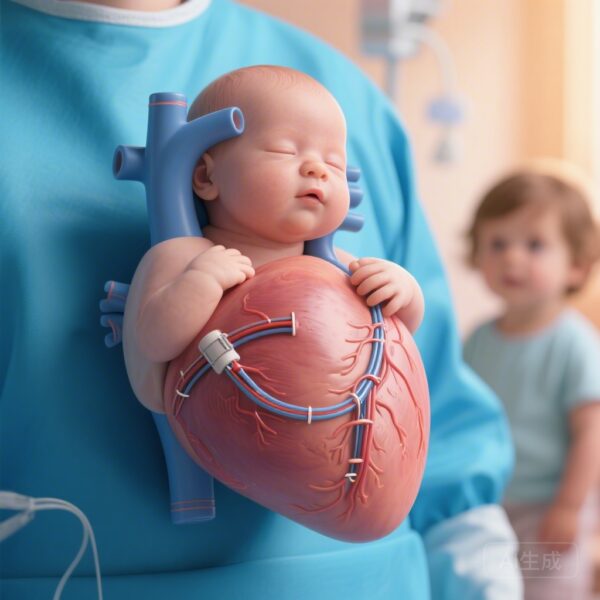
High Morbidity and Nuanced Outcomes in the SVR Trial
Highlights
- Global morbidity remains exceptionally high, with 87% of SVR trial participants experiencing death or a major complication over 16 years of follow-up.
- While overall outcomes did not differ significantly between the Right Ventricle-to-Pulmonary Artery Shunt (RVPAS) and the modified Blalock-Taussig-Thomas Shunt (mBTTS), a critical interaction with baseline tricuspid regurgitation was identified.
- Participants with moderate-to-severe pre-Norwood tricuspid regurgitation had significantly worse outcomes and higher mortality when receiving an RVPAS compared to an mBTTS.
- Prematurity and clinical site variation remain potent independent predictors of long-term outcomes in single-ventricle disease.
The Evolution of Single-Ventricle Management
For decades, the management of hypoplastic left heart syndrome (HLHS) and other single-ventricle variants has been defined by the staged surgical palliation sequence, beginning with the Norwood procedure. A pivotal moment in this field was the Single Ventricle Reconstruction (SVR) trial, which compared the modified Blalock-Taussig-Thomas shunt (mBTTS) with the right ventricle-to-pulmonary artery shunt (RVPAS). Early results from the trial suggested a 1-year transplant-free survival advantage for the RVPAS. However, as the cohort aged, this initial benefit appeared to dissipate, raising complex questions about the long-term trade-offs associated with each shunt type. The primary challenge for clinicians has been interpreting these outcomes amidst a landscape of diverse morbidities, ranging from ventricular dysfunction to neurodevelopmental delays and repeated hospitalizations.
Study Design: A Novel Hierarchical Approach
To move beyond simple survival metrics, a multi-institutional committee developed a novel hierarchically ranked composite endpoint for this 16-year follow-up study. This endpoint was designed to capture the “global morbidity” of the SVR population. It integrated several critical factors: death, heart transplantation, parent-reported adaptive function, quality of life (QoL), right ventricular (RV) function, major complications, and total hospital stay duration. Participants were ranked based on their most severe outcome over the 16-year period.
The study utilized risk-adjusted ordinal logistic regression to compare outcomes by shunt type. Sensitivity analyses were performed using Kaplan-Meier survival curves, Cox regression, and win ratio analyses to ensure the robustness of the findings. This comprehensive methodology allowed researchers to account for the nuanced reality of living with a single ventricle, where survival is often accompanied by significant clinical and psychosocial burdens.
Key Findings: The Prevalence of Morbidity
The most sobering finding of the 16-year follow-up is that death or major morbidity occurred in 87% of the original SVR trial participants (480 out of 549). This statistic underscores the fact that while surgical techniques have dramatically improved early survival, the long-term trajectory for these patients remains fraught with challenges. The “ideal” outcome—survival free of major complications and with high functional status—remains the exception rather than the rule.
The Shunt-Tricuspid Regurgitation Interaction
While the study found no overall difference in outcomes between the RVPAS and mBTTS groups in the total cohort, a significant interaction was discovered between the shunt type and the severity of pre-Norwood tricuspid regurgitation (TR). In patients with no or only mild TR before the Norwood procedure, shunt type did not significantly influence the long-term composite outcome (OR: 1.3; 95% CI: 0.9-1.8; P = 0.14).
However, for participants with moderate or severe pre-Norwood TR, those who received an RVPAS faced significantly worse outcomes (OR: 0.4; 95% CI: 0.2-0.9; P = 0.03). Most strikingly, Cox regression analysis revealed a five-fold increase in mortality for RVPAS participants with moderate-to-severe TR (HR: 5.4; 95% CI: 2.2-13.1; P = 0.0002). This suggests that the ventriculotomy required for RVPAS placement may be particularly poorly tolerated in hearts already burdened by significant valvular insufficiency.
Additional Predictors of Outcome
Beyond the surgical variables, the study identified prematurity as a significant independent predictor of worse long-term outcomes. Furthermore, the clinical site where the procedure was performed remained a significant factor, highlighting the ongoing impact of institutional experience and post-operative care protocols on long-term patient health.
Expert Commentary and Clinical Implications
The findings from the SVR trial at 16 years provide a critical roadmap for personalized surgical decision-making. Historically, many centers shifted toward the RVPAS due to its perceived hemodynamic stability in the immediate post-operative period. However, these data suggest that for a specific subset of patients—those with significant tricuspid regurgitation—the mBTTS may actually offer a safer long-term profile by avoiding a right ventriculotomy.
The high rate of global morbidity also calls for a paradigm shift in how we counsel families and structure long-term follow-up. We must move beyond the binary metric of survival and focus on optimizing “thrival.” This includes aggressive management of RV function, early neurodevelopmental intervention to improve adaptive function, and strategies to minimize the cumulative burden of hospitalization. The study’s use of a hierarchical composite endpoint serves as a model for future pediatric cardiovascular research, emphasizing that the patient’s quality of life and functional capacity are as vital as their survival.
Limitations and Future Directions
Despite the depth of this study, certain limitations exist. The parent-reported nature of some metrics (like adaptive function and QoL) may introduce subjective bias. Additionally, while the 16-year follow-up is extensive, these patients are only now entering young adulthood, a period where new complications, such as Fontan-associated liver disease or worsening heart failure, may emerge. Future investigation is needed to determine the biological mechanisms by which ventriculotomy interacts with valvular regurgitation to drive poor outcomes.
Conclusion
The 16-year results of the SVR trial illustrate the profound resilience of patients with single-ventricle disease while simultaneously highlighting the immense clinical burden they carry. While shunt type does not dictate outcomes for the majority, the presence of moderate-to-severe tricuspid regurgitation should prompt careful consideration of shunt choice during the Norwood procedure. As we look forward, the goal of single-ventricle care must be to reduce the 87% morbidity rate through precision medicine, institutional excellence, and a holistic approach to patient well-being.
Funding and Trial Information
This study was supported by the Pediatric Heart Network (PHN) and the National Heart, Lung, and Blood Institute (NHLBI). ClinicalTrials.gov Identifier: NCT00115934.
References
- Hill KD, Kang L, Wang Q, et al. Single-Ventricle Disease: Long-Term Outcomes and Global Morbidity in the Single Ventricle Reconstruction Trial. Journal of the American College of Cardiology. 2026. PMID: 41811273.
- Ohye RG, Sleeper LA, Mahony L, et al. Comparison of shunt types in the Norwood procedure for single-ventricle lesions. N Engl J Med. 2010;362(21):1980-1990.
- Newburger JW, Sleeper LA, Frommelt PC, et al. Transplantation-free survival and interventions at 3 years of age in the single ventricle reconstruction trial. Circulation. 2014;129(20):2013-2020.