Highlights
- Aggressive electrical stimulation (ES) during the acute phase of Bell’s palsy recovery significantly increases synkinesis severity and reduces botulinum toxin (BoNT) treatment durability.
- A cumulative ES exposure exceeding 4.64 hours is associated with worsened facial synkinesis and diminished BoNT efficacy, marking a critical safety threshold.
- Chronic-phase ES (>6 months post-onset) correlates with improved facial function and reduced synkinesis compared to both acute-phase ES and no ES.
Study Background
Bell’s palsy, an acute idiopathic facial nerve paralysis, often disrupts facial muscle function and may lead to long-term sequelae such as synkinesis—undesirable involuntary muscle contractions during voluntary movement. While electrical stimulation (ES) therapy aims to enhance facial nerve regeneration, its timing and dosage remain contentious. Clinicians face the challenge of optimizing ES protocols to minimize maladaptive plasticity and synkinesis while promoting functional recovery. This study addresses the critical unmet need for evidence-based guidance on the phase-specific use of ES in severe Bell’s palsy cases, particularly those with extensive electrodiagnostic criteria and clinically confirmed synkinesis.
Study Design
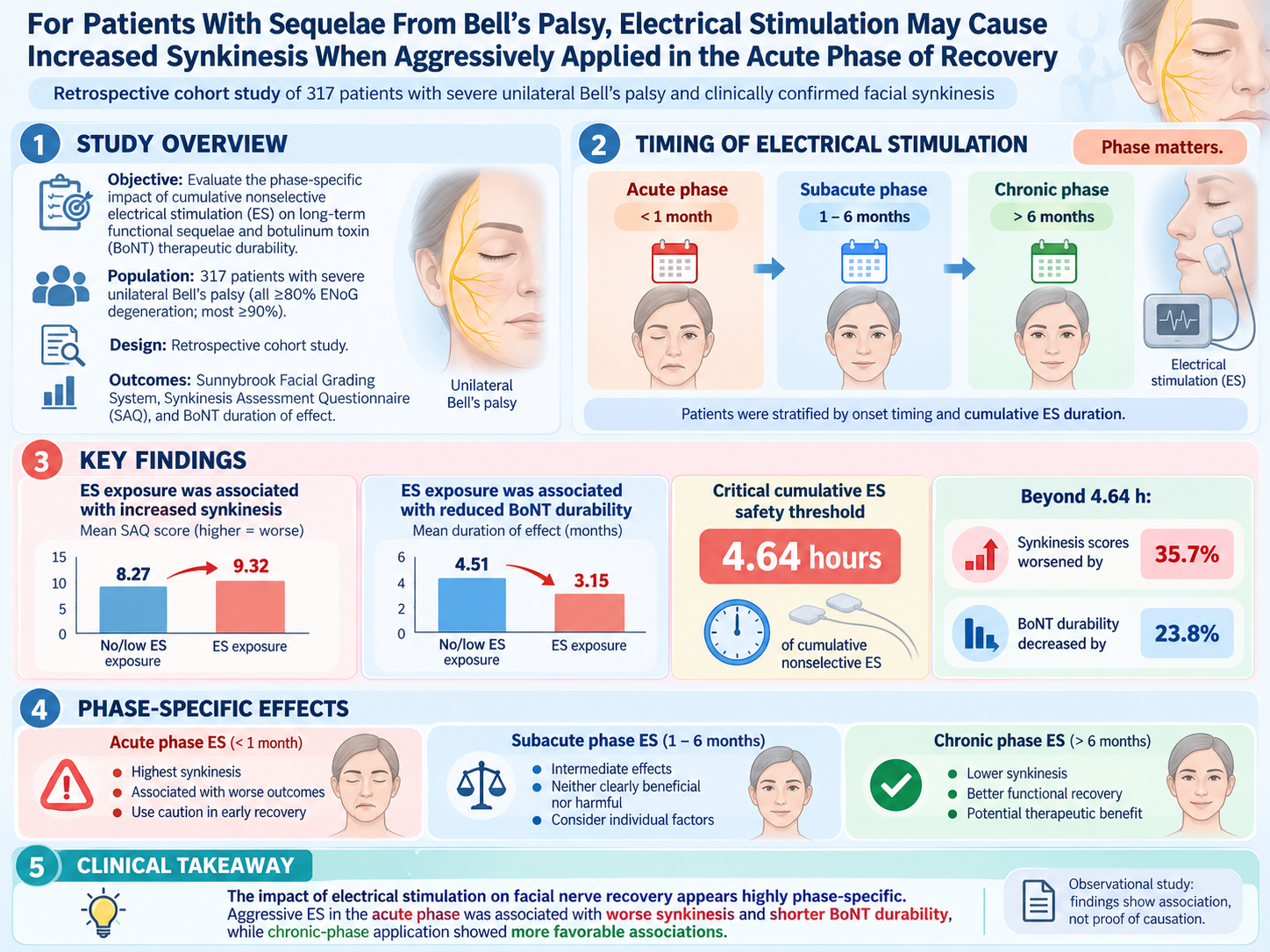
This retrospective cohort study evaluated 317 patients diagnosed with severe unilateral Bell’s palsy characterized predominantly by ≥90% degeneration on electroneuronography (ENoG), with all subjects exceeding ≥80% degeneration. All patients developed clinically verified facial synkinesis. Participants were stratified based on the timing of ES initiation: acute phase (6 months). Cumulative ES duration was recorded and analyzed in relation to functional outcomes.
Primary outcomes included facial function assessed by the Sunnybrook Facial Grading System, synkinesis evaluated via the Synkinesis Assessment Questionnaire (SAQ), and the therapeutic durability of botulinum toxin injections measured by the duration of clinical effect. Statistical analysis involved age-adjusted analysis of covariance (ANCOVA) for continuous variables and machine learning-based decision tree regression to identify prognostic thresholds for ES exposure.
Key Findings
The study demonstrated a significant association between ES exposure and increased synkinesis severity, with mean SAQ scores of 9.32 in the ES group versus 8.27 in the non-ES group (p = 0.007). Additionally, BoNT durability was notably reduced among patients receiving ES (3.15 months) compared to those who did not (4.51 months; p < 0.001).
A notable finding was the identification of a critical safety threshold at 4.64 hours of cumulative ES exposure. Beyond this threshold, synkinesis worsened by 35.7%, while BoNT durability diminished by 23.8%, highlighting the risk of excessive ES application.
Stratification by phase revealed a distinct dichotomy: acute-phase ES was associated with the worst synkinesis scores (p < 0.001), suggesting that aggressive stimulation early in nerve regeneration may exacerbate maladaptive synaptic remodeling. Conversely, chronic-phase ES correlated with significantly lower synkinesis scores (mean 6.11 ± 2.05) and superior functional recovery compared to both the acute-phase and non-ES cohorts (p = 0.015). Subacute-phase results were intermediate but leaned towards harmful effects when exceeding the cumulative exposure threshold.
Expert Commentary
The differential effects of ES based on recovery phase align with current understanding of neuroplasticity and peripheral nerve regeneration. Early after nerve injury, nonselective electrical impulses may induce aberrant reinnervation patterns, increasing synkinetic miswiring. In contrast, during the later regenerative phase, ES may reinforce correct synaptic connections and muscle contractility, enhancing functional outcomes.
This study’s robust sample size, objective grading scales, and application of machine learning for dosing thresholds provide compelling evidence for a phase-specific approach. However, its retrospective design and reliance on cumulative ES duration without standardized protocol parameters—such as stimulation frequency, intensity, and electrode placement—limit the ability to generalize precise clinical guidelines. Prospective, randomized trials are needed to refine and validate ES protocols further.
Clinicians should carefully weigh the timing and dosage of ES in severe Bell’s palsy, particularly avoiding prolonged or aggressive acute-phase stimulation that may predispose to synkinesis and reduce BoNT treatment durability. Incorporating this evidence into multidisciplinary treatment algorithms can optimize patient selection and therapeutic efficacy.
Conclusion
This investigation elucidates the complex, time-dependent impact of electrical stimulation on facial nerve recovery in Bell’s palsy sequelae. While chronic-phase ES presents as a beneficial adjunct therapy with improved functional outcomes, aggressive application in the acute phase carries significant risk of exacerbating synkinesis and diminishing botulinum toxin efficacy. The identification of a 4.64-hour cumulative ES safety threshold aids in clinical decision-making to mitigate adverse effects.
<pFuture research should prospectively examine standardized ES protocols and incorporate electrophysiological correlates to tailor individualized treatment. For now, clinicians are advised to adopt a judicious, phase-specific approach when implementing ES in Bell's palsy rehabilitation to balance nerve regeneration facilitation and prevention of maladaptive sequelae.Funding and Clinical Trials
No funding information or clinical trial registration was reported for this study.
References
- Jung S, Lee JH, Sur JS, Kwak MY, Kim J. For Patients With Sequelae From Bell’s Palsy, Electrical Stimulation May Cause Increased Synkinesis When Aggressively Applied in the Acute Phase of Recovery. The Laryngoscope. 2026 Oct 15; PMID: 42885175.
- Gilden DH. Bell’s Palsy. N Engl J Med. 2004;351(13):1323-1331.
- VanSwearingen JM, Brach JS. Prevalence and Nature of Synkinesis in Patients With Facial Paralysis. Otolaryngol Head Neck Surg. 1996;114(4):662-669.
- Peitersen E. Bell’s palsy: The spontaneous course of 2,500 peripheral facial nerve palsies of different etiologies. Acta Otolaryngol Suppl. 2002;549:4-30.
- Fattah AY, Bedei A, Hadlock TA. Correlation Between Botulinum Toxin Dosage and Duration of Effect in Facial Synkinesis. Laryngoscope. 2014;124(7):E276-81.