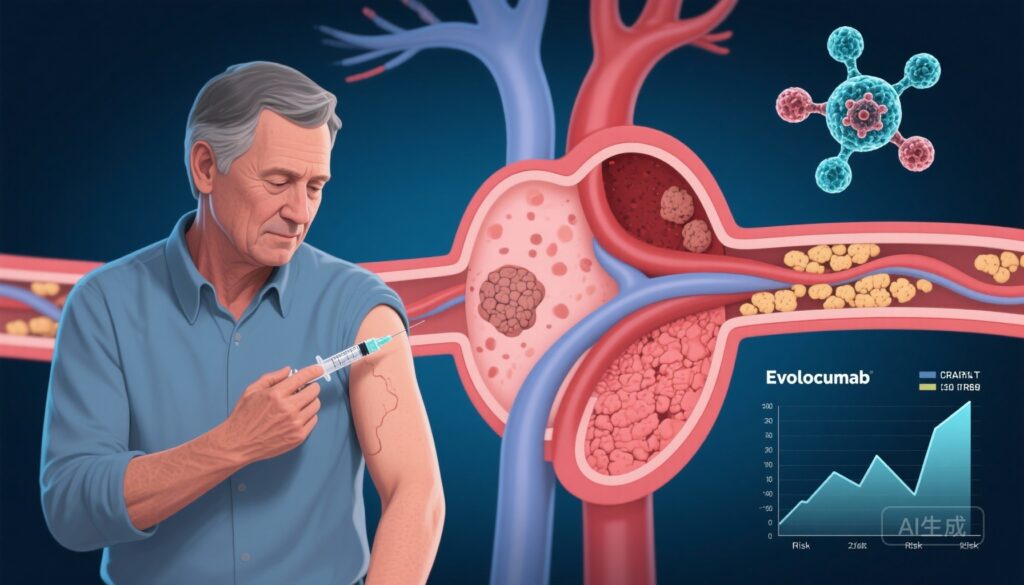
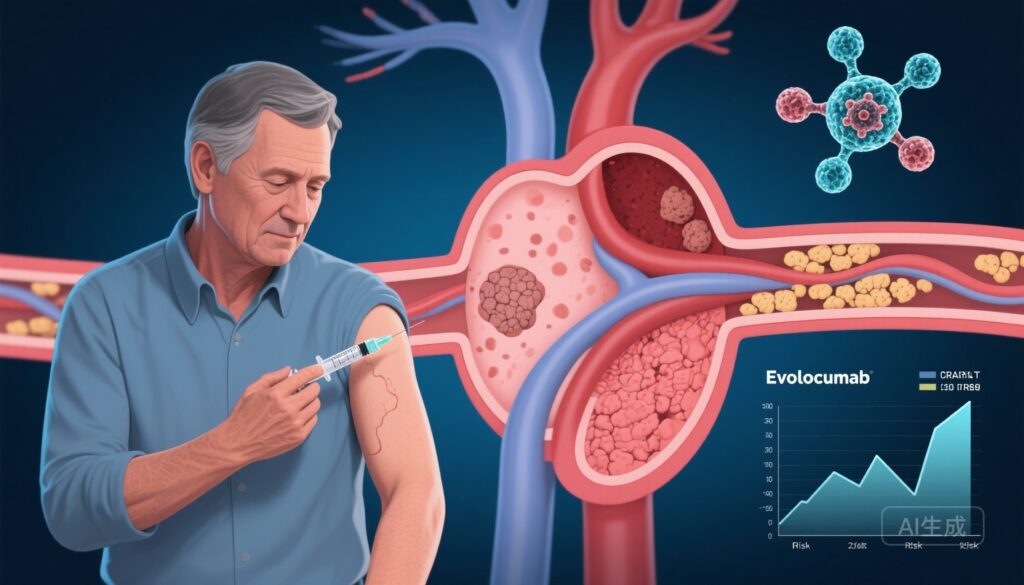
In VESALIUS-CV, evolocumab reduced first major adverse cardiovascular events by ~25% (HR 0.75) versus placebo in patients with atherosclerosis or diabetes without prior myocardial infarction or stroke, with modest absolute risk reductions and no new safety signals over 4.6 years.
In an international randomized trial, subcutaneous zalunfiban given at first medical contact improved pre‑PCI infarct‑related artery patency and reduced the likelihood of a worse 30‑day hierarchical clinical outcome versus placebo, with more mild–moderate bleeding but no increase in severe bleeding.
Elinzanetant, approved in the UK in July 2025 and by the FDA in October 2025, is the first non-hormonal NK1 and NK3 receptor antagonist for moderate-to-severe menopausal vasomotor symptoms, demonstrated effective and safe in pivotal phase 2b/3 trials with added benefits on sleep and quality of life.
OASIS‑3 evaluated once‑daily oral elinzanetant 120 mg vs placebo for 52 weeks in postmenopausal women with moderate–severe vasomotor symptoms. At 12 weeks elinzanetant reduced daily moderate–severe VMS frequency by a least‑squares mean difference of −1.6 vs placebo (P < .001); numerical advantages persisted through 50–52 weeks with no signal for hepatotoxicity or endometrial hyperplasia.
An expert summary of the 2025 ICS position statement on immune checkpoint inhibitor–associated cardiovascular toxic effects, with practical diagnostic and treatment guidance for clinicians and researchers.
A multicenter randomized trial shows stress CMR myocardial perfusion mapping with endotype-directed therapy reclassified diagnosis in 53% of patients with unobstructed coronaries and produced a large, clinically meaningful 21-point improvement in SAQ at 12 months.
Phase 2 studies demonstrate that elebsiran, a small interfering RNA, combined with PEG-IFNα, enhances sustained HBsAg loss rates in chronic HBV infection, offering a promising approach toward functional cure.
Large individual-patient meta-analyses show that 6-month albuminuria reduction and 3-year total GFR slope predict kidney failure across CKD populations—supporting their use as surrogate endpoints in randomized trials with caveats for chronic slope and disease severity.
The CARES phase 3b trial in Africa found cabotegravir + rilpivirine long‑acting injections every 8 weeks noninferior to continued oral ART for viral suppression at 96 weeks, with an acceptable safety profile and implementation considerations for African programmes.
In cognitively unimpaired older adults with elevated amyloid, higher daily step counts were associated with slower inferior-temporal tau accumulation and attenuated cognitive and functional decline, with benefit plateauing around 5,000–7,500 steps/day.
This review synthesizes recent evidence (2021–2025) on circulating tumor DNA-guided adjuvant therapy, highlighting advances in personalized cancer management and emerging challenges.
The randomized phase 2/3 DYNAMIC-III trial shows that postoperative circulating tumor DNA (ctDNA) strongly stratifies recurrence risk in stage III colon cancer. ctDNA-guided de-escalation reduced oxaliplatin exposure and hospitalizations with outcomes close to standard care; escalation for ctDNA-positive disease did not improve recurrence-free survival.
A phase 2 arm of the EDGE‑Gastric trial reports a 59% confirmed objective response rate and median PFS 12.9 months with domvanalimab (anti‑TIGIT) plus zimberelimab (anti‑PD‑1) combined with FOLFOX in untreated HER2‑negative advanced gastric/GEJ/esophageal adenocarcinoma, with a manageable safety profile.
In PASO‑DOBLE, switching virologically suppressed adults to dolutegravir/lamivudine maintained viral suppression at 48 weeks and was non‑inferior to switching to bictegravir/emtricitabine/tenofovir alafenamide, supporting shared decision‑making for maintenance regimen selection.
This review summarizes early-phase clinical trials assessing the safety, pharmacokinetics, and neutralisation activity of three innovative broadly neutralising monoclonal antibodies—N6LS, PGDM1400LS, and PGT121.414.LS—for HIV-1 prevention and therapy.
In a randomized phase 3b trial of pregnant women using the dapivirine vaginal ring or daily oral TDF/FTC for HIV prevention, 12‑month infant follow‑up showed no product‑related serious or grade 3+ adverse events and no HIV transmissions, supporting PrEP use in pregnancy.
A nested PK and safety sub‑study of D3/PENTA 21 shows once‑daily DTG/3TC dispersible and film‑coated fixed‑dose tablets deliver adequate drug exposures across WHO weight bands in children 2–<15 years, with no drug‑related discontinuations and comparable PK to historical pediatric data.
The DYNAMIC-III trial validates circulating tumor DNA (ctDNA) as a strong prognostic marker in stage III colon cancer. ctDNA-guided de-escalation reduced oxaliplatin exposure and hospitalizations with near-standard outcomes, but escalation for ctDNA-positive patients failed to improve recurrence-free survival.
In a phase 2 cohort (EDGE‑Gastric A1), domvanalimab (anti‑TIGIT) plus zimberelimab (anti‑PD‑1) combined with FOLFOX produced a 59% ORR, median PFS 12.9 months and median OS 26.7 months in 41 previously untreated HER2‑negative gastroesophageal adenocarcinoma patients, with immune‑related AEs in 27%.