Highlights
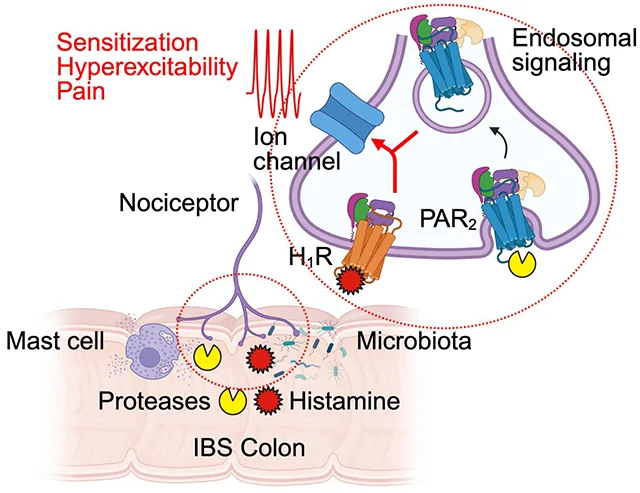
- Protease-activated receptor-2 (PAR2) and histamine H1 receptor (H1R) are coexpressed in human and mouse colonic nociceptors, linking inflammatory mediators to visceral pain.
- Endosomal signalling of irreversibly cleaved PAR2 amplifies and prolongs histamine-induced nociceptor hyperexcitability, sustaining chronic pain in IBS beyond transient receptor activation.
- Pharmacological blockade of PAR2 or H1R abolishes nociceptor sensitization induced by IBS fecal supernatants, indicating potential therapeutic targets.
- Biophysical and electrophysiological evidence supports that sustained PAR2 endosomal activity sensitizes H1R-associated Gαq and β-arrestin2 signalling enhancing pain receptor crosstalk.
Background
Irritable bowel syndrome (IBS) is a common functional gastrointestinal disorder characterized clinically by recurrent abdominal pain linked to altered gut sensitivity. Mast cells and intestinal bacteria release proteases and histamine, both known pronociceptive mediators capable of sensitizing colonic sensory neurons (nociceptors). However, the mechanistic basis linking these mediators to persistent nociceptor hypersensitivity and chronic pain remains incompletely understood. Protease-activated receptor-2 (PAR2), a G-protein coupled receptor activated by proteolytic cleavage, and histamine receptors (particularly H1 subtype) have been implicated independently in visceral hypersensitivity. The transient nature of histamine receptor signalling presented a conundrum for explaining recurrent pain episodes, motivating investigation into whether sustained PAR2 activation within endosomes might amplify histamine-induced pronociception and drive chronic IBS pain.Key Content
Coexpression and Functional Interaction of PAR2 and Histamine H1R
RNAscope in situ hybridization studies identified coexpression of PAR2 and H1R mRNA in dorsal root ganglion (DRG) nociceptors from human and mouse samples, establishing a cellular substrate for receptor interaction. This dual expression suggests a potential for receptor crosstalk in sensitization mechanisms of colonic nociceptors.In Vivo and Ex Vivo Modelling of IBS-Associated Nociceptor Sensitivity
Intracolonic infusion of fecal supernatants from IBS patients with elevated histamine and proteolytic activity enhanced the mechanosensitivity of mouse colonic nociceptors, correlating clinical samples with functional hypersensitivity. The heightened nociceptive response was abolished by selective antagonists of either PAR2 or H1R, confirming the functional necessity of both receptors in mediating this sensitization.Electrophysiological Demonstration of Synergistic Sensitization
Isolated primary colonic nociceptors exposed to subthreshold concentrations of trypsin (a serine protease activating PAR2) and histamine showed significant hyperexcitability comparable to that induced by patient fecal supernatants. Pre-activation with trypsin sensitized histamine-induced hyperexcitability in wild-type but not Par2−/− nociceptors, underlying specific dependence on PAR2.Role of Endosomal Signalling in Sustained Sensitization
Inhibitors of endocytosis prevented the hypersensitivity induced by combined protease and histamine stimulation, supporting that internalization and sustained signaling of activated PAR2 within endosomes underlie the persistent nociceptor hyperexcitability. Biophysical assays confirmed that trypsin enhanced histamine-induced activation of H1R-associated Gαq and β-arrestin2 effectors both at the plasma membrane and within endosomal compartments.Asymmetric Sensitization and Mechanistic Insights
Interestingly, histamine did not sensitize protease-induced responses, consistent with histamine’s inability to produce enduring nociceptor hypersensitivity alone. This unidirectional amplification reinforces the central role of irreversible PAR2 cleavage and its endosomal signalling for pain maintenance in IBS, potentially by prolonging histamine receptor signalling and recruiting downstream pronociceptive pathways.Expert Commentary
These findings elucidate a sophisticated mechanism of nociceptor sensitization wherein irreversibly activated PAR2 escapes rapid desensitization by trafficking into endosomal compartments, maintaining an active signalling state that potentiates histamine receptor function. This endosomal signalling paradigm challenges traditional views of GPCR signalling limited to the plasma membrane and offers an explanation for persistent visceral pain in IBS despite transient histamine release. Clinically, these results identify PAR2 as a promising therapeutic target. Unlike histamine receptor antagonists, which may reduce acute symptoms, blocking PAR2 endosomal signalling could mitigate the chronic, amplified pain state. This is particularly relevant given the interplay between gut microbial proteases and host inflammatory mediators in IBS pathophysiology, underscoring the importance of integrated mucosal and neuronal mechanisms. While promising, translation requires consideration of PAR2’s pleiotropic roles, and selective inhibition of pathological endosomal signalling over physiological protease functions. Moreover, the relevance of these mechanisms in IBS subtypes and other functional gastrointestinal disorders merits further investigation.Conclusion
Persistent endosomal signalling of protease-activated receptor-2 critically amplifies histamine-induced nociceptor hyperexcitability, constituting a dominant mechanism for recurrent, chronic visceral pain in IBS. This discovery advances understanding of pain receptor crosstalk, sustained GPCR signalling, and the neuronal basis of IBS pain. Targeted modulation of PAR2 endosomal pathways holds substantial promise for novel pain management strategies in IBS, a condition with significant clinical burden and limited effective therapies.References
- Jimenez-Vargas NN, Sokrat B, Gilmor DA, et al. Endosomal signalling of protease-activated receptor-2 amplifies histamine-induced pain of irritable bowel syndrome. Gut. 2026 Nov 11;75(12):2351-2364. PMID: 42156171. https://pubmed.ncbi.nlm.nih.gov/42156171/
Specialty calculators
For clinical reference; use professional judgment.