Highlights
- In people with early metabolic dysfunction-associated steatotic liver disease (MASLD) without fibrosis, oral glucose absorption during a 75 g oral glucose tolerance test (OGTT) was measurably higher than in matched healthy controls.
- The increase was not explained by faster gastric emptying, suggesting that the intestine itself, rather than stomach motility, may be driving the altered glucose handling.
- Despite preserved suppression of endogenous glucose production after glucose loading, participants with MASLD had impaired glucose clearance relative to insulin, pointing more toward peripheral insulin resistance than primary hepatic insulin resistance at this stage.
- Among several glucose flux measures, the rate of appearance of oral glucose (RaO) showed the strongest association with MASLD, with a 1-SD increase linked to nearly fivefold higher odds of disease.
Background
Metabolic dysfunction-associated steatotic liver disease (MASLD) has emerged as the preferred term for a disorder long recognized as fatty liver disease linked to insulin resistance, obesity, dyslipidemia, and cardiometabolic risk. Its clinical importance is substantial: MASLD is common, frequently silent, and can progress from simple steatosis to steatohepatitis, fibrosis, cirrhosis, and hepatocellular carcinoma. Even before advanced liver injury develops, the condition is tightly interwoven with systemic metabolic dysfunction.
One mechanistic question has attracted growing attention: what comes first in early MASLD, hepatic insulin resistance or altered nutrient handling from the gut? The liver receives absorbed glucose directly through the portal circulation, making hepatic glucose flux a key determinant of de novo lipogenesis, inflammation, and fibrogenesis. If oral glucose absorption is increased early in MASLD, that could amplify postprandial glycemic exposure and potentially accelerate liver fat accumulation. The new Diabetologia study by Tricò and colleagues addresses this issue by directly quantifying glucose kinetics during OGTTs.
Study design
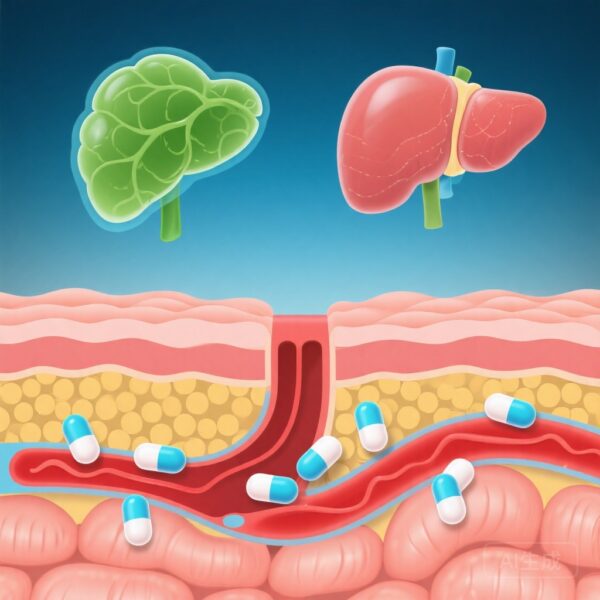
This was a mechanistic human study using stable isotopes to quantify glucose fluxes during a standard 75 g OGTT in individuals with MASLD without fibrosis and in matched healthy control participants. The main outcome was the rate of appearance of oral ingested glucose (RaO), a kinetic measure that reflects how quickly glucose derived from the test drink enters the circulation. Investigators also assessed total glucose absorption, glucose clearance relative to plasma insulin, and the suppression of endogenous glucose production after the glucose load.
In a separate cohort, the authors measured gastric emptying during an OGTT using the 13C-acetate breath test and estimated hepatic steatosis risk. This design allowed them to test whether enhanced oral glucose appearance might simply be explained by faster gastric emptying or whether a more distal intestinal mechanism was likely.
The study therefore combined two clinically relevant questions: first, whether early MASLD is associated with altered postprandial glucose kinetics; and second, whether gastric motility explains any observed difference in glucose absorption.
Key findings
The primary message is straightforward: oral glucose absorption was higher in early MASLD, and the excess absorption was not attributable to accelerated gastric emptying.
| Finding | Result | Clinical interpretation |
|---|---|---|
| RaO at 1 hour | 34% higher in MASLD; +318 ± 142 µmol/kg; p = 0.031 | More glucose from the test drink entered the circulation early after ingestion. |
| Total glucose absorption | 52% increase; +6.4 ± 1.8 g; p = 0.001 | Overall intestinal glucose delivery to blood was substantially greater. |
| Glucose clearance relative to insulin | Reduced in MASLD | Suggests a mismatch between insulin secretion/action and glucose disposal, consistent with peripheral insulin resistance. |
| Suppression of endogenous glucose production | Preserved after glucose load | Argues against major hepatic insulin resistance at this early stage. |
| Association with MASLD | 1-SD higher 1-hour RaO associated with OR 4.99 (95% CI 1.44, 31.57); p = 0.036 | RaO was the strongest glucose flux correlate of prevalent MASLD, independent of confounders. |
| Gastric emptying | Not associated with hepatic steatosis risk | Points away from the stomach as the main explanation for increased oral glucose appearance. |
A particularly important mechanistic observation is the dissociation between peripheral and hepatic insulin responses. Participants with MASLD showed reduced glucose clearance relative to insulin, which indicates that the body’s ability to dispose of glucose was impaired despite insulin availability. However, suppression of endogenous glucose production remained intact after the glucose challenge. In practical terms, this pattern suggests that the liver was still responding appropriately to the postprandial insulin signal, at least enough to restrain glucose output, while peripheral tissues were less efficient at clearing glucose from the circulation.
That distinction matters. In many clinicians’ mental models, MASLD is often framed as a condition driven primarily by hepatic insulin resistance. These data suggest that, in at least some early-stage patients without fibrosis, altered intestinal glucose absorption and peripheral insulin resistance may precede overt hepatic insulin resistance. If confirmed, this would shift attention toward the gut-liver axis earlier in the disease course.
The gastric emptying findings are equally informative. Because the rate at which the stomach empties determines how quickly nutrients reach the small intestine, accelerated gastric emptying could have explained the higher RaO. Instead, the separate gastric emptying assessment did not support that hypothesis. The implication is that the difference likely reflects intestinal handling of glucose, such as changes in brush-border transport, enterocyte processing, hormonal signaling, or gut-derived regulatory pathways, rather than simple differences in stomach motility.
Clinical interpretation
This study is valuable because it moves beyond routine glucose measurements and asks a more fundamental question: what are the fluxes behind the glycemic curve? Standard OGTT glucose values show the end result of many interacting processes, including ingestion, gastric emptying, intestinal absorption, insulin secretion, hepatic glucose output, and peripheral glucose uptake. By using stable isotopes, the authors were able to separate these components and identify a specific abnormality in oral glucose appearance.
For clinicians, the practical relevance is not immediate diagnostic adoption but mechanistic insight. The finding that oral glucose absorption is increased in early MASLD suggests that postprandial hyperglycemia in these patients may reflect more than diet quality or body weight alone. It also raises the possibility that therapies targeting intestinal carbohydrate absorption could have a role in selected patients. Agents such as alpha-glucosidase inhibitors already reduce carbohydrate absorption, and dual SGLT1/2 inhibition or other gut-directed strategies are being explored in metabolic disease. The study does not prove benefit from any therapy, but it provides a rational basis for future interventional trials.
Another important implication is temporal. If enhanced oral glucose absorption truly occurs before fibrosis and before strong hepatic insulin resistance is established, it may represent an early driver rather than a downstream consequence of liver injury. That could help explain why some patients accumulate hepatic fat and metabolic dysfunction despite only modest changes in traditional risk markers. It also underscores why MASLD should be viewed as a dynamic multisystem disorder, not just a liver imaging finding.
Limitations and cautions
Several caveats should temper overinterpretation. First, the study is mechanistic and observational in nature, so it cannot establish causality. Higher oral glucose absorption may contribute to MASLD, but it may also reflect early metabolic remodeling associated with the disease.
Second, the population was limited to individuals with MASLD without fibrosis. These findings may not generalize to patients with steatohepatitis, advanced fibrosis, cirrhosis, or those receiving glucose-lowering therapy. Disease stage matters, and intestinal glucose handling could evolve over time.
Third, the methods used to quantify glucose kinetics and gastric emptying are specialized and not part of routine clinical care. While they are highly informative for research, they are not ready for bedside adoption as screening tests for MASLD.
Fourth, the abstract does not provide granular information on sample size, body composition matching, dietary patterns, medications, or the exact criteria used to define MASLD in the cohorts. Those factors may influence both glucose kinetics and liver fat risk, and they should be considered when judging generalizability.
What this means for practice and research
For current practice, the study does not change standard management: weight reduction, physical activity, cardiometabolic risk control, diabetes treatment when present, and fibrosis risk stratification remain the cornerstones of MASLD care. However, it does add an important piece to the pathophysiologic puzzle.
For research, the next steps are clear. Investigators should determine whether enhanced oral glucose absorption predicts incident MASLD, progression from steatosis to steatohepatitis, or response to treatment. It will also be important to identify the biological mechanisms underlying this phenotype. Candidate pathways include altered intestinal glucose transporters, changes in incretin signaling, microbial metabolites, bile acid signaling, and portal sensing mechanisms linking the gut to hepatic metabolism.
Finally, interventional studies are needed to test whether reducing intestinal glucose absorption can modify liver fat content, postprandial glycemia, inflammatory markers, or fibrosis progression. If so, the gut could become a more prominent therapeutic target in MASLD than it currently is.
Conclusion
Tricò and colleagues provide compelling evidence that oral glucose absorption is enhanced in early MASLD without fibrosis and that this phenomenon is not explained by faster gastric emptying. The data suggest a shift in attention toward the intestinal component of postprandial metabolism and support the idea that altered glucose handling may be an early feature of MASLD pathogenesis. Although the findings are not yet practice-changing, they open a clinically relevant pathway for future diagnostic and therapeutic research.
Funding and clinicaltrials.gov
Funding details and clinical trial registration were not reported in the provided abstract. No clinicaltrials.gov identifier was mentioned.
References
Tricò D, Wu T, Cimbalo N, Chiriacò M, Xie C, Sacchetta L, Nesti L, Gallo S, Santoni L, Masoni MC, Petralli G, Fiorentino TV, Bizzotto R, Scozzaro MT, Frascerra R, Baldi S, Brunetto MR, Mari A, Rayner CK, Natali A. Oral glucose absorption is enhanced in early metabolic dysfunction-associated steatotic liver disease. Diabetologia. 2026-04-21. PMID: 42012683. https://pubmed.ncbi.nlm.nih.gov/42012683/