Elevated Blood Pressure in Adolescence Predicts Dose‑Dependent Coronary Atherosclerosis in Middle Age: Implications for Early Detection and Prevention

Elevated Blood Pressure in Adolescence Predicts Dose‑Dependent Coronary Atherosclerosis in Middle Age: Implications for Early Detection and Prevention

A Swedish cohort study of 10,222 men linked adolescent blood pressure to coronary atherosclerosis by CCTA ~40 years later; higher systolic BP in adolescence, even in the ‘elevated’ range, was associated with greater odds of severe (>50%) coronary stenosis in middle age.
Novel Type 1 and Type 3 Live Attenuated Oral Poliovirus Vaccines Show Comparable Safety, Immunogenicity, and Shedding to Sabin mOPV in First‑in‑Human Phase 1 Trial

Novel Type 1 and Type 3 Live Attenuated Oral Poliovirus Vaccines Show Comparable Safety, Immunogenicity, and Shedding to Sabin mOPV in First‑in‑Human Phase 1 Trial

A multicentre phase 1 trial in healthy US adults found nOPV1 and nOPV3 were well tolerated and induced robust homotypic neutralising antibody responses with shedding profiles similar to Sabin monovalent OPV, supporting progression to phase 2 studies.
Surgical aortic valve replacement produces about twice the carbon footprint of transcatheter approaches: clinical and stewardship implications

Surgical aortic valve replacement produces about twice the carbon footprint of transcatheter approaches: clinical and stewardship implications

A life cycle assessment found SAVR emits ~620–750 kg CO2e per case—roughly double OR- or cath-lab TAVR (~280–360 kg CO2e). ICU length of stay and postoperative care were the dominant contributors, highlighting targets for low-carbon perioperative pathways and policy-level decision-making.
Daily High‑Dose Mosnodenvir Significantly Lowers DENV‑3 Viremia in a Human Challenge — Proof‑of‑Concept with Early Resistance Signals

Daily High‑Dose Mosnodenvir Significantly Lowers DENV‑3 Viremia in a Human Challenge — Proof‑of‑Concept with Early Resistance Signals

In a phase 2a human challenge, high‑dose daily mosnodenvir substantially reduced DENV‑3 RNA burden versus placebo without serious adverse events, but treatment‑associated NS4B viral mutations emerged, highlighting efficacy and resistance concerns that require larger field studies.
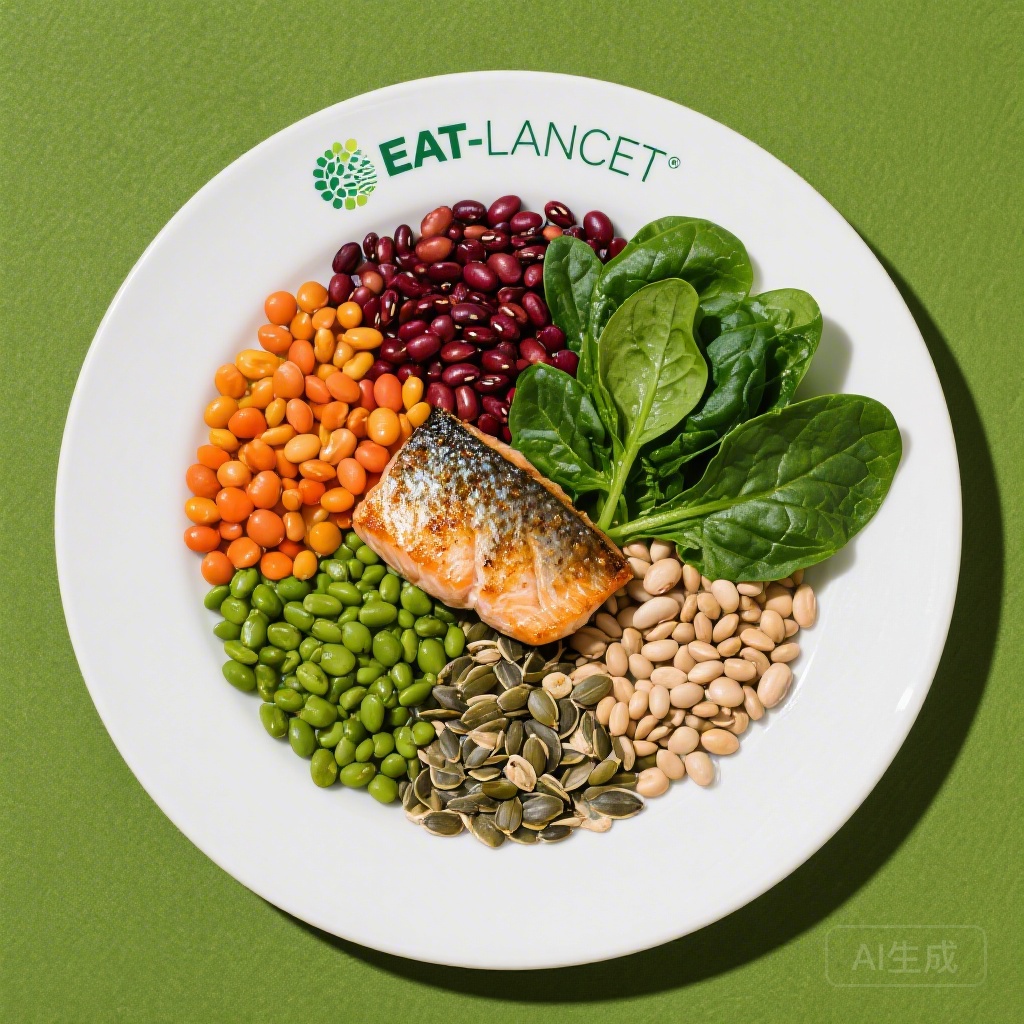
Combining Food Biodiversity, Less Processing, and the EAT‑Lancet Diet Improves Nutrient Adequacy and Lowers Environmental Impact: Insights from 368,733 EPIC Participants

Combining Food Biodiversity, Less Processing, and the EAT‑Lancet Diet Improves Nutrient Adequacy and Lowers Environmental Impact: Insights from 368,733 EPIC Participants

Multi-objective optimization in the EPIC cohort shows that modest gains in adherence to the EAT‑Lancet diet, increased plant species richness, and substitution of ultra‑processed foods with minimally processed foods can raise nutrient adequacy and reduce greenhouse gas emissions and land use.
High, Persistent Breast Cancer Mortality in Sub‑Saharan Africa: 7‑Year ABC‑DO Cohort Reveals Major Survival Gaps and Actionable Targets

High, Persistent Breast Cancer Mortality in Sub‑Saharan Africa: 7‑Year ABC‑DO Cohort Reveals Major Survival Gaps and Actionable Targets

A 7‑year follow-up of 2,153 women in the ABC‑DO cohort shows poor breast cancer survival in much of sub‑Saharan Africa, with 5‑year crude survival 40% and marked between-country and racial disparities; reaching WHO stage downstaging targets and improving treatment access could cut deaths by about a third.
Most Adolescents and Young Adults with Solid Tumours Reach Near-Normal 5-Year Survival Within Four Years — Implications for ‘Right to be Forgotten’ Policies

Most Adolescents and Young Adults with Solid Tumours Reach Near-Normal 5-Year Survival Within Four Years — Implications for ‘Right to be Forgotten’ Policies

Population-based Dutch data show that AYA survivors of most solid malignancies achieve five-year conditional relative survival >95% by four years post-diagnosis, supporting reconsideration of blanket 10‑year disclosure periods in Right to Be Forgotten laws.
Single-dose Cervarix induces durable seropositivity but fails HPV‑16 GMC non-inferiority versus three-dose Gardasil-4: implications from the PRIMAVERA immunobridging trial

Single-dose Cervarix induces durable seropositivity but fails HPV‑16 GMC non-inferiority versus three-dose Gardasil-4: implications from the PRIMAVERA immunobridging trial

PRIMAVERA immunobridging shows single-dose Cervarix induces near-universal seropositivity at 36 months and non-inferior HPV-18 antibodies versus three-dose Gardasil-4, but HPV-16 antibody GMCs were lower; results inform but do not yet support regulatory single-dose approval.
Rare but Real: Higher Risks of Vascular and Inflammatory Disease After SARS‑CoV‑2 Infection Than After BNT162b2 Vaccination in Children and Adolescents

Rare but Real: Higher Risks of Vascular and Inflammatory Disease After SARS‑CoV‑2 Infection Than After BNT162b2 Vaccination in Children and Adolescents

A nationwide English cohort study (n≈13.9M) found transient but significant increases in rare vascular and inflammatory events after first SARS‑CoV‑2 infection and a smaller, short-lived increase in myocarditis/pericarditis after first BNT162b2 vaccination—supporting vaccination to reduce greater risks from infection.
Human Monoclonal Antibody MAM01 for Malaria Prevention: Phase 1 Trial Insights and Context in Antimalarial Monoclonal Antibody Development

Human Monoclonal Antibody MAM01 for Malaria Prevention: Phase 1 Trial Insights and Context in Antimalarial Monoclonal Antibody Development

This review synthesizes evidence on MAM01, a monoclonal antibody targeting Plasmodium falciparum circumsporozoite protein, summarizing its first-in-human phase 1 trial demonstrating safety and protective efficacy, alongside contextual advances in monoclonal antibody-based malaria prevention.