Sacubitril-Valsartan for Cardiac Protection During Breast Cancer Therapy: Insights from the PRADA II Trial

Sacubitril-Valsartan for Cardiac Protection During Breast Cancer Therapy: Insights from the PRADA II Trial

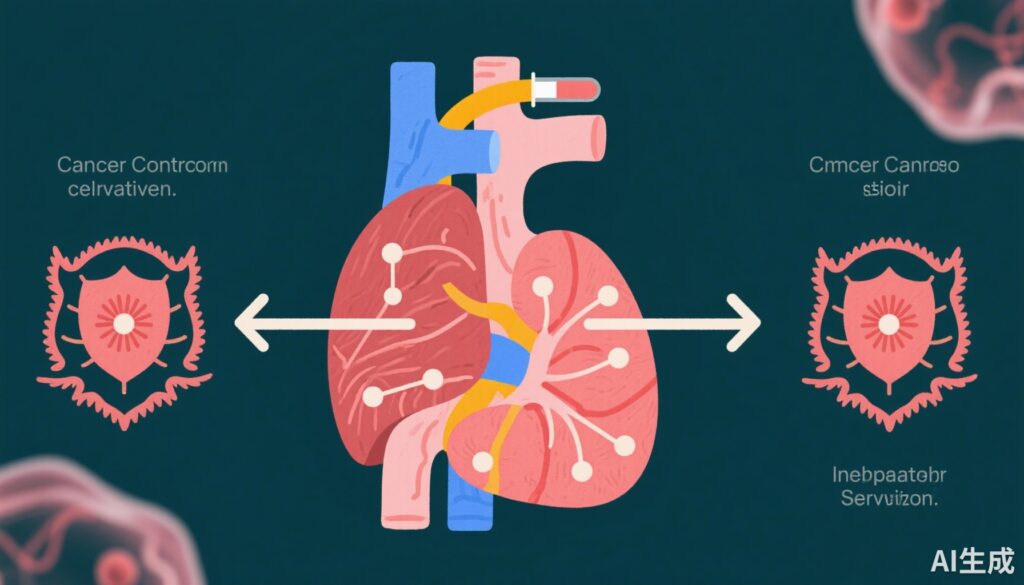
The PRADA II trial evaluated sacubitril-valsartan for preventing cardiac dysfunction during anthracycline-based breast cancer therapy. While it did not significantly preserve left ventricular ejection fraction, improvements in myocardial strain and cardiac biomarkers suggest a potential role in cardioprotection.
Patritumab Deruxtecan Shows Promising Efficacy in HR+HER2− Advanced Breast Cancer After CDK4/6 Inhibitor Failure: Insights from ICARUS-BREAST01 Phase 2 Trial

Patritumab Deruxtecan Shows Promising Efficacy in HR+HER2− Advanced Breast Cancer After CDK4/6 Inhibitor Failure: Insights from ICARUS-BREAST01 Phase 2 Trial

The ICARUS-BREAST01 phase 2 trial demonstrated patritumab deruxtecan's efficacy and manageable safety in HR+HER2− metastatic breast cancer post-CDK4/6 inhibitors, highlighting key biomarkers linked to response and resistance.
Distinct Clinical and Genomic Profiles of Anogenital Basal Cell Carcinomas Highlight Higher Recurrence Risks

Distinct Clinical and Genomic Profiles of Anogenital Basal Cell Carcinomas Highlight Higher Recurrence Risks

Anogenital basal cell carcinomas (BCCs) represent a rare subtype with unique genomic features and a higher recurrence rate compared to UV-related BCCs. This French cohort study elucidates their clinical characteristics, lichen sclerosus association, and dependence on the sonic hedgehog pathway, informing tailored management strategies.
Fertility-Preserving Hormonal Therapy vs Hysterectomy in Early-Stage Endometrial Cancer: Survival Outcomes and Clinical Implications

Fertility-Preserving Hormonal Therapy vs Hysterectomy in Early-Stage Endometrial Cancer: Survival Outcomes and Clinical Implications

This analysis compares survival in young women with early-stage endometrial cancer treated with fertility-preserving hormonal therapy versus hysterectomy, highlighting survival equivalence in women under 40 years and increased mortality risk in older patients undergoing hormonal therapy.
Tumor Microenvironment-Responsive Mn-Based Nanoplatform Activates cGAS-STING Pathway Coupled with Metabolic Interference for Enhanced Antitumor Therapy

Tumor Microenvironment-Responsive Mn-Based Nanoplatform Activates cGAS-STING Pathway Coupled with Metabolic Interference for Enhanced Antitumor Therapy

A novel Mn-based nanoplatform, LT@MnO@MON-HA (LMMH), responsive to tumor microenvironment triggers metabolic disruption and robust cGAS-STING activation, potentiating chemodynamic therapy and immunotherapy for improved tumor suppression.