Beyond MACE: Semaglutide Significantly Reduces Hospitalization Burden in Patients with Obesity and Cardiovascular Disease

Beyond MACE: Semaglutide Significantly Reduces Hospitalization Burden in Patients with Obesity and Cardiovascular Disease

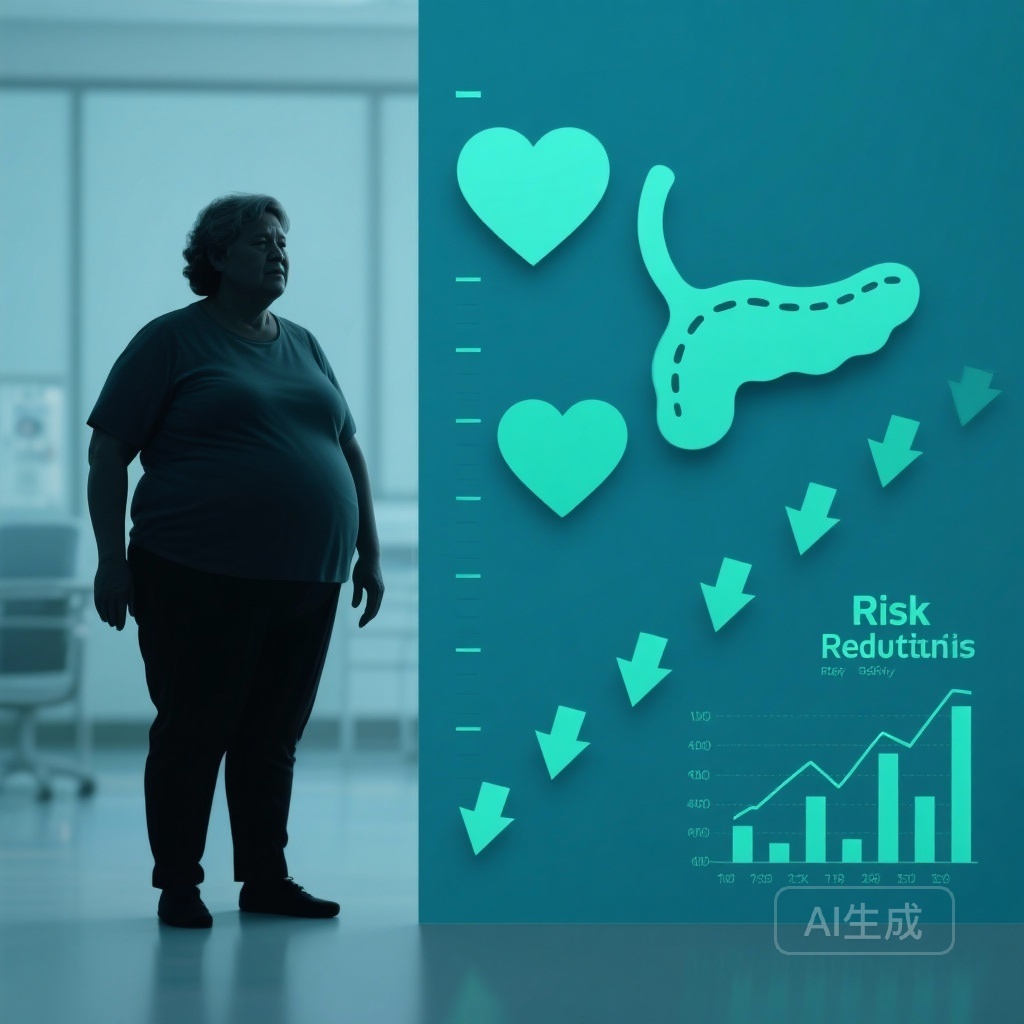
This exploratory analysis of the SELECT trial demonstrates that semaglutide 2.4 mg reduces total hospital admissions and total days spent in the hospital by approximately 10-11% in patients with established cardiovascular disease and obesity, highlighting benefits beyond traditional major adverse cardiovascular events.

European Perioperative Diabetes Care: Significant Practice Variation Impacts 30-Day Recovery Outcomes

The MOPED study of over 6,000 European patients reveals significant international variations in perioperative diabetes management. Findings demonstrate that higher preoperative HbA1c levels and practice inconsistencies are linked to fewer days at home within 30 days of surgery, highlighting an urgent need for clinical harmonization.

Precision Diabetology Validated: Algorithm for SGLT2i and DPP4i Selection Performs Accurately Across Major UK Ethnicity Groups

A retrospective cohort study validates an algorithm for choosing between SGLT2 and DPP4 inhibitors across diverse UK ethnicity groups, confirming its accuracy for precision medicine while highlighting the necessity of minor recalibration to optimize performance in different populations.
Tirzepatide Achieves Cardiovascular Noninferiority Against Dulaglutide: A Milestone in Dual Incretin Therapy

Tirzepatide Achieves Cardiovascular Noninferiority Against Dulaglutide: A Milestone in Dual Incretin Therapy

The SURPASS-CVOT trial confirms that tirzepatide is noninferior to dulaglutide for cardiovascular safety in high-risk type 2 diabetes patients. While superiority was not statistically reached, the study solidifies the cardiovascular profile of dual GIP/GLP-1 agonism compared to established standards of care.
Planetary Health Diet and Cardiometabolic Risk Reduction in Women with Gestational Diabetes: An Evidence-Based Review

Planetary Health Diet and Cardiometabolic Risk Reduction in Women with Gestational Diabetes: An Evidence-Based Review

This review synthesizes evidence linking adherence to the Planetary Health Diet with reduced risks of myocardial infarction, type 2 diabetes, and improved weight management in women post-gestational diabetes, highlighting BMI's mediating role.
Early-Life Famine Exposure in Chinese Immigrants Strongly Linked to Later Diabetes and Hypertension — But Not Cardiovascular Hospitalization

Early-Life Famine Exposure in Chinese Immigrants Strongly Linked to Later Diabetes and Hypertension — But Not Cardiovascular Hospitalization

A large Ontario cohort study links early-life exposure to the Great Chinese Famine with higher adult risks of type 2 diabetes and hypertension among Chinese immigrants, while cardiovascular hospitalization was not increased; methodological caveats underline need for age-balanced research.
Can an 11β‑HSD1 Inhibitor Improve Prednisolone’s Benefit–Risk Ratio in Polymyalgia Rheumatica? Early Human Trial Suggests Feasibility

Can an 11β‑HSD1 Inhibitor Improve Prednisolone’s Benefit–Risk Ratio in Polymyalgia Rheumatica? Early Human Trial Suggests Feasibility

A single‑blind sequential cohort trial found that clofutriben, a selective 11β‑HSD1 inhibitor, reduced biomarkers of glucocorticoid toxicity while partially attenuating prednisolone efficacy at low doses; efficacy was restored at higher prednisolone doses, supporting further randomized trials.
Tirzepatide Lowers 10‑Year Predicted Risk of Cardiovascular Disease and Type 2 Diabetes in Adults with Obesity and Prediabetes: Post hoc Analysis of SURMOUNT‑1

Tirzepatide Lowers 10‑Year Predicted Risk of Cardiovascular Disease and Type 2 Diabetes in Adults with Obesity and Prediabetes: Post hoc Analysis of SURMOUNT‑1

A post hoc analysis of the three‑year SURMOUNT‑1 trial found that once‑weekly tirzepatide (5–15 mg) produced dose‑dependent reductions in 10‑year predicted risks for ASCVD, heart failure, total CVD and progression to type 2 diabetes versus placebo in adults with obesity and prediabetes.
Underweight in Type 2 Diabetes Raises Cardiovascular Risk — Severe Leanness Carries Greater Risk Than Obesity

Underweight in Type 2 Diabetes Raises Cardiovascular Risk — Severe Leanness Carries Greater Risk Than Obesity

A nationwide Korean cohort found that underweight patients with Type 2 diabetes—especially those with severe underweight—have higher cardiovascular risk than normal-weight and even some obese patients, underscoring the need to screen and manage malnutrition, sarcopenia, and frailty in diabetes care.
Normalising Renin After Medical Therapy for Primary Aldosteronism May Lower Cardiovascular Risk — But RCTs Are Needed

Normalising Renin After Medical Therapy for Primary Aldosteronism May Lower Cardiovascular Risk — But RCTs Are Needed

A 2025 systematic review and meta-analysis found that patients with primary aldosteronism whose renin rose after mineralocorticoid receptor antagonist therapy had substantially lower cardiovascular event rates and possibly lower mortality, suggesting renin normalisation as a therapeutic target pending prospective confirmation.
Cyclic Cushing’s Syndrome: International Cohort Reveals Diagnostic Pitfalls, High Complication Rates, and Practical Strategies for Clinicians

Cyclic Cushing’s Syndrome: International Cohort Reveals Diagnostic Pitfalls, High Complication Rates, and Practical Strategies for Clinicians

An international retrospective cohort of 110 patients with cyclic Cushing’s syndrome highlights frequent diagnostic delays, imaging misses, inappropriate surgeries, high rates of spontaneous adrenal insufficiency, and variable outcomes — prompting practical recommendations for testing, sampling timing, and peri‑care planning.
Gender‑Affirming Hormone Therapy and Acute Cardiovascular Events: Dutch Cohort Finds Lower MI but Higher VTE in Transgender Women, Elevated MI and Stroke Risk in Transgender Men

Gender‑Affirming Hormone Therapy and Acute Cardiovascular Events: Dutch Cohort Finds Lower MI but Higher VTE in Transgender Women, Elevated MI and Stroke Risk in Transgender Men

A large Dutch cohort study found that after adjusting for socioeconomic status and lifestyle, transgender women on oestradiol had lower myocardial infarction (MI) risk but higher venous thromboembolism (VTE) risk; transgender men on testosterone had higher MI and ischaemic stroke risk.
Comprehensive Review of the EMPEROR-Preserved Trial: Efficacy and Outcomes of Empagliflozin in Heart Failure with Preserved Ejection Fraction

Comprehensive Review of the EMPEROR-Preserved Trial: Efficacy and Outcomes of Empagliflozin in Heart Failure with Preserved Ejection Fraction

This review comprehensively summarizes recent studies (2021–2024) from the EMPEROR-Preserved trial, highlighting empagliflozin’s consistent benefits on cardiovascular and renal outcomes, quality of life, and key clinical subgroups in HFpEF patients.