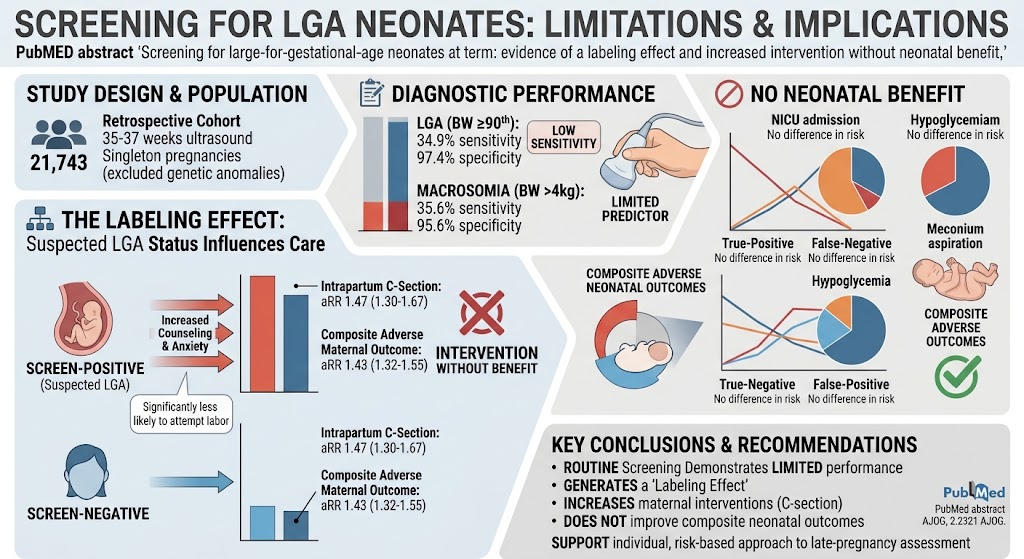
Routine third-trimester ultrasound screening for large-for-gestational-age (LGA) and macrosomic fetuses has limited diagnostic sensitivity (~35%) despite high specificity (~95-97%).
Screen-positive results significantly increase obstetric interventions including reduced labor attempts and higher intrapartum cesarean delivery rates.
There is a “labeling effect” where suspicion of fetal largeness drives maternal interventions and adverse maternal outcomes without clear neonatal benefit.
Findings support reconsidering universal LGA screening at term in favor of individualized, risk-based late pregnancy assessment strategies.