Can a Mobile App Ease the Burden of Ovarian Cancer Fatigue?
Fatigue remains one of the most pervasive and debilitating sequelae of ovarian cancer and its treatment. Unlike the exhaustion experienced by healthy individuals, cancer-related fatigue (CRF) is often disproportionate to recent activity and is not fully relieved by rest. For ovarian cancer survivors, this symptom frequently co-occurs with sleep disturbances and a diminished quality of life, persisting long after the completion of primary therapy. While clinical guidelines increasingly recommend integrative therapies like acupressure, logistical barriers—including cost, travel to specialized clinics, and a shortage of trained practitioners—often prevent patients from accessing these benefits.
A landmark phase 3 randomized clinical trial, recently published in JAMA Network Open, investigates whether these barriers can be dismantled using digital health technology. The study, led by Zick et al., explores the efficacy of self-acupressure taught via a mobile application to manage fatigue in ovarian cancer survivors.
Highlights
- Six weeks of true self-acupressure (TSA) significantly reduced fatigue scores compared to usual care, with benefits persisting for 24 weeks.
- Both true and sham self-acupressure (SSA) outperformed usual care in fatigue reduction, suggesting a possible benefit from the physical act of self-care or a strong placebo response.
- Only true self-acupressure led to significant improvements in overall quality of life (QoL) compared to usual care.
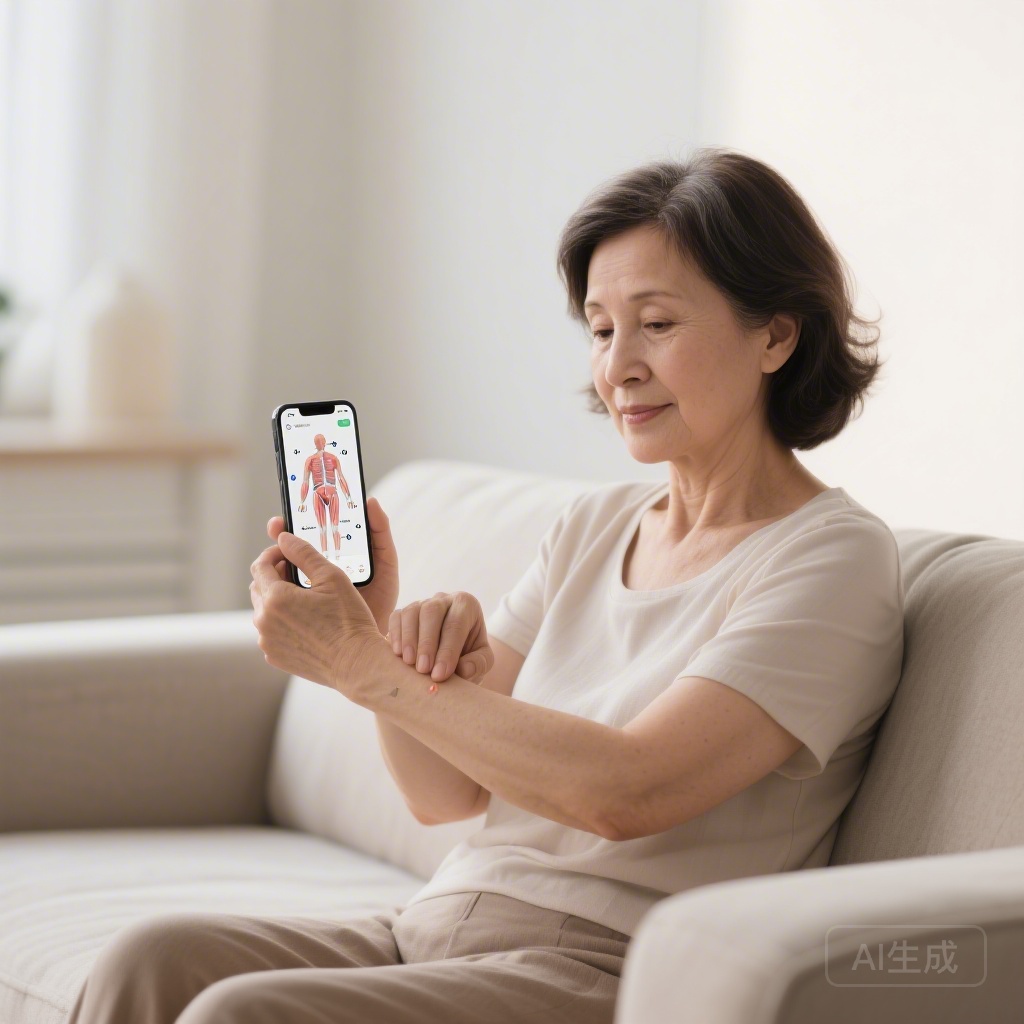
- The intervention was delivered entirely via a mobile app, demonstrating the feasibility of low-cost, scalable digital interventions for oncology survivorship.
The Persistent Challenge of Cancer-Related Fatigue
Ovarian cancer survivors face a unique trajectory of recovery. The aggressive nature of cytoreductive surgery and platinum-based chemotherapy often leaves a lasting impact on metabolic and neurological function. Fatigue in this population is not merely a symptom but a syndrome that interferes with physical, social, and cognitive functioning.
Traditional Chinese Medicine (TCM) has long utilized acupressure—the application of manual pressure to specific points (acupoints) on the body—to balance ‘Qi’ and alleviate exhaustion. Previous studies have suggested that stimulating these points can modulate the autonomic nervous system and reduce inflammatory cytokines associated with fatigue. However, the requirement for frequent in-person visits has limited its clinical adoption. The integration of a mobile app to teach self-administration represents a significant shift toward patient-empowered, home-based care.
Trial Architecture: Evaluating Digital Self-Care
This phase 3 single-blind randomized clinical trial (NCT03763838) was conducted between 2019 and 2023. The researchers recruited 171 ovarian cancer survivors who reported moderate-to-severe fatigue, defined by a Brief Fatigue Inventory (BFI) score of 4 or higher.
Participants were randomized into three arms:
1. True Self-Acupressure (TSA)
Participants were taught via a mobile app to stimulate specific acupoints associated with energy and sleep (such as GV20, CV6, ST36, LI4, SP6, and KI3). They performed the routine daily for six weeks.
2. Sham Self-Acupressure (SSA)
Participants were taught to apply pressure to ‘non-points’—locations on the body not recognized as active acupoints in TCM—using the same mobile app interface to maintain blinding.
3. Usual Care (UC)
Participants continued their standard follow-up care without any specific acupressure intervention.
The primary endpoint was the change in the BFI score from baseline to week 6. Secondary endpoints included fatigue levels at week 24 (following an 18-week washout period), sleep quality (Pittsburgh Sleep Quality Index), and quality of life (FACT-O).
Efficacy and Sustained Impact: What the Data Shows
The results of the trial provide compelling evidence for the role of self-managed interventions. By the end of the 6-week treatment period, the proportion of participants achieving a ‘clinically normal’ fatigue level was 58.5% in the TSA group, compared to only 17.6% in the usual care group.
Fatigue Reduction
At 6 weeks, the TSA group showed a significantly greater reduction in BFI scores compared to the UC group (adjusted mean difference, -1.23; 95% CI, -2.17 to -0.29). Interestingly, while the sham group (SSA) also showed improvement over usual care, the difference for SSA did not reach the same level of statistical significance at the primary 6-week mark as TSA did. However, when comparing TSA directly to SSA, there was no statistically significant difference between the two acupressure techniques, suggesting that the act of self-touch and the structured daily routine may contribute to the therapeutic effect.
Durability of Effect
The most striking finding was the persistence of the benefit. At 24 weeks—18 weeks after the participants stopped using the app daily—the fatigue reduction remained significant for both the TSA and SSA groups compared to usual care. This suggests that a short-term intervention may ‘reset’ certain physiological or psychological thresholds for fatigue.
Quality of Life and Sleep
While fatigue improved across both acupressure arms, quality of life (QoL) improvements were uniquely significant in the True Self-Acupressure group (OR, 2.85). This indicates that while any form of acupressure might help with the sensation of tiredness, the specific points used in TSA may have a broader impact on functional well-being. Notably, neither intervention significantly improved sleep quality compared to usual care, suggesting that fatigue in ovarian cancer may be distinct from primary sleep disorders.
Mechanistic Insights and the Placebo Paradox
The lack of a significant difference between True and Sham acupressure for the primary fatigue endpoint raises important questions. In integrative medicine trials, the ‘sham’ intervention is often more active than a standard placebo in drug trials. The physical stimulation of the skin and underlying tissue, even at non-acupoints, may induce physiological relaxation or stimulate afferent nerve fibers.
Furthermore, the psychological impact of engaging with a mobile app and taking an active role in one’s recovery cannot be understated. This ‘activation’ of the patient may decrease the sense of helplessness that often accompanies chronic cancer-related fatigue. However, the fact that only TSA improved Quality of Life suggests that the specific selection of acupoints holds intrinsic value beyond the placebo effect.
Clinical Implications for Survivorship Care
For clinicians, these findings offer a practical, evidence-based tool for a common clinical challenge. The safety profile of self-acupressure is excellent, with no adverse events reported in the trial. Because the intervention is delivered via a mobile app, it bypasses the traditional barriers of cost and geography.
Health systems and oncology clinics should consider incorporating digital self-acupressure education into survivorship care plans. It represents a low-risk, high-reward strategy that aligns with the growing trend of ‘hospital-at-home’ and patient-centered care models.
Conclusion
The study by Zick et al. validates self-acupressure as a clinically meaningful intervention for ovarian cancer-related fatigue. By leveraging mobile technology, this ancient practice becomes a modern, scalable solution. While more research is needed to tease apart the specific biological mechanisms of TSA versus SSA, the practical takeaway is clear: empowering patients with a simple, app-guided physical routine can lead to sustained improvements in fatigue and quality of life.
Funding and Trial Information
This study was supported by grants from the National Cancer Institute. ClinicalTrials.gov Identifier: NCT03763838.
References
1. Zick SM, Chen D, Harris RE, et al. Self-Acupressure for Fatigue in Patients Surviving Ovarian Cancer: A Randomized Clinical Trial. JAMA Netw Open. 2026;9(2):e2556357.
2. Bower JE. Cancer-related fatigue—mechanisms, risk factors, and treatments. Nat Rev Clin Oncol. 2014;11(10):597-609.
3. Molassiotis A, et al. Effectiveness of Acupressure for Cancer-Related Fatigue in Patients With Breast Cancer. JAMA Oncol. 2016;2(10):1315-1321.