Highlights
- Low-dose amitriptyline (10-20 mg) met the criteria for non-inferiority compared to group CBT-I in reducing insomnia severity among patients with medical comorbidities.
- Despite statistical non-inferiority, CBT-I achieved a significantly higher clinical response rate (58%) compared to amitriptyline (41%).
- Amitriptyline was associated with a higher burden of anticholinergic side effects and a high rate of sleep deterioration (68%) following treatment discontinuation.
- CBT-I remains the recommended first-line therapy due to its superior safety profile and more durable clinical benefits.
The Challenge of Insomnia in Medical Comorbidity
Chronic insomnia is a pervasive issue among patients navigating complex medical conditions, including chronic pain, cardiovascular disease, and metabolic disorders. When insomnia is comorbid with other illnesses, it often exacerbates the primary condition, impairs quality of life, and complicates clinical management. While Cognitive Behavioral Therapy for Insomnia (CBT-I) is the internationally recognized gold-standard treatment, its accessibility is often limited by a lack of trained providers and the time commitment required from patients.
Consequently, many clinicians turn to off-label pharmacological interventions. Low-dose amitriptyline, a tricyclic antidepressant, is frequently prescribed for its sedative properties, particularly in patients who also experience chronic pain. However, robust evidence comparing its efficacy and safety to CBT-I in medically comorbid populations has been sparse until now.
Study Design: A Multicenter Non-Inferiority Framework
The study by Rauwerda et al., published in Sleep (2025), utilized a randomized controlled multicenter non-inferiority trial design to evaluate whether low-dose amitriptyline could serve as a viable alternative to CBT-I. The trial included 187 participants diagnosed with both insomnia and at least one chronic medical condition.
Participants were randomized into two arms:
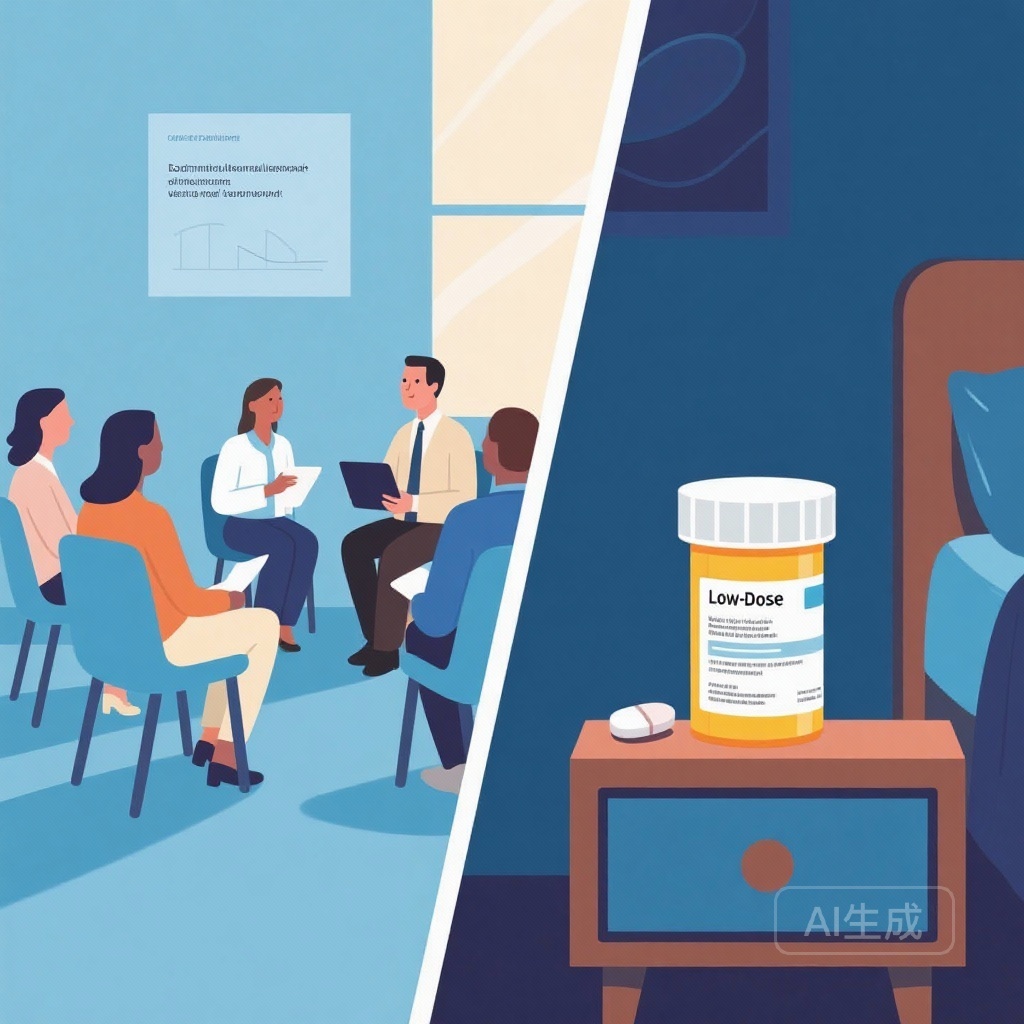
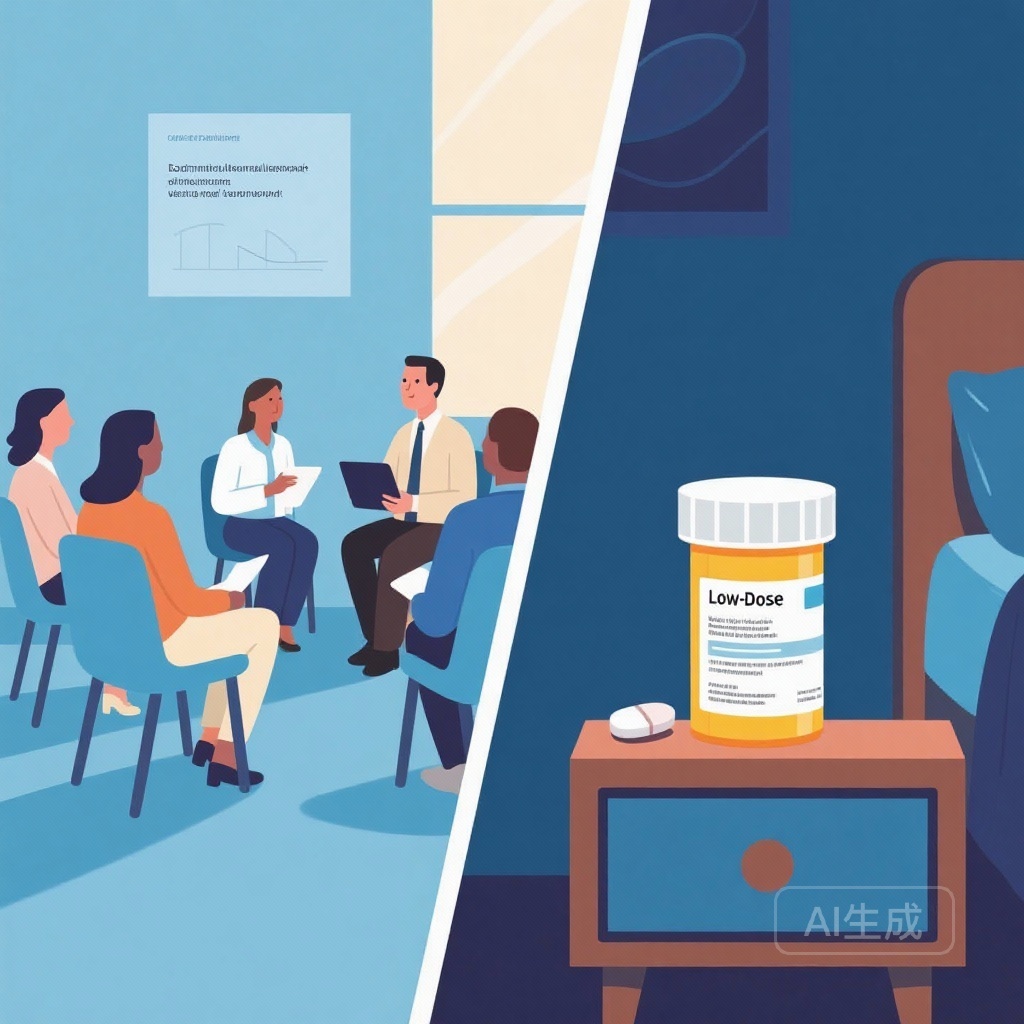
- Amitriptyline Arm (n = 93): Received 10-20 mg of amitriptyline daily for 12 weeks.
- CBT-I Arm (n = 94): Participated in seven sessions of group-based cognitive behavioral therapy over 12 weeks.
The primary outcome was the change in the Insomnia Severity Index (ISI) at the 12-week mark. The researchers established a non-inferiority margin of four points on the ISI—a threshold described as ‘liberal’ by the authors, meaning that if the difference between the two treatments was less than four points, amitriptyline would be considered non-inferior.
Key Findings: Statistical Success vs. Clinical Superiority
The results presented a nuanced picture of treatment efficacy. At 12 weeks, the mean difference in ISI scores between the two groups was 1.1 points (95% CI = -0.5 to 2.8). Because the upper bound of the confidence interval (2.8) did not exceed the pre-specified four-point margin, amitriptyline was statistically categorized as non-inferior to CBT-I.
However, secondary outcomes told a different story regarding clinical impact. A clinical response—defined as a reduction of eight points or more on the ISI—was achieved by 58% of the CBT-I group compared to only 41% of the amitriptyline group (p = .02). This suggests that while both treatments improved sleep, CBT-I was more likely to produce a meaningful improvement in the patient’s condition.
Safety and Tolerability Profile
Safety is a critical consideration in medically comorbid patients who may already be taking multiple medications. The trial highlighted significant differences in the adverse effect profiles of the two interventions. Participants in the amitriptyline arm reported significantly more side effects (p < .001), primarily anticholinergic in nature, such as dry mouth, dizziness, and daytime somnolence.
In contrast, the CBT-I group reported fewer adverse events, which were generally related to the temporary sleep restriction components of the therapy. For clinicians, this divergence in safety profiles is a major factor in treatment selection, particularly for elderly patients or those with conditions sensitive to anticholinergic effects.
The Sustainability Gap: What Happens After Treatment?
One of the most striking findings of the study was the outcome following treatment discontinuation. Among participants who stopped taking amitriptyline after the 12-week period, 68% reported a worsening of their sleep. While this worsening was temporary for 12% of those patients, the high rate of relapse suggests that the benefits of amitriptyline are largely dependent on continued use of the drug.
CBT-I, which focuses on skill acquisition and cognitive restructuring, traditionally offers more durable results because patients learn to manage their sleep patterns independently of external substances. This study reinforces the notion that pharmacological interventions for insomnia may offer a ‘quick fix’ that lacks the long-term sustainability of behavioral change.
Expert Commentary: Navigating the Clinical Trade-offs
The ‘non-inferior’ label for amitriptyline must be interpreted with caution. Experts in sleep medicine point out that the choice of a four-point non-inferiority margin is relatively wide. In clinical practice, a difference of nearly three points on the ISI (the upper bound of the confidence interval) can be the difference between subthreshold insomnia and moderate clinical insomnia.
Clinicians should view low-dose amitriptyline not as a replacement for CBT-I, but as a secondary option. It may be considered when CBT-I is unavailable, when a patient has failed behavioral therapy, or when the patient has a co-occurring condition—such as neuropathic pain—that might also benefit from tricyclic antidepressants. However, the high rate of post-discontinuation relapse and the side effect burden make it a less-than-ideal long-term solution.
Conclusion: Why CBT-I Remains the First-Line Choice
The Rauwerda et al. trial provides valuable data on the off-label use of amitriptyline. While the drug technically met the statistical criteria for non-inferiority, the study’s broader data set favors CBT-I across several domains: higher clinical response rates, better safety profiles, and superior sustainability of effects.
For patients with medical comorbidities, the priority should remain securing access to CBT-I. If amitriptyline is utilized, patients must be thoroughly informed about the potential for anticholinergic side effects and the high likelihood that sleep problems will return once the medication is stopped.
Funding and Registration
The study was a randomized controlled multicenter trial. Details on funding can be found in the original publication. Reference: Sleep. 2025 Dec 11;48(12):zsaf176. doi: 10.1093/sleep/zsaf176.
References
1. Rauwerda N, van Straten A, et al. Low-dose amitriptyline versus cognitive behavioral therapy for insomnia in patients with medical comorbidity: results of a randomized controlled multicenter non-inferiority trial. Sleep. 2025;48(12):zsaf176.
2. Qaseem A, et al. Management of Chronic Insomnia Disorder in Adults: A Clinical Practice Guideline From the American College of Physicians. Ann Intern Med. 2016;165(2):125-133.
3. Riemann D, et al. European guideline for the diagnosis and treatment of insomnia. J Sleep Res. 2017;26(6):675-700.