Highlight
- Neuropath-AI reached family-level classifications in 96% of samples and terminal-level predictions in 87% of the test cohort.
- The model achieved a Top-1 accuracy of 80% and a Top-2 accuracy of 86% for specific CNS tumor types compared to DNA methylation reference labels.
- The study demonstrates that deep learning can successfully infer complex molecular features directly from standard histopathological whole-slide images.
- This technology provides a scalable, clinically applicable assistant to improve the efficiency and accuracy of CNS tumor diagnosis worldwide.
Bridging the Gap Between Histology and Molecular Diagnostics
The 2021 World Health Organization (WHO) classification of central nervous system (CNS) tumors has fundamentally shifted the diagnostic paradigm from purely morphological assessment to an integrated approach that heavily relies on molecular characteristics. While DNA methylation profiling is currently the gold standard for molecular classification, its clinical utility is often limited by high costs, long turnaround times, and the requirement for specialized infrastructure. This creates a significant “molecular gap” in global neuro-oncology care.
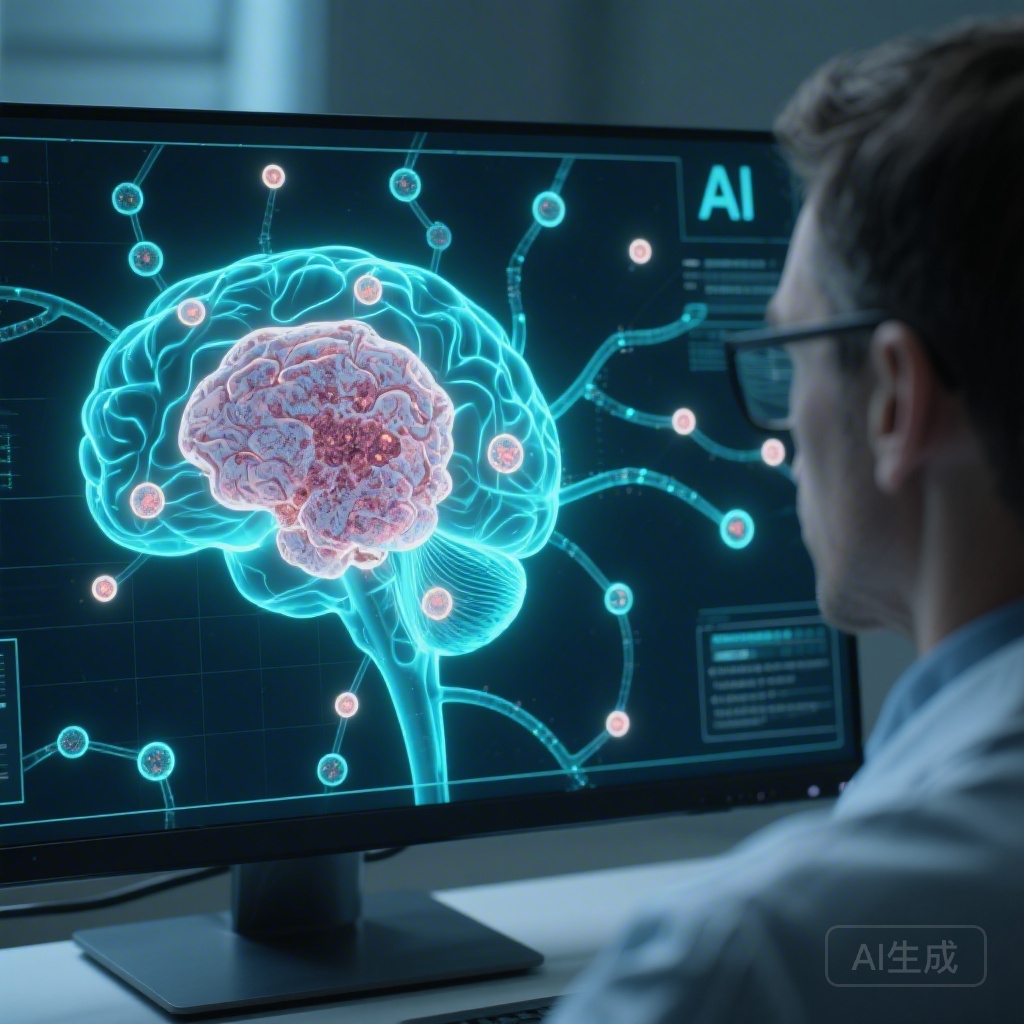
To address this, researchers have turned to artificial intelligence. By leveraging deep learning and computer vision, it is now possible to infer molecular features—such as chromosomal alterations, mutations, and methylation patterns—directly from standard hematoxylin and eosin (H&E) stained slides. This study evaluates Neuropath-AI, a hierarchical molecular inference-based system designed to classify CNS tumors with the precision of molecular testing but the speed and accessibility of routine histology.
Study Design and Methodology
In this multi-institutional, retrospective study, researchers developed and validated Neuropath-AI using a massive dataset of whole-slide images (WSIs). The training phase involved 5,835 samples from the National Cancer Institute (NCI), the Children’s Brain Tumor Network (CBTN), and the Digital Brain Tumour Atlas. The model was trained to identify 52 distinct tumor types, encompassing the majority of gliomas, embryonal tumors, and meningeal or mesenchymal tumors encountered in clinical practice.
The Test Cohort
The model’s performance was rigorously tested on a separate cohort of 5,516 samples identified between 2024 and 2025 across four major centers: the NCI, Northwestern Medicine, the University of Pittsburgh Medical Center, and University College London. The cohort was balanced by sex (50% female, 50% male) with a median age of 43 years. The reference standard for all diagnoses was DNA methylation-based classification, ensuring the highest level of ground-truth accuracy.
Statistical Endpoints
The primary objectives were to measure classification accuracy at two levels: the broad “family” level (e.g., glioma vs. embryonal) and the specific “terminal” classification. Coprimary endpoints included sample coverage (the percentage of samples receiving a prediction above a confidence threshold) and balanced accuracy, which accounts for the rarity of certain tumor types.
Key Findings: High Accuracy and Clinical Coverage
The results of the validation study underscore the potential of Neuropath-AI as a diagnostic adjunct. The model demonstrated high coverage, successfully reaching a family-level classification in 96% of the 5,516 samples. When pushed to terminal-level classification with at least moderate confidence, the model provided predictions for 87% of the cohort.
Prediction Performance
Among the 4,772 samples that met the confidence threshold for terminal classification, the single highest-scoring prediction (Top-1) matched the DNA methylation reference label in 80% of cases (3,817 samples; 95% CI 79–81). The balanced accuracy, which reflects performance across all 52 categories regardless of sample frequency, was 66% (95% CI 63–70).
When considering the Top-2 predictions, the accuracy rose to 86% (4,103 samples; 95% CI 85–87), with a balanced accuracy of 75%. These figures suggest that in the vast majority of cases, the AI assistant either identifies the correct tumor type immediately or places it within the top two differential diagnoses, providing a powerful safety net for pathologists.
Expert Commentary: Clinical Implications
The ability of Neuropath-AI to infer molecular properties from morphology is a significant technological milestone. While it does not replace the gold-standard DNA methylation profiling, it serves as a rapid screening tool. In settings where molecular testing is unavailable, it provides a level of diagnostic depth that was previously impossible. In high-resource settings, it can prioritize cases for further testing, flag potential human errors, and drastically reduce the time to an integrated diagnosis.
One limitation of the study is its retrospective nature. While the large, multi-institutional cohort provides robust evidence, prospective studies are needed to evaluate how the model performs in real-time clinical workflows. Furthermore, the balanced accuracy of 66% indicates that while common tumors are identified with very high precision, rarer subtypes remain a challenge for AI, much as they do for human experts.
Conclusion
The Neuropath-AI system represents a major step toward the democratization of precision neuro-oncology. By providing molecular-level insights from standard histology slides, it offers a pathway to improve diagnostic accuracy and efficiency. As the model becomes publicly available, its implementation in future prospective trials will likely redefine the role of the pathologist from a manual observer to a high-level integrator of AI-driven data.
Funding and Reference
This study was funded by the Intramural Research Program of the National Institutes of Health (NIH).
Reference: Lalchungnunga H, Dampier CH, Singh O, et al. Classification accuracy of a hierarchical molecular inference-based deep-learning system for CNS tumour diagnosis: a multi-institutional, retrospective study. Lancet Oncol. 2026 Feb;27(2):243-253. doi: 10.1016/S1470-2045(25)00661-8. PMID: 41643698.