Highlight
No Clinical Benefit for Live Birth
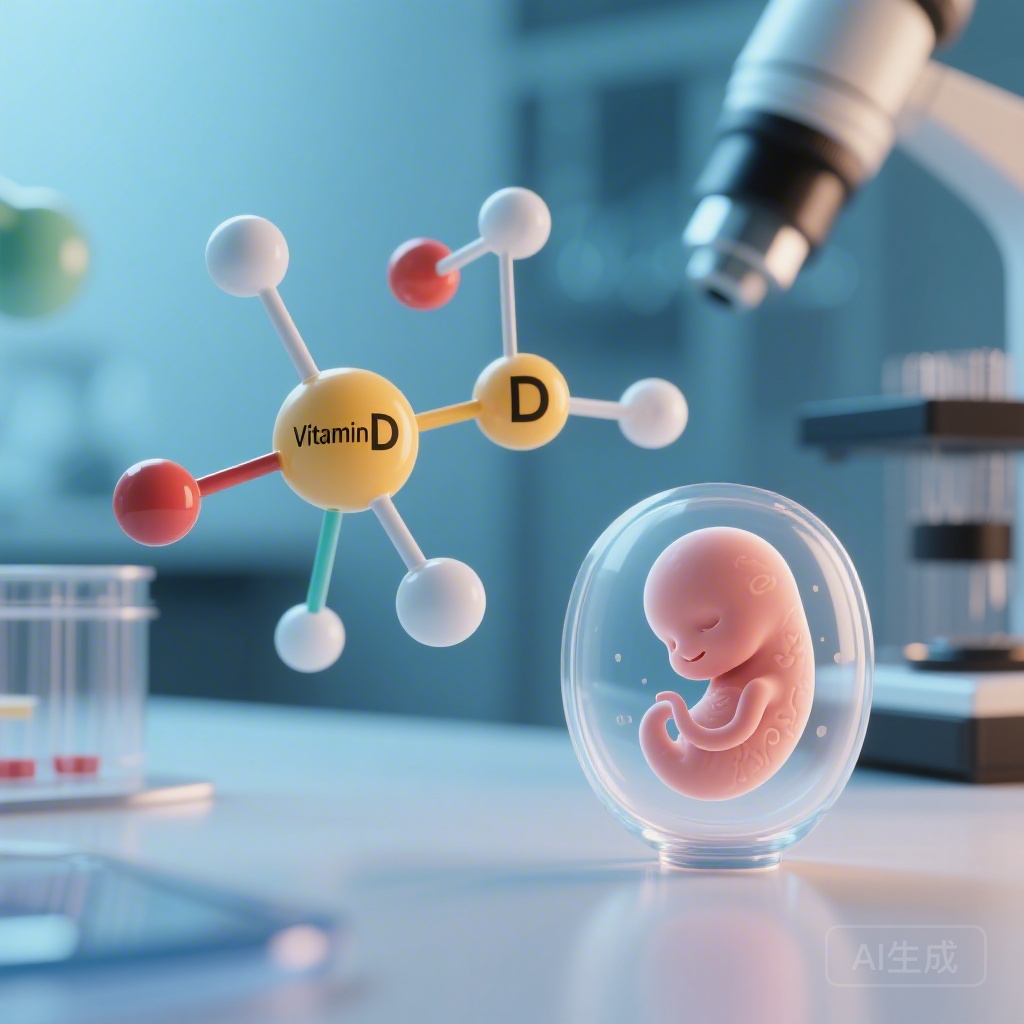
In a robust multicenter randomized controlled trial involving 876 women with PCOS, high-dose Vitamin D supplementation (4000 IU/day) did not increase the likelihood of a live birth after the first embryo transfer compared to a placebo.
Effective Serum Correction
While the primary clinical endpoint was not met, the intervention successfully corrected Vitamin D deficiency, raising mean serum 25-hydroxyvitamin D (25-OHD) levels from approximately 16.5 ng/mL to over 32 ng/mL by the day of the trigger.
Safety and Secondary Outcomes
There were no significant differences between the Vitamin D and placebo groups regarding pregnancy complications, fertility outcomes, or the incidence of severe ovarian hyperstimulation syndrome (OHSS).
Background: The Vitamin D and Fertility Hypothesis
Polycystic ovary syndrome (PCOS) is one of the most common endocrine disorders affecting women of reproductive age, characterized by ovulatory dysfunction, hyperandrogenism, and metabolic disturbances. Women with PCOS often face significant challenges with subfertility and are frequently found to have Vitamin D deficiency.
For years, observational studies have suggested a correlation between low Vitamin D levels and poor reproductive outcomes, including lower pregnancy rates and increased insulin resistance. Mechanistically, Vitamin D receptors (VDR) are expressed in the human ovary, uterus, and placenta, leading to the hypothesis that Vitamin D may modulate follicular development and endometrial receptivity. However, high-quality interventional evidence has been lacking, leaving clinicians in a state of uncertainty regarding whether routine supplementation should be standard practice for patients with PCOS undergoing in vitro fertilization (IVF).
Study Design and Methodology
The VitD-PCOS trial was a multicenter, double-blind, placebo-controlled, randomized clinical trial conducted across 24 fertility centers in China. The study enrolled 876 participants diagnosed with PCOS who were scheduled for IVF treatment.
Participants and Randomization
Eligible women were randomized in a 1:1 ratio to receive either Vitamin D (4000 IU daily) or a matching placebo. The intervention period lasted up to 90 days, beginning before the start of the IVF cycle and continuing until the day of the trigger (ovulation induction).
Endpoints
The primary outcome was the live birth rate after the first embryo transfer. Secondary outcomes were comprehensive, including:
- Serum 25-OHD levels on the day of the trigger.
- Clinical pregnancy rates and ongoing pregnancy rates.
- Fertility metrics such as the number of oocytes retrieved and embryo quality.
- Safety outcomes, specifically the incidence of severe ovarian hyperstimulation syndrome (OHSS) and other adverse events.
The analysis followed a modified intention-to-treat (mITT) principle, including 865 participants (435 in the Vitamin D group and 430 in the placebo group).
Key Findings and Results
Biochemical Impact
At baseline, both groups exhibited significant Vitamin D deficiency, with mean serum 25-OHD levels of 16.5±7.2 ng/mL in the treatment group and 16.1±6.7 ng/mL in the placebo group. By the day of the trigger, the supplementation group showed a dramatic increase to 32.3±11.2 ng/mL, whereas the placebo group remained relatively static at 18.2±7.6 ng/mL. The adjusted mean difference was 13.6 ng/mL (95% CI 10.9 to 16.3), confirming the efficacy of the dose in achieving sufficiency.
Primary Outcome: Live Birth Rate
Despite the successful correction of Vitamin D levels, the clinical outcomes did not differ significantly between the groups:
- Vitamin D Group: 226/435 (52.0%) live births.
- Placebo Group: 216/430 (50.2%) live births.
The adjusted risk ratio was 1.03 (95% CI 0.91 to 1.18), indicating that the 1.8% absolute difference was not statistically significant.
Secondary and Safety Outcomes
The study found no significant differences in secondary pregnancy outcomes, including clinical pregnancy rates or miscarriage rates. Furthermore, the incidence of severe OHSS—a major concern in PCOS patients undergoing IVF—was low in both groups (0.7% in the Vitamin D group vs. 1.4% in the placebo group), with an adjusted risk difference of -0.7% (95% CI -2.0% to 0.6%).
Expert Commentary and Clinical Implications
The results of the VitD-PCOS trial provide a definitive answer to a long-standing question in reproductive endocrinology. While Vitamin D is essential for general health and bone metabolism, its role as a specific enhancer for IVF success in women with PCOS appears to be limited.
Interpreting the Negative Result
Several factors may explain why the correction of Vitamin D deficiency did not translate into higher live birth rates. First, the pathophysiology of subfertility in PCOS is multifactorial, involving insulin resistance, androgen excess, and inflammatory pathways that may not be sufficiently addressed by Vitamin D alone. Second, the baseline Vitamin D levels, while low, may not have been low enough to significantly impair reproductive function to a degree that correction would yield a measurable difference in a single IVF cycle.
Strengths and Limitations
The trial’s strengths include its large sample size, double-blind design, and multicenter approach, which enhance the generalizability of the findings within the studied population. However, a limitation is that the study focused only on the first embryo transfer. Long-term cumulative live birth rates across multiple transfers were not the primary focus, though they are often a more comprehensive measure of IVF success.
Conclusion
In conclusion, the VitD-PCOS trial demonstrates that although daily supplementation with 4000 IU of Vitamin D effectively increases serum 25-OHD levels, it does not improve the live birth rate after the first embryo transfer in women with PCOS. These findings suggest that routine high-dose Vitamin D supplementation specifically for the purpose of improving IVF outcomes in this population may not be warranted. Clinicians should continue to follow general health guidelines for Vitamin D monitoring but manage expectations regarding its impact on immediate fertility success.
Funding and Clinical Trial Information
This study was funded by several national health and research foundations in China. Trial registration: ClinicalTrials.gov NCT04082650.
References
Hu KL, Liao T, Wu Q, et al. Vitamin D supplementation before in vitro fertilisation in women with polycystic ovary syndrome: multicentre, double blind, placebo controlled, randomised clinical trial. BMJ. 2026;392:e087438. doi:10.1136/bmj-2025-087438.