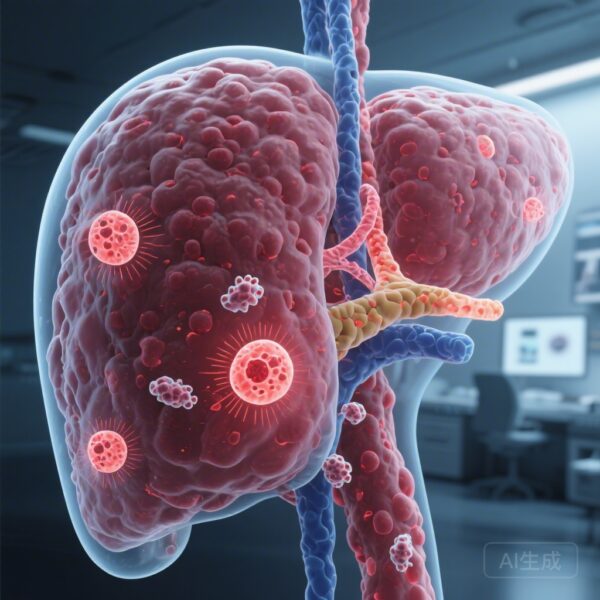
Highlights
- Liver fibrosis remains the strongest predictor of long-term major adverse liver outcomes (MALO), and noninvasive tests like FIB-4 and VCTE show prognostic accuracy comparable to histology.
- Multiparametric MRI (mpMRI), particularly iron-corrected T1 (cT1), provides superior identification of ‘at-risk’ MASH compared to traditional serum scores.
- Longitudinal changes in FAST, MRI-PDFF, and specific serum panels (e.g., ELF, PRO-C3) are successfully tracking therapeutic response in clinical trials for GLP-1R agonists and pan-PPAR agonists.
- Machine learning models and ‘in-silico’ scores are emerging as high-accuracy tools for early detection and risk stratification in large populations.
Background
Metabolic dysfunction-associated steatohepatitis (MASH) is the progressive stage of metabolic dysfunction-associated steatotic liver disease (MASLD), characterized by inflammation and hepatocyte injury. While liver biopsy has historically been the ‘gold standard’ for diagnosis and staging, its practical utility is hampered by invasiveness, sampling error, and high cost. There is an urgent clinical and regulatory need for noninvasive tests (NITs) that can serve as surrogate endpoints to predict clinical outcomes and monitor treatment efficacy. Recent evidence suggests that NITs are not only feasible for diagnosis but are also becoming robust tools for identifying ‘at-risk’ patients (those with MASH and fibrosis stage ≥F2) and measuring pharmaceutical impact in real-time.
Key Content
Prognostic Value of NITs for Adverse Outcomes
Recent longitudinal data confirm that liver fibrosis is the primary driver of major adverse liver outcomes (MALO). A 2025 cohort study by Swedish researchers demonstrated that the Fibrosis-4 (FIB-4) index had a predictive performance (C-index 0.75) for MALO nearly identical to biopsy-defined staging (C-index 0.77). Furthermore, hypertension has been identified as a critical, modifiable risk factor. Multi-center cohort analyses show that hypertension independently increases the risk of liver stiffness progression (HR 1.57) and histologic fibrosis progression (HR 1.41), suggesting that NIT-based monitoring should be more intensive in hypertensive MASLD patients.
NITs as Measures of Treatment Efficacy
Clinical trials are now utilizing NITs to demonstrate pharmacologic success:
- GLP-1 Receptor Agonists: In the SAMARA trial (2026), semaglutide led to a significantly greater reduction in the FAST score (FibroScan-AST) compared to placebo. Monitoring with MRI-PDFF revealed that 60% of recipients achieved a ≥30% fat reduction, which correlated with metabolic improvements.
- Pan-PPAR Agonists: Analysis of the NATIVE study for lanifibranor identified specific biological signatures (combining ferritin, adiponectin, and CK18 fragments) that accurately predicted histologic response, achieving AUROCs above 0.80 for MASH resolution and fibrosis improvement.
- FGF21 Analogs: A 2026 network meta-analysis indicated that pegozafermin and pegbelfermin were among the most effective therapies for reducing liver stiffness measurement (LSM) via VCTE, ranking higher than older candidates like obeticholic acid in short-term analyses.
Advanced Imaging and Multi-Step Strategies
Magnetic resonance-based techniques are setting new benchmarks for accuracy. Multiparametric MRI (mpMRI) using iron-corrected T1 (cT1) has shown a remarkable ability to detect disease risk in patients previously categorized as ‘low risk’ by FIB-4. Specifically, a cT1 value ≥800 ms can identify patients at higher risk for MASH progression. A head-to-head comparison (2025) of diagnostic scores found that a two-step strategy, M-PcT (MRE-based LSM followed by PDFF and cT1), outperformed the FAST and MAST scores in ruling in/out at-risk MASH, with a positive predictive value of 84.5%.
Machine Learning and Novel Biomarkers
The integration of ‘big data’ is refining early detection. Machine learning models, such as the Extreme Gradient Boosting (XGB) model, have achieved AUROCs exceeding 0.8 across international databases for detecting steatosis. Additionally, novel biomarkers such as Liver Type Fatty Acid Binding Protein (L-FABP) and volatile organic compounds (VOCs) in exhaled breath (volatomics) are showing promise for pediatric diagnosis and 5-year prognosis stratification, respectively.
Expert Commentary
The synthesis of recent literature (Sanyal et al., 2026) suggests that we are approaching a ‘post-biopsy’ era in MASH management. The alignment of NITs like VCTE and ELF with histologic changes provides a roadmap for federal regulators to accept these markers as valid surrogate endpoints. This shift would drastically accelerate drug approval timelines. However, clinicians must remain cautious; while FIB-4 is an excellent initial screening tool, its sensitivity is limited in lean individuals and the elderly, where specialized markers like TyG-BMI or mpMRI may be required. The ‘at-risk’ MASH phenotype (NAS ≥4, F≥2) should be the primary focus for pharmacological intervention, and the combination of imaging (MRE/mpMRI) with serum panels appears to be the most robust approach to minimize the ‘gray zone’ of diagnostic uncertainty.
Conclusion
Significant progress has been made in validating noninvasive surrogate endpoints for MASH. From simple serum indices to complex machine learning models and multiparametric imaging, these tools offer a reliable means to assess disease severity and treatment response. Future research should focus on the ‘delta-NIT’—the degree of change in a noninvasive test required to guarantee a reduction in hard clinical endpoints like cirrhosis or liver failure. Standardizing these NITs across diverse populations will be the final step in replacing liver biopsy in both routine clinical practice and late-phase clinical trials.
References
- Sanyal AJ, Abdelmalek MF, Loomba R. Noninvasive surrogate endpoints of adverse outcomes, disease progression, and treatment efficacy in Metabolic Dysfunction-Associated Steatohepatitis (MASH). Hepatology (Baltimore, Md.). 2026. PMID: 41911560.
- Hagström H, et al. Association between invasive and noninvasive liver disease assessments and long-term clinical outcomes in MASLD. Scand J Gastroenterol. 2025;60(12):1226-1237. PMID: 40951930.
- Loomba R, et al. Comparative efficacy of pharmacologic therapies for MASLD in improving fibrosis: systematic review and network meta-analysis. Eur J Gastroenterol Hepatol. 2026;38(4):407-415. PMID: 41811770.
- Francque SM, et al. Biomarkers of Histological Response in Lanifibranor-treated Patients With Metabolic Dysfunction-associated Steatohepatitis. Clin Gastroenterol Hepatol. 2025;23(13):2499-2508.e8. PMID: 40107637.
- He L, et al. Effect of hypertension on long-term adverse clinical outcomes and liver fibrosis progression in MASLD. J Hepatol. 2026;84(2):254-265. PMID: 40854336.
- Imajo K, et al. Head-to-head comparison among FAST, MAST, and multiparametric MRI-based new score in diagnosing at-risk MASH. Eur Radiol. 2025;35(6):3599-3609. PMID: 39638942.