Highlights
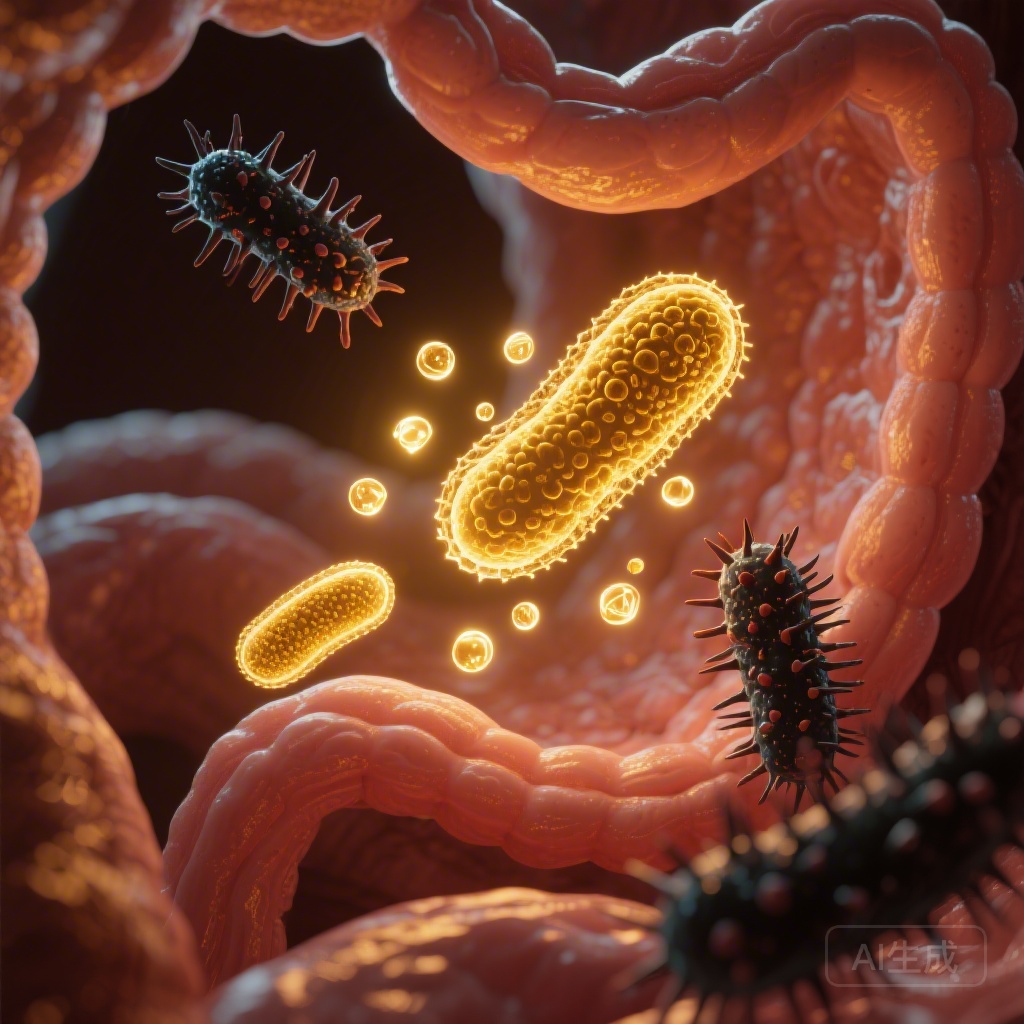
The study identifies a critical microbe-metabolite-host regulatory axis in colorectal cancer (CRC) characterized by the interaction between Faecalibacterium prausnitzii and enterotoxigenic Bacteroides fragilis.
Faecalibacterium prausnitzii converts dietary tryptophan into picolinic acid (PIA) via the enzyme 2-amino-3-carboxymuconate semialdehyde decarboxylase.
PIA exerts a potent anticancer effect by inducing tumor cell apoptosis and down-regulating TCERG1 and CKAP2, genes associated with poor tumor differentiation and recurrence.
A tryptophan-rich diet was shown in murine models to elevate circulating PIA levels, offering a viable nutritional strategy for CRC prevention and management.
Background: The Microbiome-Metabolite-Cancer Nexus
The human gut microbiome is a complex ecosystem whose metabolic output profoundly influences host physiology and disease states. In colorectal cancer (CRC), the maladaptation of these host-microbe metabolic interactions is increasingly recognized as a driver of oncogenesis. While previous research has linked specific microbial species to CRC, there has been a historical lack of comprehensive studies integrating multi-omics data—metagenomics, metabolomics, and transcriptomics—to map the precise molecular pathways through which gut bacteria influence tumor progression. This study addresses this gap by investigating the antagonistic relationship between two key gut residents: the beneficial Faecalibacterium prausnitzii and the potentially pathogenic Bacteroides fragilis.
Study Design: A Comprehensive Multi-Omics Approach
To elucidate these interactions, researchers conducted a multi-phase study beginning with a discovery cohort in Shanghai, China. The cohort included 440 stool samples (255 CRC patients and 185 healthy controls). Each sample underwent rigorous metagenomic sequencing and nontargeted liquid chromatography-mass spectrometry (LC-MS) to identify microbial compositions and metabolic profiles.
To bridge the gap between luminal findings and host tissue response, the team extracted fresh-frozen specimens of tumors and matched adjacent normal mucosae from 62 CRC patients. These specimens were subjected to whole-exome sequencing (WES) and RNA sequencing. The resulting data allowed for a high-resolution exploration of host genomic patterns and their correlation with microbial metabolites. Finally, the mechanistic relationships identified were validated through independent cohorts, organoid models, and murine experiments to ensure the generalizability and biological plausibility of the findings.
Key Findings: The F. prausnitzii-PIA-TCERG1/CKAP2 Axis
Microbial Dysbiosis and CRC Progression
The initial metagenomic analysis revealed a distinct signature of microbial dysbiosis in CRC patients compared to healthy controls. Specifically, the progression of CRC was consistently characterized by an enrichment of enterotoxigenic Bacteroides fragilis (ETBF) and a significant reduction in Faecalibacterium prausnitzii. This inverse relationship suggested that F. prausnitzii might play a protective role that is lost during colorectal carcinogenesis.
The Metabolic Bridge: Tryptophan to Picolinic Acid
The study identified picolinic acid (PIA) as a key metabolite produced by F. prausnitzii. Utilizing the enzyme 2-amino-3-carboxymuconate semialdehyde decarboxylase, F. prausnitzii metabolizes the essential amino acid tryptophan into PIA. Metabolomic data confirmed that PIA levels were significantly lower in CRC patients, correlating with the reduction of F. prausnitzii. This metabolic shift highlights a critical loss of a protective metabolite in the CRC gut environment.
Molecular Antagonism of B. fragilis
The most significant discovery of the study was the mechanistic antagonism between PIA and ETBF. While ETBF was found to up-regulate the expression of TCERG1 (Transcription Elongation Regulator 1) and CKAP2 (Cytoskeleton Associated Protein 2)—genes associated with poor cellular differentiation, increased proliferation, and clinical recurrence—PIA acted as a direct countermeasure. PIA was shown to induce apoptosis in tumor cells by specifically down-regulating these two oncogenic drivers. This interaction forms the F. prausnitzii-PIA-TCERG1/CKAP2 axis, a regulatory pathway that effectively checks the pro-tumorigenic influence of ETBF.
Validation and Dietary Implications
The therapeutic potential of this axis was validated in murine models and organoid systems. Mice fed a tryptophan-rich diet exhibited significantly higher levels of circulating PIA and reduced tumor burdens compared to controls. This suggests that dietary interventions designed to increase tryptophan intake could potentially bolster the F. prausnitzii-PIA axis, providing a non-invasive strategy to mitigate CRC risk or supplement existing treatments.
Expert Commentary: Mechanistic Insights and Clinical Potential
This research provides a sophisticated blueprint for how we might transition from observing microbial correlations to understanding microbial causation in oncology. The identification of PIA as a metabolite capable of inducing apoptosis via the TCERG1/CKAP2 pathway is a significant step forward. It moves the field beyond general terms like ‘dysbiosis’ and toward targeted ‘metabolic surgery’ or nutritional precision medicine.
However, clinicians should view these results with a balanced perspective. While the murine and organoid data are compelling, the efficacy of a tryptophan-rich diet in humans requires further investigation through randomized controlled trials. Additionally, the heterogeneity of CRC means that this specific microbial axis may be more or less dominant depending on the patient’s genetic background and existing gut architecture. The study’s reliance on a discovery cohort from a single geographic region (Shanghai) also necessitates broader validation across diverse populations to account for dietary and genetic variations.
Conclusion: A New Frontier in CRC Prevention
The study by Kong et al. successfully characterizes a representative microbe-metabolite-host regulatory pathway in CRC. By identifying the F. prausnitzii-PIA-TCERG1/CKAP2 axis, the research highlights a natural antagonistic mechanism against B. fragilis-induced tumor progression. These findings underscore the therapeutic potential of manipulating the gut microbial composition and utilizing dietary interventions, such as tryptophan-rich foods, to prevent or manage colorectal cancer. As we move toward an era of personalized oncology, the integration of microbiome-based metabolic profiling may become a cornerstone of CRC screening and therapeutic strategy.
References
1. Kong C, Jin Y, Guo F, et al. Revealing the Antagonistic Interactions of Faecalibacterium prausnitzii and Bacteroides fragilis in Colorectal Cancer. Gastroenterology. 2026. PMID: 41790075.
2. Sears CL, Geis AL. The role of the intestinal microbiome in colon cancer. Genome Med. 2014;6(12):113.
3. Louis P, Hold GL, Flint HJ. The gut microbiota, bacterial metabolites and colorectal cancer. Nat Rev Microbiol. 2014;12(10):661-672.