Preoperative Clues That Predict Who Will Receive Adjuvant Therapy After Surgery for Oral Cavity Cancer

Preoperative Clues That Predict Who Will Receive Adjuvant Therapy After Surgery for Oral Cavity Cancer

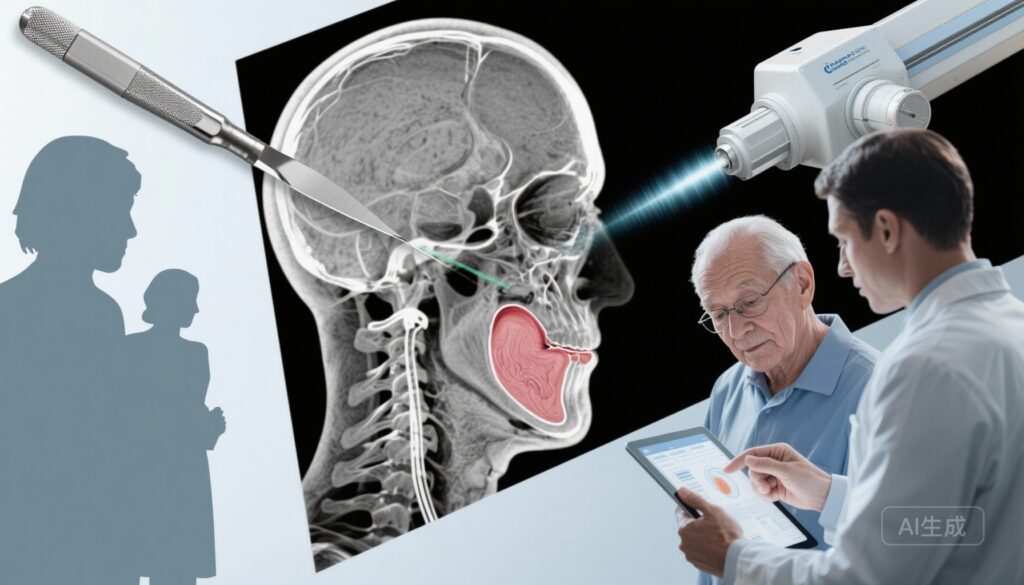
In a multicenter cohort of 3,980 oral cavity squamous cell carcinoma patients, preoperative clinical and tumor features—including age, comorbidity, tumor subsite, size, clinical stage, and biopsy grade—predicted receipt and intensity of adjuvant therapy, with a predictive model AUC of 0.84.
ctDNA-Guided Adjuvant Therapy in Stage III Colon Cancer: Prognostic Validation but No Benefit from Chemotherapy Intensification — Key Findings from the DYNAMIC-III Randomized Phase 2/3 Trial

ctDNA-Guided Adjuvant Therapy in Stage III Colon Cancer: Prognostic Validation but No Benefit from Chemotherapy Intensification — Key Findings from the DYNAMIC-III Randomized Phase 2/3 Trial

The DYNAMIC-III trial validates circulating tumor DNA (ctDNA) as a strong prognostic marker in stage III colon cancer. ctDNA-guided de-escalation reduced oxaliplatin exposure and hospitalizations with near-standard outcomes, but escalation for ctDNA-positive patients failed to improve recurrence-free survival.
Long-Term Real-World Outcomes of Adjuvant Anti-PD-1 Checkpoint Inhibition Versus Targeted Therapy in Stage III Melanoma: A Comprehensive Review

Long-Term Real-World Outcomes of Adjuvant Anti-PD-1 Checkpoint Inhibition Versus Targeted Therapy in Stage III Melanoma: A Comprehensive Review

This review synthesizes current evidence on long-term real-world efficacy of adjuvant anti-PD-1 immunotherapy and targeted BRAF/MEK inhibitor therapy in stage III melanoma, highlighting differential recurrence risks, survival benefits, and treatment duration implications.