Proton Beam vs IMRT for Olfactory Neuroblastoma: Multicenter Propensity-Matched Cohort Shows No Clear Superiority

Proton Beam vs IMRT for Olfactory Neuroblastoma: Multicenter Propensity-Matched Cohort Shows No Clear Superiority

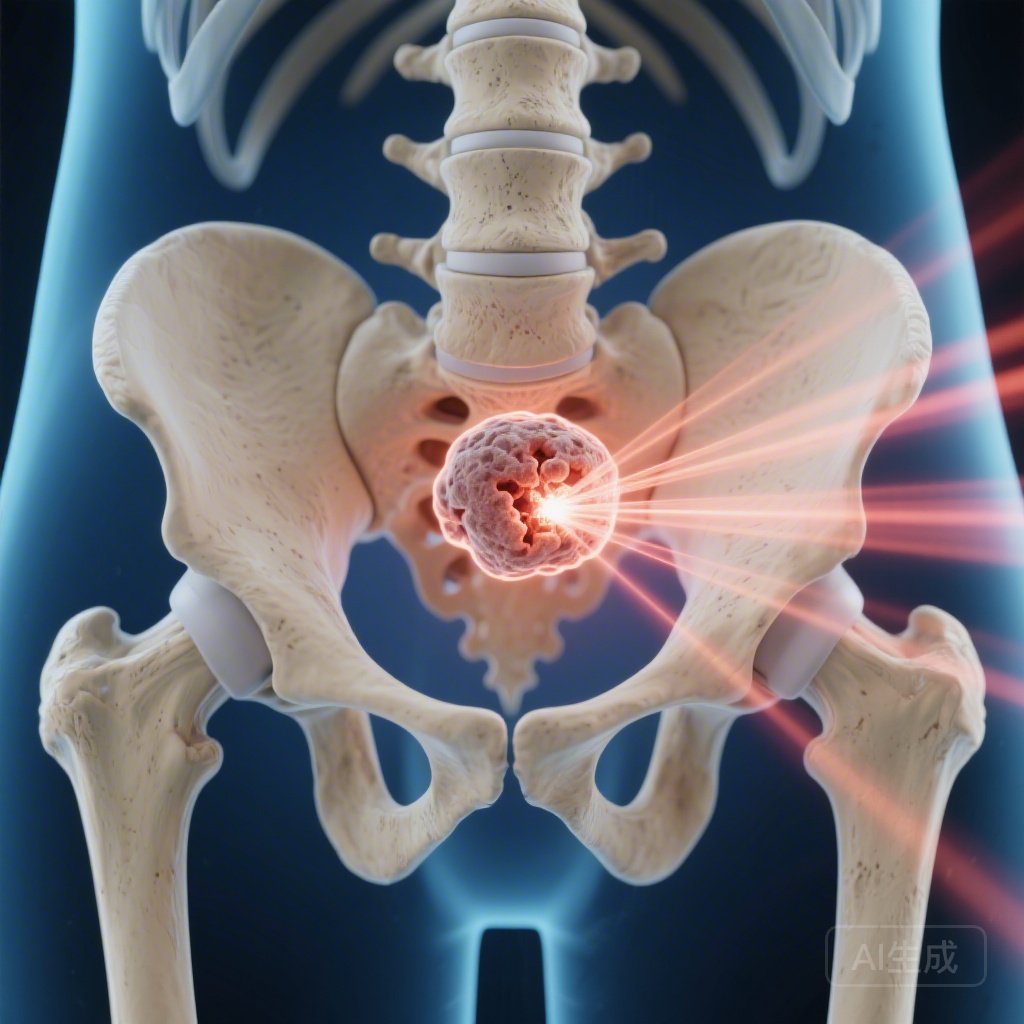
A multicenter propensity-matched cohort comparing adjuvant proton beam radiotherapy (PBRT) with intensity-modulated radiotherapy (IMRT) for olfactory neuroblastoma found no definitive differences in local control, recurrence-free survival, overall survival, or clinically meaningful reductions in grade ≥2 radiation toxicities, but estimates were imprecise.
Radiotherapy for Growing Vestibular Schwannomas: Real‑World Tumor Control and What It Means for Practice

Radiotherapy for Growing Vestibular Schwannomas: Real‑World Tumor Control and What It Means for Practice

An international multicenter cohort of 1,883 patients with radiologically growing vestibular schwannomas treated first‑line with radiotherapy showed a 10‑year tumor control rate of 76.1% (primary definition). Control estimates varied widely by growth definition, underscoring the clinical importance of outcome metrics.
Antibody–Drug Conjugates and Heart Risk in HER2-Positive Advanced Breast Cancer: What Clinicians Need to Know

Antibody–Drug Conjugates and Heart Risk in HER2-Positive Advanced Breast Cancer: What Clinicians Need to Know

A 2025 meta-analysis of 9,538 patients found trastuzumab emtansine (T‑DM1) carries the lowest incidence of LVEF decline (0.94%), while trastuzumab deruxtecan (T‑DXd) and trastuzumab-based combinations show similar, modest rates (≈4–5%). Trial selection and monitoring practices limit generalizability; baseline cardiac assessment and individualized surveillance remain essential.
Therapist-Guided e‑Health Cuts Fear of Cancer Recurrence in Colorectal Survivors: A Randomized Trial Shows Clinically Meaningful Benefits

Therapist-Guided e‑Health Cuts Fear of Cancer Recurrence in Colorectal Survivors: A Randomized Trial Shows Clinically Meaningful Benefits

A Danish RCT of TG‑iConquerFear, a 10‑week therapist‑guided online program for colorectal cancer survivors with clinical fear of cancer recurrence (FCR), reduced FCR scores substantially compared with augmented self‑help at 3 months; the between‑group effect was clinically meaningful (Cohen d 0.62).
Neural Networks Predict Survival for Older Adults With Head and Neck Cancer — Useful, but Not Yet Practice-Changing

Neural Networks Predict Survival for Older Adults With Head and Neck Cancer — Useful, but Not Yet Practice-Changing

An international cohort study developed and externally validated artificial neural networks that stratify older adults with locoregionally advanced head and neck squamous cell carcinoma (HNSCC) treated with definitive chemoradiation. Models showed moderate discrimination (OS AUC 0.68, PFS AUC 0.64) with HPV status, kidney function, ECOG, and nodal stage among top predictors.
Ramantamig (JNJ-79635322): A Trispecific T‑Cell Engager Targeting BCMA and GPRC5D Shows Potent Preclinical Activity in Multiple Myeloma

Ramantamig (JNJ-79635322): A Trispecific T‑Cell Engager Targeting BCMA and GPRC5D Shows Potent Preclinical Activity in Multiple Myeloma

Ramantamig (JNJ-79635322), a trispecific antibody that engages BCMA, GPRC5D and CD3, demonstrates sub-nanomolar cytotoxicity, ex vivo depletion of patient plasma cells, and antitumor activity in xenograft models—supporting ongoing phase 1 trials in relapsed/refractory multiple myeloma.
Metformin in Metastatic Hormone-Sensitive Prostate Cancer Undergoing Androgen Deprivation Therapy: Insights from the STAMPEDE Phase 3 Trial and Contemporary Evidence

Metformin in Metastatic Hormone-Sensitive Prostate Cancer Undergoing Androgen Deprivation Therapy: Insights from the STAMPEDE Phase 3 Trial and Contemporary Evidence

Comprehensive review of metformin's role in metastatic prostate cancer with ADT highlights STAMPEDE trial's findings: no significant overall survival benefit but metabolic side-effect mitigation. Integration of other RCTs outlines nuanced effects on metabolic syndrome and progression outcomes.
Age‑Adapted Chemotherapy Plus MRD‑Directed Transplantation Improves Safety Without Sacrificing Efficacy in Ph‑Negative Adult ALL: Key Findings from GRAALL‑2014

Age‑Adapted Chemotherapy Plus MRD‑Directed Transplantation Improves Safety Without Sacrificing Efficacy in Ph‑Negative Adult ALL: Key Findings from GRAALL‑2014

The GRAALL‑2014 trial shows that age‑adapted chemotherapy with MRD‑guided alloHSCT reduces early mortality and transplant use while maintaining disease‑free survival in adults (18–59) with Ph‑negative ALL; 4‑year DFS was 57.1% and overall survival improved across age groups.
Laparoscopic Distal Gastrectomy Is Comparable to Open Surgery for Clinical T4a Gastric Cancer in Short-Term Outcomes: Results from the UMC‑UPPERGI‑01 RCT

Laparoscopic Distal Gastrectomy Is Comparable to Open Surgery for Clinical T4a Gastric Cancer in Short-Term Outcomes: Results from the UMC‑UPPERGI‑01 RCT

The UMC‑UPPERGI‑01 randomized trial (n=208) found laparoscopic distal gastrectomy with D2 lymphadenectomy had similar 30‑day morbidity and mortality to open surgery for clinical T4a gastric cancer, despite longer operative times and modestly higher blood loss.