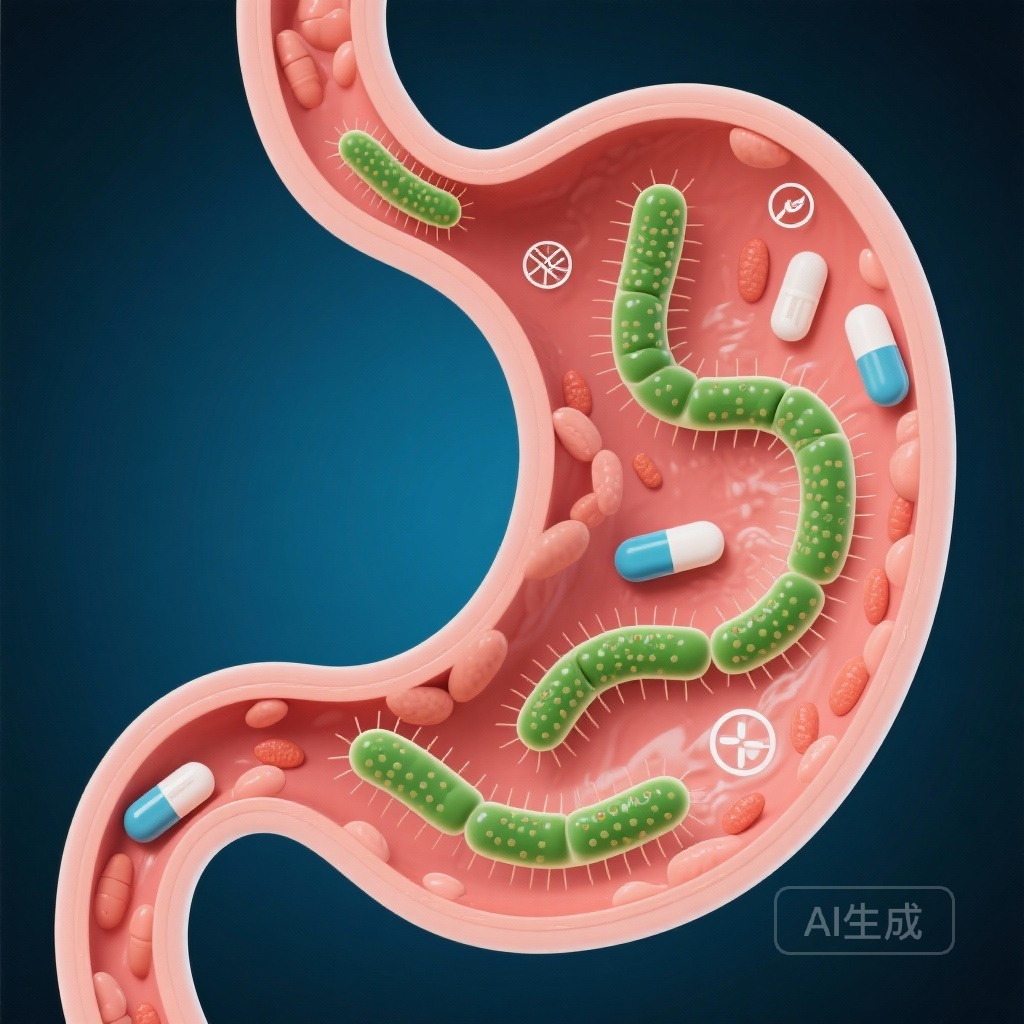
Routine 5–7 Day Antibiotic Prophylaxis After Upper GI Bleeding in Cirrhosis: New Meta-analysis Questions the Mortality Benefit

Routine 5–7 Day Antibiotic Prophylaxis After Upper GI Bleeding in Cirrhosis: New Meta-analysis Questions the Mortality Benefit

A 2025 bayesian meta-analysis of 14 RCTs (n=1,322) found shorter or no antibiotic prophylaxis after upper GI bleeding in cirrhosis was highly likely to be noninferior for mortality, though it increased reported bacterial infections. Study limitations temper definitive practice change.
Single-dose Cervarix induces durable seropositivity but fails HPV‑16 GMC non-inferiority versus three-dose Gardasil-4: implications from the PRIMAVERA immunobridging trial

Single-dose Cervarix induces durable seropositivity but fails HPV‑16 GMC non-inferiority versus three-dose Gardasil-4: implications from the PRIMAVERA immunobridging trial

PRIMAVERA immunobridging shows single-dose Cervarix induces near-universal seropositivity at 36 months and non-inferior HPV-18 antibodies versus three-dose Gardasil-4, but HPV-16 antibody GMCs were lower; results inform but do not yet support regulatory single-dose approval.
Bivalent RSV pre‑F Vaccine Dramatically Reduces RSV‑Associated Hospitalisations and Chronic‑Disease Exacerbations in Adults Aged 75–79 Years

Bivalent RSV pre‑F Vaccine Dramatically Reduces RSV‑Associated Hospitalisations and Chronic‑Disease Exacerbations in Adults Aged 75–79 Years

In a multicentre test‑negative study of 1006 adults aged 75–79 in England, a bivalent RSV pre‑F vaccine reduced RSV‑associated hospitalisation by 82% overall and protected against severe disease and exacerbations of chronic heart and lung disease, including in immunosuppressed patients.
Three-Month Clofazimine–Rifapentine Regimen for Drug‑Susceptible TB Failed to Improve Outcomes and Raised Safety Concerns: Lessons from Clo‑Fast (Phase 2c)

Three-Month Clofazimine–Rifapentine Regimen for Drug‑Susceptible TB Failed to Improve Outcomes and Raised Safety Concerns: Lessons from Clo‑Fast (Phase 2c)

The Clo‑Fast phase 2c trial tested a 3‑month rifapentine‑clofazimine regimen versus standard 6‑month therapy for drug‑susceptible pulmonary TB. Culture conversion at 12 weeks was similar, but shorter therapy had higher grade ≥3 adverse events and worse 65‑week composite clinical outcomes, leading to early termination.
Orodispersible Ivermectin and Moxidectin–Albendazole Combinations Deliver Major Gains Against Trichuris trichiura in Children: Dose‑response, Safety, and Programmatic Implications

Orodispersible Ivermectin and Moxidectin–Albendazole Combinations Deliver Major Gains Against Trichuris trichiura in Children: Dose‑response, Safety, and Programmatic Implications

Two randomized trials from Pemba Island show orodispersible ivermectin–albendazole yields dose‑dependent high cure rates in preschool children, and moxidectin–albendazole is superior to albendazole alone in school‑aged children, both with acceptable safety.
Human Monoclonal Antibody MAM01 for Malaria Prevention: Phase 1 Trial Insights and Context in Antimalarial Monoclonal Antibody Development

Human Monoclonal Antibody MAM01 for Malaria Prevention: Phase 1 Trial Insights and Context in Antimalarial Monoclonal Antibody Development

This review synthesizes evidence on MAM01, a monoclonal antibody targeting Plasmodium falciparum circumsporozoite protein, summarizing its first-in-human phase 1 trial demonstrating safety and protective efficacy, alongside contextual advances in monoclonal antibody-based malaria prevention.
Long-Term Clinical and Immunological Landscape Following Monkeypox Virus Infection and MVA-BN Vaccination: Insights from the Belgian MPX-COHORT and POQS-FU-PLUS Studies

Long-Term Clinical and Immunological Landscape Following Monkeypox Virus Infection and MVA-BN Vaccination: Insights from the Belgian MPX-COHORT and POQS-FU-PLUS Studies

This review synthesizes 24-month follow-up data on monkeypox virus infection and MVA-BN vaccination, detailing durable immunity post-infection, comparative antibody kinetics, and clinical sequelae, informing future vaccination strategies and patient management.
Shorter Is Safe: Adjusted Analyses of BALANCE Confirm Non‑Inferiority of 7‑Day Antibiotic Courses for Uncomplicated Bloodstream Infection

Shorter Is Safe: Adjusted Analyses of BALANCE Confirm Non‑Inferiority of 7‑Day Antibiotic Courses for Uncomplicated Bloodstream Infection

A post-hoc analysis of the BALANCE randomized trial shows that after accounting for treatment non-adherence using causal inference methods, 7 days of antibiotics for uncomplicated non‑Staphylococcus aureus bloodstream infection remains non‑inferior to 14 days for 90‑day mortality.
Targeted Vaccination Is Most Efficient but Not Cost‑Effective: National Serosurvey and Modelling of Japanese Encephalitis in Bangladesh

Targeted Vaccination Is Most Efficient but Not Cost‑Effective: National Serosurvey and Modelling of Japanese Encephalitis in Bangladesh

A nationally representative serosurvey and transmission modelling study in Bangladesh estimates low population-level JEV exposure but large numbers of infections annually; spatially targeted vaccination would be most efficient, though not cost-effective under conventional thresholds.
Post‑COVID Resurgence of Mycoplasma pneumoniae in French Children: Hospital Burden, Risk Factors for ICU Admission, and Clinical Implications

Post‑COVID Resurgence of Mycoplasma pneumoniae in French Children: Hospital Burden, Risk Factors for ICU Admission, and Clinical Implications

A nationwide French multicentre cohort (ORIGAMI) documents a substantial 2023–24 paediatric hospitalisation surge from Mycoplasma pneumoniae, identifies older age, asthma, comorbidity and erythema multiforme as ICU risk factors, and highlights stewardship and surveillance priorities.
Recombinant Quadrivalent Influenza Vaccine (RIV4) Shows Non‑Inferior Immunogenicity and Acceptable Safety in 9–17‑Year‑Olds: Results of a Phase 3 Immunobridging Study

Recombinant Quadrivalent Influenza Vaccine (RIV4) Shows Non‑Inferior Immunogenicity and Acceptable Safety in 9–17‑Year‑Olds: Results of a Phase 3 Immunobridging Study

A phase 3 immunobridging study found that a single dose of recombinant quadrivalent influenza vaccine (RIV4) induced non‑inferior HAI responses in 9–17‑year‑olds vs 18–49‑year‑olds, with a comparable safety profile and fewer solicited reactions in adolescents.