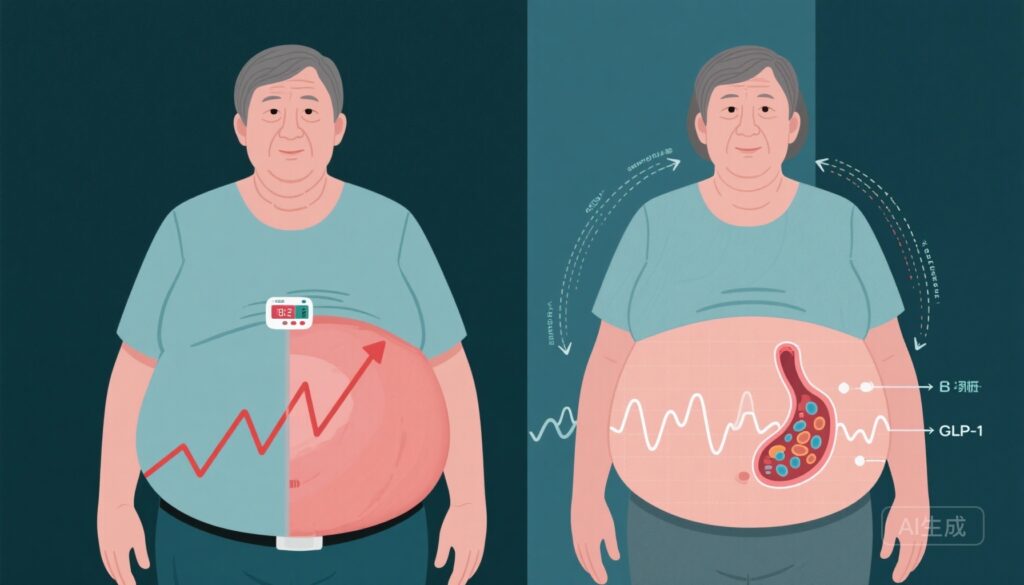
Tirzepatide Produces Large Real‑World Weight Loss in Women with PCOS

Tirzepatide Produces Large Real‑World Weight Loss in Women with PCOS

A large retrospective real‑world cohort (n=4241) of women with PCOS and overweight/obesity treated with tirzepatide experienced mean 18.8% weight loss at 10 months (90% lost ≥10%); digital engagement amplified outcomes. The data are promising but require randomized, biomarker‑driven studies to define metabolic and reproductive benefits and safety in this population.
Heat and Dehydration Increase Carbohydrate Use During Endurance Exercise — Heat Is the Dominant Driver

Heat and Dehydration Increase Carbohydrate Use During Endurance Exercise — Heat Is the Dominant Driver

A 2025 systematic review and meta-analysis found that endurance exercise in the heat increases carbohydrate oxidation and muscle glycogen use; dehydration amplifies this effect principally when combined with heat. Findings inform fueling and hydration strategies for athletes and at-risk populations.
Indole-3-Propionic Acid Bridges Gut Dysfunction and Diabetic Retinopathy — A Biomarker and Therapeutic Avenue

Indole-3-Propionic Acid Bridges Gut Dysfunction and Diabetic Retinopathy — A Biomarker and Therapeutic Avenue

A Gut 2025 study identifies microbially produced indole-3-propionic acid (IPA) as a protective metabolite linking restored intestinal tryptophan handling to prevention of diabetic retinopathy in mice and associates low serum IPA with retinopathy in people with type 2 diabetes.
Finerenone Lowers Albuminuria in Type 1 Diabetes with CKD: FINE‑ONE Phase III Shows 25% Average UACR Reduction and Acceptable Safety

Finerenone Lowers Albuminuria in Type 1 Diabetes with CKD: FINE‑ONE Phase III Shows 25% Average UACR Reduction and Acceptable Safety

The FINE‑ONE Phase III trial found finerenone reduced urinary albumin-to-creatinine ratio (UACR) by 25% versus placebo in adults with type 1 diabetes and chronic kidney disease over six months, with safety broadly consistent with prior type 2 diabetes trials and a manageable hyperkalemia signal.
Less Sitting, More Sleep and MVPA Linked to Better Glycaemic Stability in Children with Type 1 Diabetes: A 2‑Year Compositional Analysis

Less Sitting, More Sleep and MVPA Linked to Better Glycaemic Stability in Children with Type 1 Diabetes: A 2‑Year Compositional Analysis

A longitudinal compositional analysis of 83 children with type 1 diabetes found that reallocating daily time away from sedentary behaviour toward sleep or moderate‑to‑vigorous physical activity (MVPA) was associated with lower HbA1c and interstitial glucose over two years.
GLP‑1 Receptor Agonists Provide Greatest MACE Reduction in Type 2 Diabetes — Evidence from a Large US Comparative-Effectiveness Study

GLP‑1 Receptor Agonists Provide Greatest MACE Reduction in Type 2 Diabetes — Evidence from a Large US Comparative-Effectiveness Study

In a 241,981-patient emulated trial using modern causal methods, sustained GLP‑1RA use yielded the lowest 2.5‑year MACE risk, followed by SGLT2is, sulfonylureas, and DPP4is; the GLP‑1RA advantage over SGLT2is was greatest in older adults and those with ASCVD, HF, or kidney impairment.
Diabetes and Dementia Biomarkers: Less Alzheimer’s Pathology but More Non‑AD Neurodegeneration in Cognitively Normal Adults

Diabetes and Dementia Biomarkers: Less Alzheimer’s Pathology but More Non‑AD Neurodegeneration in Cognitively Normal Adults

A pan‑European analysis (n=5,550) found diabetes was associated with lower odds of amyloid and p‑tau pathology in cognitively impaired patients, but with markers of neurodegeneration (total tau, medial temporal atrophy) in cognitively normal individuals without amyloid — suggesting non‑AD pathways link diabetes to cognitive decline.
Obesity Alters Symptom Trajectory and Inflammatory Signatures after Sport-Related Concussion: the NCAA‑DoD CARE Consortium

Obesity Alters Symptom Trajectory and Inflammatory Signatures after Sport-Related Concussion: the NCAA‑DoD CARE Consortium

In a large prospective cohort, obese BMI (≥30) was associated with worse post-concussion neurocognitive outcomes and a persistently proinflammatory blood biomarker profile, despite fewer baseline symptoms. Findings suggest obesity modifies clinical recovery and biological response after sport-related concussion.
Targeting Mitochondria: A Practical Algorithm for Diabetes Care in Maternally Inherited Diabetes and Deafness (MIDD)

Targeting Mitochondria: A Practical Algorithm for Diabetes Care in Maternally Inherited Diabetes and Deafness (MIDD)

Maternally inherited diabetes and deafness (MIDD) is driven by m.3243A>G mitochondrial mutation with mixed β‑cell failure and insulin resistance. GLP‑1 receptor agonists and SGLT2 inhibitors have biologic plausibility and cardiorenal benefits in MIDD; we propose a pathophysiology‑driven treatment algorithm and practical monitoring guidance.
Low Energy Availability Blunts Muscle and Functional Gains: What Clinicians and Coaches Need to Know

Low Energy Availability Blunts Muscle and Functional Gains: What Clinicians and Coaches Need to Know

A 2025 systematic review finds low energy availability (LEA) is associated with impaired neuromusculoskeletal training responses—reduced gains in lean mass and function and consistent deficits in strength, cellular markers and subjective recovery—highlighting the need to screen and restore energy before hypertrophy-focused rehabilitation.