Highlights
- Sibeprenlimab achieved a significant 51.2% lower 24-hour urinary protein-to-creatinine ratio (UPCR) compared to placebo at 9 months.
- The therapy targets A Proliferation-Inducing Ligand (APRIL), leading to a 67.1% reduction in pathogenic galactose-deficient IgA1 (Gd-IgA1) levels.
- The safety profile of sibeprenlimab was comparable to placebo, with no treatment-related deaths and a low incidence of serious adverse events.
- These interim results suggest that upstream inhibition of B-cell signaling may provide a disease-modifying approach for IgA nephropathy.
Background: The Clinical Challenge of IgA Nephropathy
IgA nephropathy (IgAN) remains the most common primary glomerular disease worldwide and a leading cause of chronic kidney disease (CKD) and end-stage renal disease (ESRD). The pathogenesis of IgAN is widely understood through the ‘four-hit hypothesis.’ This process begins with the overproduction of galactose-deficient IgA1 (Gd-IgA1), followed by the generation of autoantibodies that recognize these O-glycan-deficient hinges, leading to the formation of immune complexes. These complexes eventually deposit in the glomerular mesangium, triggering inflammation, fibrosis, and progressive loss of renal function.
Despite current standard-of-care treatments involving optimized renin-angiotensin system (RAS) inhibition, many patients remain at high risk for progression. While recent approvals like SGLT2 inhibitors and endothelin receptor antagonists have expanded the armamentarium, there is a critical need for therapies that target the underlying immunological drivers of the disease rather than just the downstream consequences of glomerular injury.
The Mechanistic Rationale: Targeting APRIL
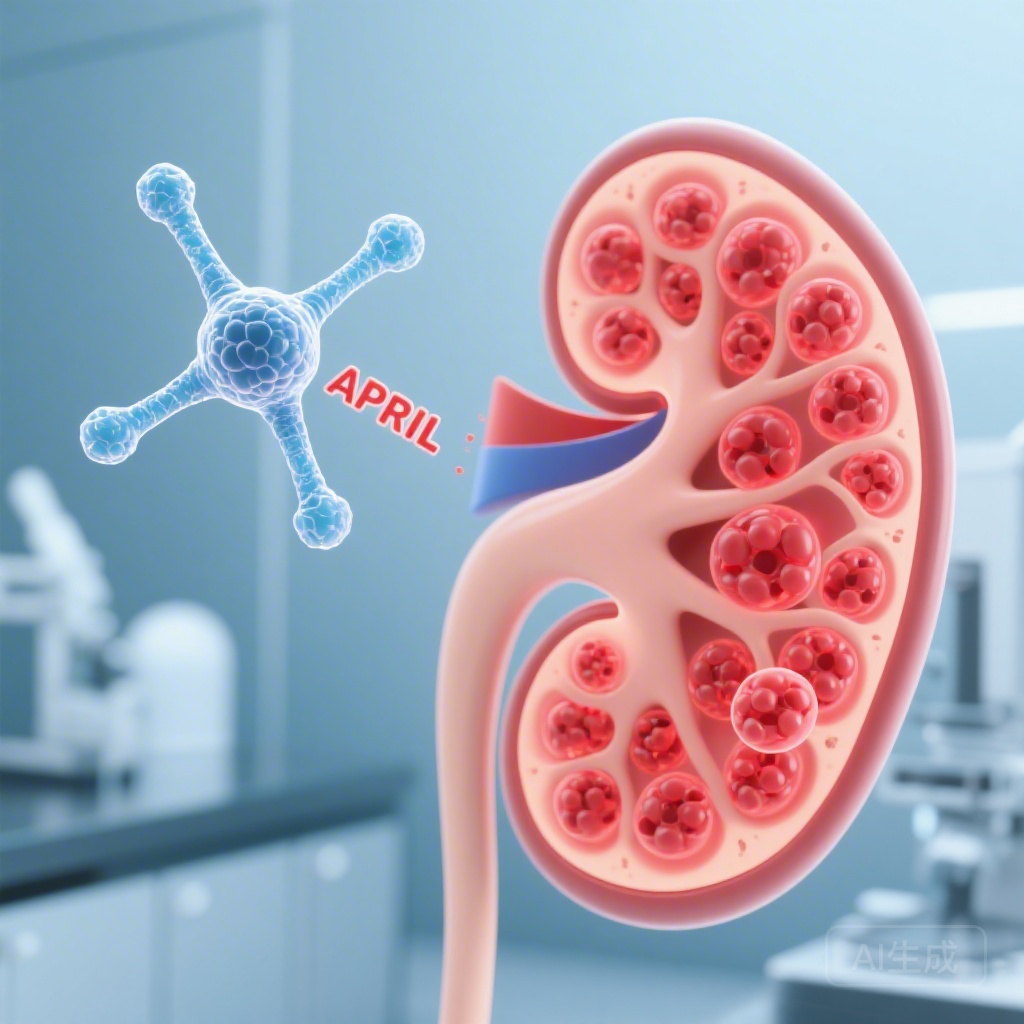
A Proliferation-Inducing Ligand (APRIL) is a member of the tumor necrosis factor (TNF) superfamily that plays a pivotal role in B-cell maturation, isotype switching, and the survival of plasma cells. Elevated levels of APRIL have been correlated with increased production of Gd-IgA1 and worse clinical outcomes in IgAN patients. By inhibiting APRIL, researchers hypothesized that they could reduce the production of the ‘first hit’ in the disease cascade. Sibeprenlimab is a humanized IgG2 monoclonal antibody designed to selectively bind to and neutralize APRIL, thereby potentially halting the disease process at its source.
The VISIONARY Trial: Study Design and Methodology
The VISIONARY trial is a phase 3, multicenter, double-blind, randomized, placebo-controlled trial designed to evaluate the efficacy and safety of sibeprenlimab in adults with biopsy-confirmed IgA nephropathy. Participants were required to have persistent proteinuria (UPCR ≥0.75 g/g or 24-hour urine protein ≥1.0 g) despite receiving stable, optimized doses of RAS inhibitors.
A total of 510 patients were randomized in a 1:1 ratio to receive either 400 mg of sibeprenlimab or a matching placebo, administered via subcutaneous injection every 4 weeks for a total of 100 weeks. This specific interim analysis focused on the first 320 patients who reached the 9-month evaluation mark.
Primary and Secondary Endpoints
The primary endpoint for this interim analysis was the change from baseline in the 24-hour urinary protein-to-creatinine ratio (UPCR) at 9 months. Proteinuria is a well-established surrogate marker for kidney disease progression; sustained reductions are strongly associated with improved long-term eGFR outcomes. The key secondary endpoint, which will be reported upon the trial’s full completion at 24 months, is the annualized slope of the estimated glomerular filtration rate (eGFR). Other assessments included changes in serum immunoglobulins, safety parameters, and exploratory biomarkers like Gd-IgA1 and total APRIL concentrations.
Interim Results: Efficacy and Biomarker Suppression
The results of the interim analysis revealed a profound and statistically significant divergence between the treatment groups. At the 9-month mark, the sibeprenlimab group showed a geometric least-squares mean reduction in 24-hour UPCR of 50.2%. In stark contrast, the placebo group experienced a slight increase of 2.1%. This resulted in an adjusted ratio of 51.2% lower proteinuria in the sibeprenlimab arm compared to placebo (96.5% CI, 42.9 to 58.2; P<0.001).
Biomarker Modulation: APRIL and Gd-IgA1
The pharmacodynamic data supported the clinical findings. Sibeprenlimab treatment led to a near-complete suppression of serum APRIL levels, with a 95.8% reduction from baseline by week 48. Crucially, this was accompanied by a 67.1% reduction in the levels of pathogenic Gd-IgA1. These findings provide strong mechanistic evidence that sibeprenlimab effectively targets the ‘first hit’ of the IgAN disease process, reducing the substrate available for immune complex formation.
Safety and Tolerability Profile
One of the primary concerns with long-term B-cell modulation is the risk of infection or significant immunosuppression. However, the safety profile of sibeprenlimab in this interim analysis was encouraging. The incidence of treatment-emergent adverse events (TEAEs) was similar between the sibeprenlimab and placebo groups. Serious adverse events occurred in 3.5% of the sibeprenlimab group and 4.4% of the placebo group. No deaths were reported during the treatment period, and there were no signals of increased opportunistic infections. Serum immunoglobulin levels did decrease, as expected with the mechanism of action, but remained within manageable ranges for the duration of the interim period.
Expert Commentary
The VISIONARY interim data represent a significant milestone in the treatment of IgA nephropathy. By achieving a 50% reduction in proteinuria within nine months, sibeprenlimab demonstrates efficacy that rivals or exceeds many current and emerging therapies. The ability to specifically target APRIL allows for a more focused immunosuppressive effect compared to broad-acting steroids, which often carry a heavy burden of systemic side effects.
However, clinicians must remain cautious. While proteinuria reduction is a strong surrogate, the definitive proof of disease modification lies in the 24-month eGFR slope data. Furthermore, the long-term impact of continued APRIL inhibition on the host’s immune repertoire and response to vaccinations will need continued monitoring. The generalizability of these results across different ethnic populations and various stages of CKD will also be of great interest as the full trial data set becomes available.
Conclusion
The interim analysis of the Phase 3 VISIONARY trial confirms that sibeprenlimab significantly reduces proteinuria and pathogenic Gd-IgA1 in patients with IgA nephropathy. If the 24-month eGFR data confirm these early efficacy signals, sibeprenlimab could become a cornerstone of targeted therapy, shifting the management of IgAN from symptom control to precise molecular intervention. For clinicians, these findings reinforce the importance of monitoring proteinuria and considering early intervention with emerging biologics in high-risk patients.
Funding and Trial Registration
The VISIONARY trial was funded by Otsuka Pharmaceutical Development and Commercialization. ClinicalTrials.gov number: NCT05248646.
References
Perkovic V, Trimarchi H, Tesar V, Lafayette R, Wong MG, Barratt J, Suzuki Y, Liew A, Zhang H, Carroll K, Jha V, Quevedo A, Han SH, Praga M, Chacko B, Sahay M, Cheung CK, Kooienga L, Walsh M, Xia J, Fajardo C, Shah L, Hafkin J, Rizk DV; VISIONARY Trial Investigators Group. Sibeprenlimab in IgA Nephropathy – Interim Analysis of a Phase 3 Trial. N Engl J Med. 2026 Feb 12;394(7):635-646. doi: 10.1056/NEJMoa2512133. Epub 2025 Nov 8. PMID: 41211929.