Highlights
- Providing an $80 monthly produce subsidy did not result in improved glycemic control or reduced emergency department visits compared to usual care.
- Only 30% of participants utilized more than 80% of the provided funds, suggesting significant barriers to implementation beyond cost.
- The adjusted difference in HbA1c actually favored the usual care group by 0.20 percentage points, highlighting the complexity of nutritional interventions in chronic disease.
The Clinical Intersection of Food Insecurity and Diabetes
The ‘Food is Medicine’ movement has gained significant momentum in recent years, predicated on the idea that addressing social determinants of health (SDOH)—specifically food insecurity—is essential for managing chronic metabolic conditions. For patients with diabetes, food insecurity is not merely a social challenge; it is a clinical barrier that correlates with higher hemoglobin A1c (HbA1c) levels, increased rates of hypoglycemia, and a greater burden of cardiovascular complications.
Produce prescription (PRx) programs have emerged as a popular policy tool to bridge this gap. These programs typically provide financial assistance to purchase fresh fruits and vegetables, assuming that reducing the cost of healthy food will naturally lead to better dietary habits and improved clinical markers. However, most previous studies on PRx programs have been small, observational, or lacked rigorous control groups. The recently published pragmatic randomized clinical trial by Drake et al. provides a critical, evidence-based assessment of whether these subsidies alone can move the needle on cardiometabolic health.
Study Design: The PRx Pragmatic Trial
This two-arm, pragmatic randomized clinical trial was conducted within an integrated academic health system in the southeastern United States. Between June and August 2023, researchers recruited 2,155 patients who met two primary criteria: a diagnosis of diabetes and a confirmed risk of food insecurity.
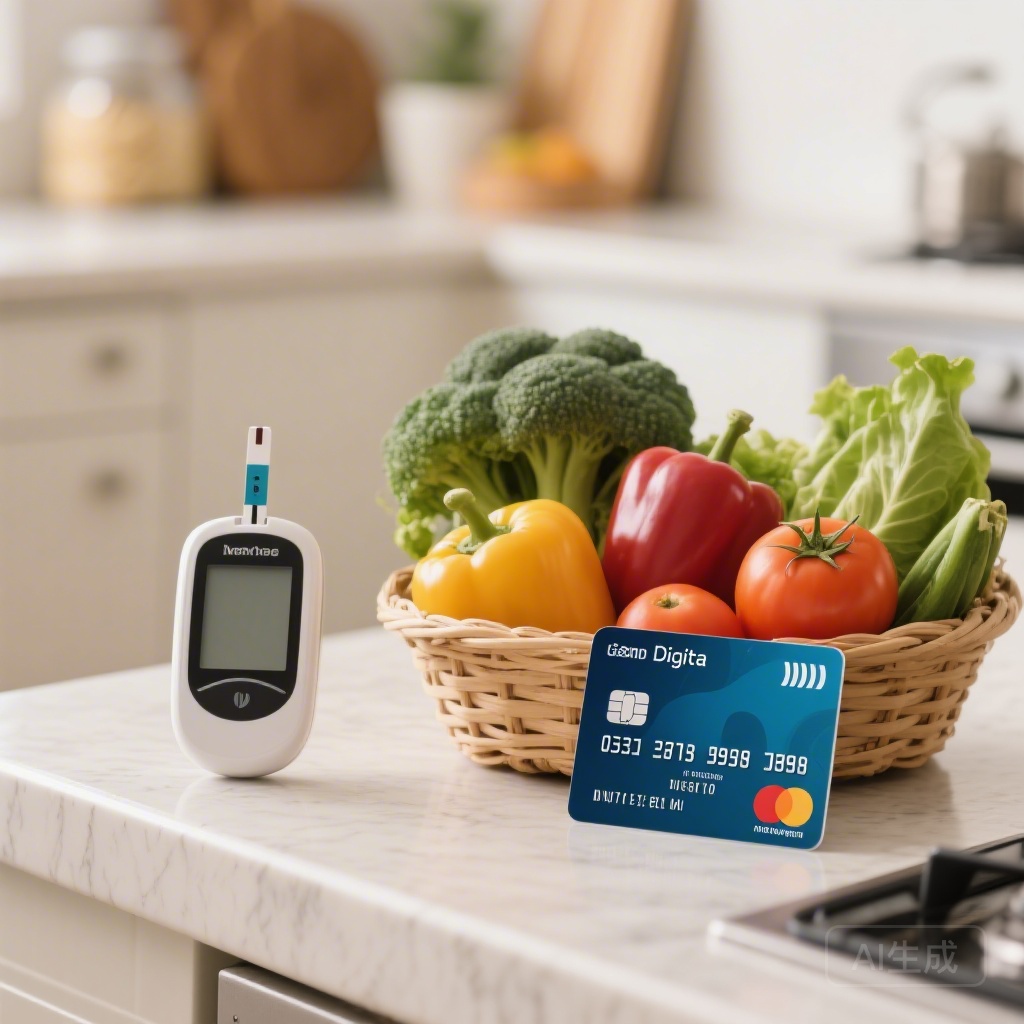
Participants were randomized into two groups. The intervention arm (n = 1450) received a debit card loaded with $80 monthly for 12 months, specifically for purchasing fresh, frozen, or canned fruits, vegetables, and legumes at grocery retailers. The comparison group (n = 705) received usual care. Both groups were provided with standard diabetes self-management educational materials. Randomization was stratified based on the participants’ mean HbA1c levels from the previous year, categorized as either above or below 8%.
The primary endpoints of the study were the change in HbA1c levels and the frequency of emergency department (ED) visits over a 12-month follow-up period. Secondary outcomes included body mass index (BMI), blood pressure, and inpatient hospitalizations. The pragmatic nature of the trial meant it was designed to reflect real-world clinical practice and patient behavior rather than a highly controlled, artificial environment.
Key Findings and Statistical Analysis
Contrary to the hypotheses of many public health advocates, the study found no evidence that the produce prescription subsidy improved clinical outcomes. In fact, the data suggested a slight trend in the opposite direction.
Glycemic Control and Healthcare Utilization
At the 12-month mark, the treatment arm had an adjusted mean HbA1c level that was 0.20 percentage points higher than the usual care arm (95% CI, 0.05% to 0.35%). While this difference is statistically significant, it favors the usual care group, though it may not be clinically meaningful in isolation. More importantly, it demonstrates a clear failure of the intervention to lower blood sugar levels as intended. Furthermore, there were no significant differences between the groups regarding the number of emergency department visits or inpatient hospitalizations.
Secondary Cardiometabolic Outcomes
Analyses of secondary outcomes mirrored the primary results. There were no statistically significant differences in blood pressure or BMI between the treatment and comparison groups. Even in the subgroup of patients with baseline HbA1c levels ≥8%—those arguably most in need of intervention—the results remained consistent: the produce subsidy did not lead to improved control.
Utilization Patterns
One of the most telling findings from the trial was the low rate of benefit utilization. Although the funds were provided directly via a debit card, only 30% of participants used 80% or more of their monthly $80 allocation. This suggests that the mere provision of funds is insufficient to overcome the myriad barriers food-insecure patients face, such as transportation issues, lack of time for meal preparation, or limited access to retailers that carry high-quality produce.
Expert Commentary: Why Did the Intervention Fail?
The results of this trial are sobering for proponents of standalone PRx programs. Several factors may explain why providing $80 a month did not translate into better health.
First, the ‘dose’ of the intervention may have been insufficient. While $80 per month helps, it may not be enough to shift the entire dietary pattern of a household, especially if the participant is sharing food with family members. Second, the pragmatic nature of the trial highlights real-world friction. If a patient lives in a food desert, a debit card does not create a grocery store or provide the transportation needed to reach one.
Furthermore, dietary change is behaviorally complex. Clinical nutrition involves more than just ‘access’—it requires ‘agency,’ which includes the knowledge, tools, and time to prepare healthy meals. Without integrated nutritional counseling, cooking classes, or more intensive case management, financial subsidies may simply be absorbed into existing shopping habits without significantly altering the nutritional density of the diet.
It is also worth noting that the ‘usual care’ group in a modern academic health system may already be receiving some level of social support or intensive diabetes management, which could have narrowed the gap between the two arms. The fact that the intervention group actually had slightly higher HbA1c levels warrants further investigation into whether the subsidy inadvertently replaced other healthy behaviors or if the result was a statistical anomaly of the pragmatic design.
Conclusion and Clinical Implications
This randomized clinical trial demonstrates that a produce prescription subsidy, when provided as a standalone intervention without integrated clinical support, does not improve cardiometabolic health or reduce healthcare utilization for patients with diabetes and food insecurity.
For clinicians and policymakers, the takeaway is not that ‘Food is Medicine’ is a flawed concept, but rather that the delivery mechanism must be more robust. Addressing food insecurity in the context of chronic disease likely requires a multi-modal approach that combines financial assistance with intensive behavioral support, transportation solutions, and perhaps even medically tailored meals rather than just raw ingredients. As we continue to integrate social interventions into clinical care, we must rely on rigorous data like the PRx trial to refine our strategies and ensure that resources are directed toward programs that yield measurable health benefits.
Funding and Trial Registration
This study was supported by various academic and health system grants. Full details can be found in the original publication.
Trial Registration: ClinicalTrials.gov Identifier: NCT05896644.
References
1. Drake C, Buckman C, Brucker A, et al. Produce Prescription Subsidy for Patients With Diabetes: A Pragmatic Randomized Clinical Trial. JAMA Intern Med. 2026 Feb 16:e258008. doi: 10.1001/jamainternmed.2025.8008.
2. Berkowitz SA, Seligman HK, Rigdon J, et al. Supplemental Nutrition Assistance Program (SNAP) Participation and Health Care Expenditures Among Low-Income Adults. JAMA Intern Med. 2017;177(11):1642–1649.
3. Hager ER, Quigg AM, Black MM, et al. Development and Validity of a 2-Item Screen to Identify Families at Risk for Food Insecurity. Pediatrics. 2010;126(1):e26-e32.