Highlights
Prenatal maternal depression is associated with a significant increase in offspring behavioral and developmental symptoms, including higher internalizing, externalizing, ADHD, and ASD scores (6.61-10.90 percentile points).
Associations between prenatal depression and child outcomes were found to be similar across both male and female offspring, suggesting a non-sex-specific developmental vulnerability.
The study found that these developmental risks are largely independent of pre-pregnancy depression, though they are partially mediated by postnatal maternal depressive symptoms.
Findings from over 76,000 participants underscore the necessity of early mental health screening during pregnancy to mitigate long-term neurodevelopmental risks in children.
Background and Disease Burden
Maternal mental health during pregnancy is a cornerstone of public health, yet it remains an area where clinical needs are frequently unmet. Estimates suggest that approximately one in five pregnant women experience depression. While the clinical focus has traditionally been on the mother’s well-being, a growing body of evidence suggests that the intrauterine environment serves as a critical window for fetal neurodevelopment. Prenatal maternal depression has been hypothesized to influence the developing brain through various pathways, including alterations in the hypothalamic-pituitary-adrenal (HPA) axis, placental function, and epigenetic modifications.
Despite numerous studies, previous research has often been limited by small sample sizes, heterogeneous outcome measures, and a failure to account for the timing of depressive symptoms (pre-pregnancy vs. prenatal vs. postnatal). Furthermore, whether these associations differ between male and female offspring—a concept known as sex-specific vulnerability—has remained a subject of intense debate in the field of developmental psychopathology. Addressing these gaps is essential for developing targeted interventions and informing health policy across European and global healthcare systems.
Study Design and Methodology
The study, published by Hermans et al. (2026) in the Lancet Regional Health – Europe, utilized a robust Individual Participant Data (IPD) meta-analysis approach. This methodology is often considered the gold standard in evidence synthesis because it allows for the harmonization of raw data across different cohorts, providing greater statistical power and more consistent control for confounders than aggregate data meta-analyses.
Population and Data Sources
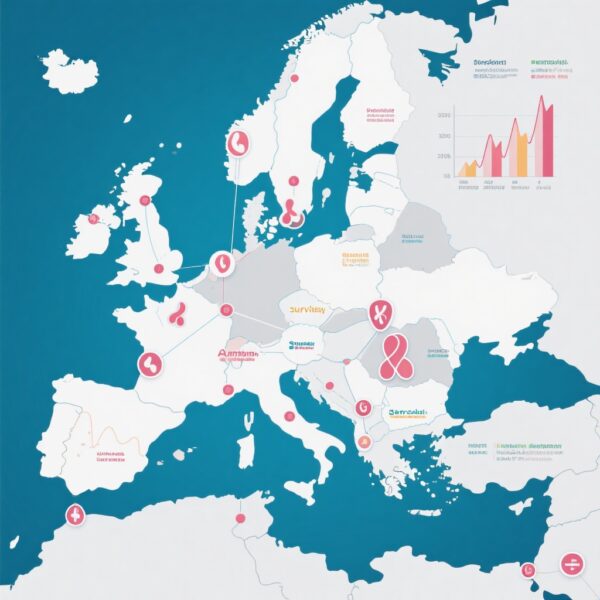
The researchers leveraged data from the EU Child Cohort Network, specifically drawing from seven European birth cohorts. The final sample size included up to 76,514 mother-child pairs. This large-scale collaboration allowed for the investigation of prospective associations across a diverse demographic landscape.
Outcomes and Harmonization
Eight primary offspring behavioral and developmental outcomes were assessed. These included internalizing symptoms (e.g., anxiety, depression), externalizing symptoms (e.g., aggression, rule-breaking), Attention Deficit Hyperactivity Disorder (ADHD) symptoms, and Autism Spectrum Disorder (ASD) symptoms. To ensure comparability across different cohorts that may have used different screening tools, the researchers used harmonized percentile scores.
Statistical Approach
Cohort-specific estimates were calculated and subsequently combined using random-effects meta-analysis. The researchers specifically examined the role of pre-pregnancy depression and postnatal depression to determine whether the prenatal period represents a unique window of risk. They also performed sex-stratified analyses to explore potential differences in how male and female children respond to prenatal maternal distress.
Key Findings
The results of this meta-analysis provide compelling evidence that prenatal maternal depression is a robust predictor of a wide range of neurodevelopmental and behavioral challenges in children.
Behavioral and Developmental Symptoms
Prenatal maternal depression was consistently associated with higher scores across all eight outcomes. Specifically, children exposed to prenatal depression showed an increase of 6.61 to 10.90 percentile points in symptoms of internalizing and externalizing behaviors, ADHD, and ASD. These findings were not limited to mothers with clinical diagnoses; continuous measures of prenatal depressive symptoms also showed a linear association with adverse outcomes, suggesting that even subclinical levels of depression during pregnancy may impact fetal development.
The Role of Timing and Mediation
One of the most significant aspects of this study was the examination of timing. The associations were found to be largely independent of pre-pregnancy depression. This suggests that the prenatal period itself is a sensitive window, and the risk to the child is not merely a reflection of the mother’s long-term psychiatric history. However, the study did find that postnatal maternal depression partially mediated the associations. This indicates that while the prenatal environment sets a developmental trajectory, the continued presence of maternal depression after birth further compounds the risk, potentially through altered caregiving environments or continued biological influences.
Sex-Specific Considerations
Contrary to some previous hypotheses suggesting that males or females might be more vulnerable to prenatal stress, this study found that the associations were remarkably similar between sexes. This suggests that the developmental biological pathways affected by maternal depression are likely fundamental processes shared across all children.
Expert Commentary and Clinical Implications
The findings from the EU Child Cohort Network have significant implications for clinical practice and public health policy. The magnitude of the effect—up to a 10-percentile increase in symptom scores—is clinically meaningful and could shift a significant number of children from the subclinical to the clinical range for disorders like ADHD and ASD.
Biological Plausibility
From a mechanistic perspective, these findings support the fetal programming hypothesis. Elevated maternal cortisol levels, associated with depression, can cross the placental barrier or alter placental enzyme activity (such as 11β-HSD2), leading to increased fetal exposure to glucocorticoids. This exposure can alter the development of the fetal amygdala and prefrontal cortex, which are central to emotional regulation and executive function.
Limitations and Generalizability
While the study is one of the largest of its kind, it is important to acknowledge certain limitations. Most of the data were derived from European cohorts, which may limit generalizability to populations in low- and middle-income countries where nutritional and environmental stressors may interact differently with maternal mental health. Additionally, while the study controlled for many confounders, the possibility of residual confounding by genetic factors (rGE—gene-environment correlation) cannot be entirely ruled out without specific genomic data.
Conclusion and Practice Recommendations
This IPD meta-analysis confirms that prenatal maternal depression is a major developmental risk factor that transcends sex and is not solely explained by pre-existing maternal psychiatric history. The evidence underscores a critical need for integrated care models where mental health screening is a standard component of prenatal visits.
For clinicians, the takeaway is clear: early identification and treatment of depression during pregnancy are not just about the mother’s immediate health; they are a form of early intervention for the child. Furthermore, because postnatal depression partially mediates these risks, support should continue into the fourth trimester and early childhood. Future research should focus on the efficacy of specific prenatal interventions—such as cognitive behavioral therapy (CBT) or pharmacotherapy—in improving not only maternal mood but also long-term neurodevelopmental trajectories in the offspring.
Funding
This research was supported by the HappyMums Project, funded by the European Union (Grant Agreement n.101057390).
References
Hermans APC, Avraam D, Schuurmans IK, Soares AG, Lahti-Pulkkinen M, Girchenko P, Vrijkotte TGM, de Rooij SR, Elhakeem A, van der Waerden J, Heude B, Vainqueur C, Yang TC, Cheung RW, Lewer D, Strandberg-Larsen K, Cadman T, Popovic M, Candelora F, Lahti J, Räikkönen K, Cecil CAM, El Marroun H. Prenatal maternal depression and child behavioural and developmental outcomes: an individual participant data meta-analysis in 76,514 children from the EU Child Cohort Network. Lancet Reg Health Eur. 2026 Jan 29;63:101595. doi: 10.1016/j.lanepe.2026.101595. PMID: 41648808.