Highlights of the Research
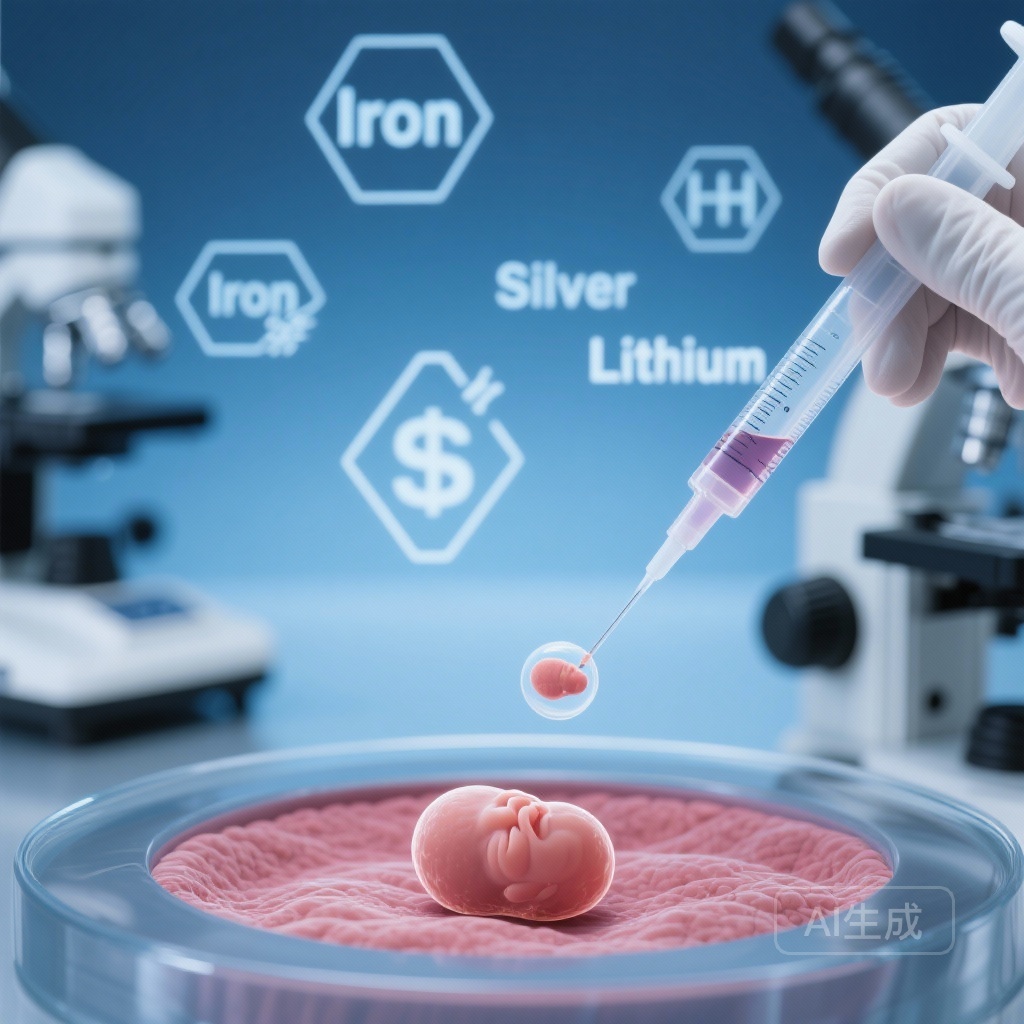
The study demonstrates that preconception plasma trace metal levels in both partners significantly influence early IVF embryological outcomes. Key findings include:
- High exposure to trace metal mixtures in couples and male partners is associated with a decrease in best-quality embryos and blastocyst numbers.
- Specific individual elements show divergent effects: Iron (Fe), Lithium (Li), Strontium (Sr), and Molybdenum (Mo) are positively associated with favorable embryological outcomes.
- Conversely, Silver (Ag) and Thallium (Tl) were identified as harmful elements, negatively impacting fertilization and embryo development.
- The study underscores the necessity of a couple-based approach, rather than focusing solely on maternal health, to optimize assisted reproductive technology (ART) success.
Background: The Environmental Factor in Assisted Reproduction
As the prevalence of infertility rises globally, Medically Assisted Reproduction (MAR), particularly In Vitro Fertilization (IVF), has become a cornerstone of reproductive medicine. However, success rates remain variable, prompting researchers to look beyond traditional clinical markers toward environmental and lifestyle determinants. Among these, exposure to trace metal elements—both essential and non-essential—has emerged as a critical factor.
Trace metals are ubiquitous in the environment, entering the human body through diet, drinking water, and occupational exposure. While essential elements like iron and molybdenum are vital for cellular metabolism and enzymatic functions, non-essential heavy metals can act as endocrine disruptors or induce oxidative stress. Historically, research has focused predominantly on maternal exposure during pregnancy or the immediate preconception period. However, the paternal contribution to the early embryo’s genome and epigenome is increasingly recognized. This study addresses a significant gap in the literature by evaluating the joint and independent effects of trace metal mixtures in both partners on early IVF outcomes.
Study Design and Methodology
This couple-based prospective cohort study was conducted at a high-volume fertility center, involving 1071 couples who underwent 1369 IVF treatment cycles between December 2020 and August 2023. The methodology was designed to provide a comprehensive view of the metal-fertility relationship.
Plasma concentrations of 21 trace metal elements were measured using inductively coupled plasma mass spectrometry (ICP-MS), a highly sensitive technique capable of detecting elements at low concentrations. The primary endpoints included four early IVF embryological outcomes: the number of two-pronuclear (2PN) zygotes, the number of best-quality embryos, fertilization rates, and the number of blastocysts.
To handle the complexity of multi-metal exposure, the researchers employed sophisticated statistical models. Elastic net regression was used for element selection, while K-medoids clustering identified distinct exposure patterns. Furthermore, Quantile-based G-computation (QGC) and Group-Weighted Quantile Sum (groupWQS) regression were utilized to assess the joint effects of metal mixtures, accounting for the correlations between different elements.
Key Findings: The Impact of Metal Mixtures and Individual Elements
The study cohort had a mean age of 32.60 years for females and 33.79 years for males. The analysis revealed that the majority of trace metals were detectable in over 90% of participants, indicating widespread exposure.
The Harmful Influence of Metal Mixtures
The joint analysis revealed that high exposure to certain metal mixtures in couples and male partners was significantly associated with a reduction in the number of best-quality embryos and blastocysts. This suggests a synergistic detrimental effect where the cumulative burden of multiple metals impairs the early stages of embryonic cleavage and blastulation. Interestingly, the paternal metal profile showed a stronger negative correlation with these outcomes than previously assumed, reinforcing the idea that sperm quality—and the trace elements within the seminal and plasma environment—plays a vital role in early development.

Fig. Associations between ENR-selected trace metal element mixtures and early IVF embryological outcomes in couples.
Beneficial vs. Detrimental Elements
When examining elements individually, the study found a nuanced landscape of biological effects:
- Positive Associations: Iron (Fe), Lithium (Li), Strontium (Sr), and Molybdenum (Mo) were generally associated with improved outcomes. For instance, Iron is essential for DNA synthesis and mitochondrial function in oocytes, while Molybdenum serves as a cofactor for enzymes involved in redox homeostasis.
- Negative Associations: Silver (Ag) and Thallium (Tl) emerged as significant threats. Thallium, even at low levels, is known to interfere with potassium-dependent processes and induce mitochondrial dysfunction, which is catastrophic for the energy-intensive process of fertilization and early cell division.

Fig. Associations between ENR-selected individual trace metal elements and early IVF embryological outcomes among 1071 couples with 1369 IVF cycles.
Clinical Implications and Expert Commentary
The transition from focusing solely on maternal health to a couple-based approach is perhaps the most significant takeaway from this research. For clinicians, these findings suggest that the preconception window is a critical period for intervention for both partners.
From a mechanistic perspective, the detrimental effects of metals like Thallium and Silver likely stem from the induction of reactive oxygen species (ROS). Excessive ROS can lead to DNA fragmentation in sperm and oocytes, as well as impaired mitochondrial bioenergetics in the developing embryo. Conversely, the positive role of elements like Strontium and Lithium may involve the modulation of signaling pathways essential for oocyte maturation and embryo implantation.
However, the study has limitations that warrant caution. The reliance on a single time-point plasma measurement may not capture long-term exposure dynamics or the fluctuations in metal levels over the course of an entire spermatogenesis or oogenesis cycle. Additionally, the study focused on fresh embryo transfer cycles, and the results may not be fully generalizable to frozen-thawed cycles or the general population not seeking fertility treatment.
Conclusion
This study provides robust evidence that the trace metal environment of both partners influences the success of IVF from the earliest stages of fertilization. It advocates for the implementation of preconception trace element screening as a standard part of the fertility workup. By identifying and correcting deficiencies in essential elements like Iron or Molybdenum, and minimizing exposure to toxic elements like Thallium, clinicians can potentially improve the yield of high-quality embryos and increase the overall success rates of MAR.
Funding and Clinical Trial Information
This work was supported by the National Key Research and Development Program of China (No. 2018YFC1004201), the National Natural Science Foundation of China (No. 82304159), and the Open Research Fund of the National Health Commission Key Laboratory of Birth Defects Prevention & Henan Key Laboratory of Population Defects Prevention (No. ZD202310). The authors declare no competing interests.
Reference:
Cao Y, Bao S, Yang Q, Sun Y, Tang Y, Ju W, Liu J, Fang W, Wang X, Wu C, Li C, Zhu P, Shao S, Tao F, Pan G. Association between trace metal element concentrations in human blood plasma and early MAR embryological outcomes: a couple-based prospective cohort study. Hum Reprod Open. 2025 Jun 10;2025(3):hoaf034. doi: 10.1093/hropen/hoaf034. PMID: 40747136; PMCID: PMC12311266.